
Critical Illness Looms: How Resilient Is Your Family’s Emergency Fund?
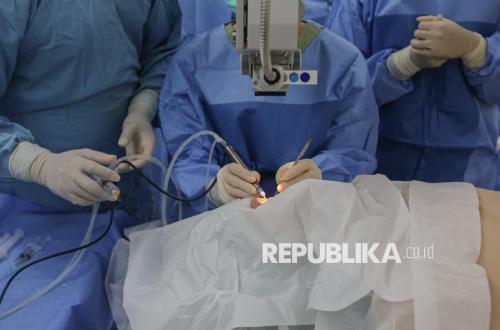
JAKARTA — For young couples, saving is a way to build a future. They set aside part of their income for their children’s education, an emergency fund and mortgage instalments. But what happens when plans made over many years are suddenly disrupted by a critical illness?
Imagine a young family with one child. The husband is the main breadwinner, while the wife manages the household finances. When he needs treatment, his work is disrupted and his income falls, while the family’s expenses continue.
His wife must then make difficult decisions. Savings for their child’s education begin to be used and the emergency fund shrinks. Selling a vehicle or other assets may have to be considered. This is an illustration, not the experience of a particular patient, but it shows how health problems can become a financial risk for families.
Costs That Do Not End at the Hospital
In an article published by the Ministry of Health’s Health Development Policy Agency (BKPK) on 23 June 2026, Dhamas Pratista explained that heart disease, cancer, stroke and kidney failure pose major challenges to Indonesia’s health system. According to claims data cited in the article, heart disease ranks highest in terms of costs, followed by cancer, stroke and kidney failure.
The National Health Insurance programme (JKN), administered by BPJS Kesehatan, plays an important role in financing medical services in accordance with its provisions. As a result, families do not have to bear all treatment costs themselves. Even so, the effects of critical illness extend beyond medical care. There are transport and patient-care costs and, most significantly, lost income when the breadwinner is unable to work. The cost of treating a critical illness should be viewed as part of a wider household-finance issue, not simply as a hospital bill.
How Resilient Is an Emergency Fund?
As a simple illustration, a family spends Rp 8 million a month and has an emergency fund of Rp 48 million. With no income, that fund would last six months. If an additional Rp 2 million a month is spent on transport and recovery needs, it would last only about 4.8 months. These figures are purely illustrative and are not an average estimate of critical-illness treatment costs.
A professional financial planner has warned that patients’ families face financial pressure from the additional needs associated with treatment, particularly if the patient is the breadwinner. The planner said emergency savings and insurance are essential foundations of household financial planning. In other words, savings alone may not be enough.
Women’s Role in Financial Decisions
In many households, women play a major role in managing day-to-day budgets, although ideally financial matters should be a shared responsibility. When a crisis strikes, difficult questions arise: which expenses should take priority, should a child’s savings be used, and how long will the emergency fund last?
Selling assets can provide cash quickly, but it also reduces the family’s wealth for the future. For this reason, women’s health protection should be considered more broadly. Women need to understand the financial protection available to all family members so that decisions in a crisis do not depend solely on savings or assets that can be sold.
Start by Reviewing Existing Cover
The first step for young couples is to review the protection they already have: JKN membership, insurance provided by an employer, personal policies and how long their emergency fund could cover expenses if the main income stopped.
It is important to understand that health insurance and critical illness cover are not necessarily the same. Health insurance generally pays for medical services in accordance with the policy. Some critical illness products pay a sum insured when specified conditions are met, giving the family greater financial flexibility, depending on the product and its terms.
For families wishing to learn about this option, information on AXA Mandiri’s critical illness insurance may serve as one reference. One of its products, Mandiri Secure CritiCare, covers four main groups of critical illness — stroke, cancer, heart disease and kidney failure — from early to advanced stages, subject to policy terms. The product also includes life cover and a cash benefit.
Full details of the critical illness cover, including benefits, available coverage periods, waiting periods and claim requirements, can be found on AXA Mandiri’s official website. The product information states that a waiting period of 80 calendar days applies to the critical illness benefit, so prospective customers should read the product information summary and policy before deciding.
Preserving Choices for the Future
Critical illness may not always be preventable, but its financial impact can be prepared for through emergency savings, appropriate protection and planning for household income. The first step does not have to be buying a new product. Understand the protection already in place, identify risks that remain uncovered and calculate how long the family could manage if one partner were unable to work.
That way, if critical illness strikes, the family can focus on treatment and recovery without rushing to sacrifice the future they have spent years building.
Source: jawawa.id (https://jawawa.id/newsitem/critical-illness-looms-how-resilient-is-your-familys-emergency-fund-1793195505)
Originally published by Republika (https://ekonomi.republika.co.id/berita/tnmaw6423/penyakit-kritis-mengintai-seberapa-kuat-dana-darurat-keluarga), translated from Indonesian