
Crisis Worsens: Protests for Presidential Change Intensify as Defence Minister Resigns
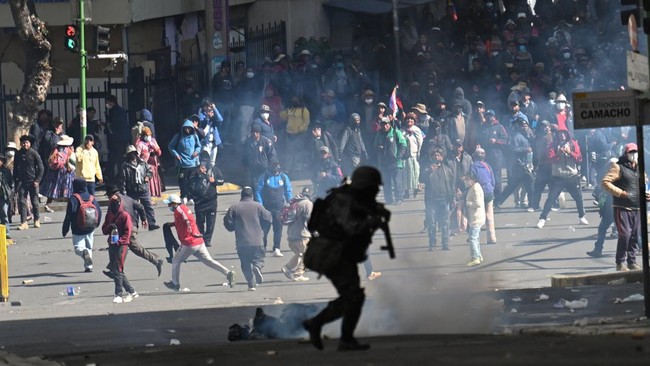
The political crisis in Bolivia has intensified after Defence Minister Marcelo Salinas resigned amidst a wave of anti-government demonstrations that has lasted for a month. The resignation has shaken the administration of President Rodrigo Paz, who is currently facing demands to step down from office.
According to Reuters, two government sources confirmed on Tuesday (3/6/2026) that Salinas has vacated his position as pressure on the Paz administration continues to mount. The centrist President assumed office last November after winning an election that ended nearly two decades of rule by left-wing groups in the South American nation.
The protests rocking Bolivia are led by trade unions and groups loyal to former President Evo Morales. They are demanding that the government revoke austerity policies and take concrete steps to address the soaring cost of living.
According to a government source, Ernesto Justiniano, a deputy minister who has been handling anti-narcotics efforts, has been selected to replace Marcelo Salinas as Defence Minister. Cabinet reshuffles are also continuing in other sectors; Minister of Education Beatriz Garcia reportedly resigned on Tuesday evening, according to local media.
Previously in May, President Rodrigo Paz announced plans for a cabinet reorganisation in response to the expanding wave of demonstrations. In that reshuffle, Minister of Labour Edgar Morales had already left his post. Local media reports suggest he resigned due to a lack of shared vision with President Paz.
As of the time of writing, the Bolivian presidency has not issued an official response regarding the latest changes to the cabinet.
The crisis began with labour strikes in May. The demonstrations subsequently evolved into highway blockades that severed access to Bolivia’s two main cities, La Paz and El Alto, which together house approximately two million residents. These blockades have not only caused transport disruptions but have also had a significant economic impact.
The Mayor of El Alto, Eliser Roca, told reporters that his city is losing approximately US$6.5 million every day due to the road blockades. He urged demonstrators to engage in dialogue with the government, noting that small business owners are the group most affected. “Many families live from day to day… they also have a right to eat,” he stated.
Amidst the escalating protests, President Paz began taking steps last week towards declaring a state of emergency, which could potentially pave the way for military deployment on the streets to restore security. However, this move has triggered further criticism from opposition groups and trade unions.
Mario Argollo, Executive Secretary of the Central Obrera Boliviana (COB) labour group, assessed that the government failed to utilise the momentum to reconcile with the citizens who had previously provided electoral support to Paz. “The central government did not take the opportunity to make peace with its people, 54% of whom, according to the president, brought him to power, but unfortunately, after arriving in power, he forgot his voter base,” Argollo said before demonstrators gathered in El Alto.
During the protests, demonstrators burned tyres in the streets and once again called for the resignation of President Paz. Nevertheless, the government maintains there are no plans for the president to step down. Minister of the Presidency Jose Luis Lupo told Reuters last week that such demands are contrary to democratic principles.
Paz took office with promises to open Bolivia to foreign private investment, particularly in the mining, hydrocarbon, lithium, and energy sectors. However, since taking leadership, Bolivia has faced serious economic issues, including fuel shortages and dwindling foreign exchange reserves. This economic pressure has been a primary driver of public dissatisfaction and has bolstered support for the protest movement.
In April, Paz also replaced the energy minister, appointing Marcelo Blanco, who previously served as Deputy Minister for Electricity and Renewable Energy.