
Criminal Law Professor Highlights Alleged Procedural Violations in Febrie Adriansyah Case
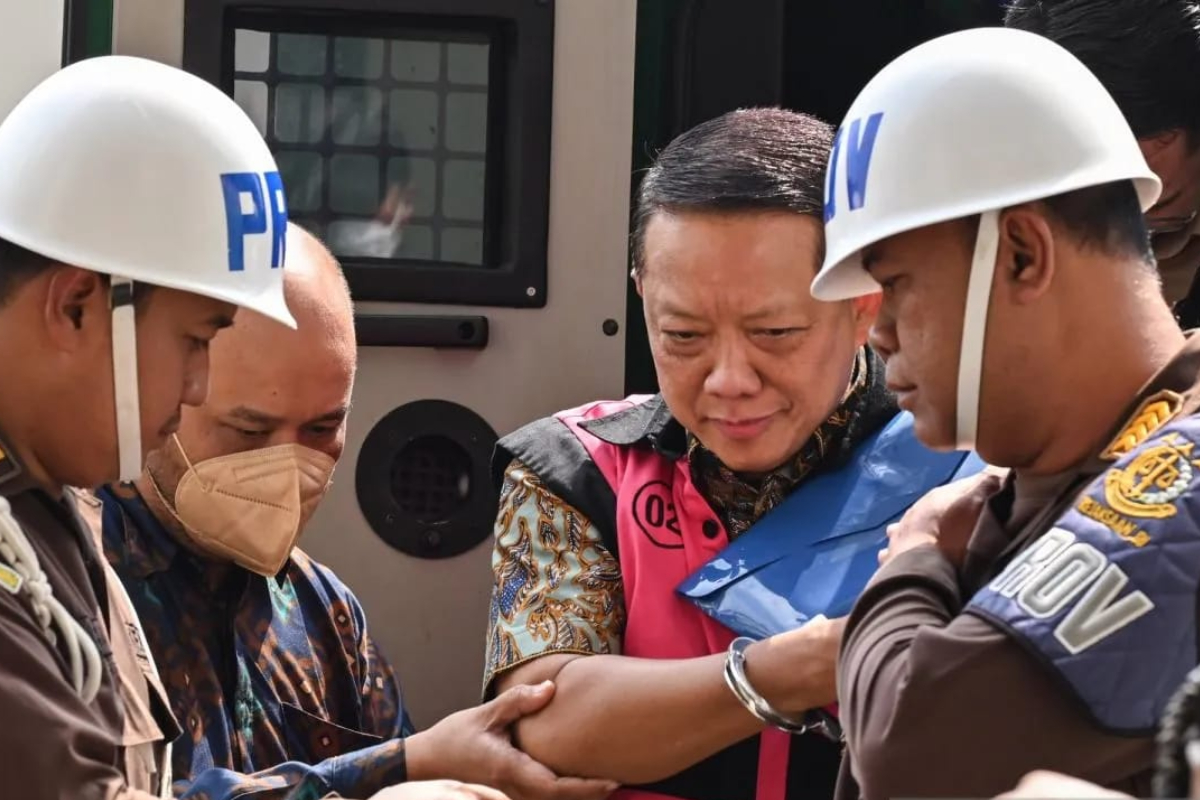
The designation of former Junior Attorney General for Special Crimes (Jampidsus) of the Attorney General’s Office, Febrie Adriansyah, as a suspect is deemed insufficient if viewed solely through the lens of meeting the minimum requirements for evidence. Procedural aspects in the examination of a prospective suspect also become a critical issue that can determine the legality of the legal process.
Professor Jamin Ginting, a Professor of Criminal Law at Pelita Harapan University (UPH), stated that investigators do possess the authority to designate someone as a suspect provided they meet the requirements stipulated in the Criminal Procedure Code (KUHAP). However, according to him, this authority remains limited by the principles of human rights protection and the prohibition of treating an individual as if they are guilty before the evidentiary process is completed.
“In the KUHAP, the requirements for designating a suspect are regulated under Article 90: subjective requirements—reasonable suspicion; and objective requirements—based on two valid pieces of evidence. Textually, it is not required that the prospective suspect must have been examined first as a witness,” Jamin stated in Jakarta on Friday (4/9/2026).
According to Jamin, the problem arises when an individual, whom it is known from the outset will be designated as a suspect, is examined under a status that does not reflect their actual legal position. He believes such a condition deprives the individual of the opportunity to prepare a defence from the early stages of the investigation.
“By never being examined as a witness or a prospective suspect, the investigators have essentially committed an unlawful act by violating human rights,” he said.
Jamin maintains that prospective suspects should be given the opportunity to provide testimony before their legal status is elevated. He argues that such an examination is vital to ensure the investigation does not proceed by covertly placing the legal subject in a position where they are already treated as a suspect.
“The subject cannot prepare their defence because their position is equated with that of other witnesses, resulting in an abuse of circumstances to deceive a party who was known from the start to be targeted as a suspect,” he added.
Beyond examination procedures, Jamin also highlighted the construction of evidence used by investigators in designating suspects. This is particularly relevant in cases involving corruption and money laundering (TPPU), which generally involve complex case constructions, including tracing the links between the predicate crime and the flow of funds.
Jamin reminded that the flexibility of evidence in money laundering cases does not mean investigators can ignore the principle of prudence when determining a suspect. In money laundering cases, legal processes can proceed without waiting for a final and binding decision on the predicate crime. However, Jamin noted that this condition actually demands that investigators ensure the basis for the suspect designation rests on an objective evidentiary foundation.
He also criticised the construction of suspect designations that rely on the testimony of a single witness without direct clarification from the party subsequently designated as a suspect. “Unus testis nullus testis—one witness is no witness. Therefore, it must not be based solely on one witness,” he emphasised.
According to Jamin, examining a prospective suspect remains a vital part of the process to ensure an individual has the opportunity to provide explanations regarding the facts used by investigators to build the case. Even in cases of caught-in-the-act (red-handed) offences, he believes the examination of the person to be designated as a suspect is still necessary.
“The right of a prospective suspect or witness to be examined, even during a red-handed arrest, must involve being examined as a witness before subsequently being designated as a suspect,” he stated.
This perspective places the Febrie Adriansyah case not merely on whether the elements of the alleged crime are met, but also on whether all stages undertaken by investigators comply with criminal procedure law. Because the sufficiency of evidence and compliance with procedure are two interrelated issues in determining the legitimacy of investigative actions.
Jamin emphasised that all evidence used in the legal process must be obtained and utilised based on formal legal provisions. If there are violations of fundamental procedures, the validity of such investigative actions can be challenged through available legal mechanisms.
The debate regarding Febrie’s suspect designation serves as a test for the application of new criminal procedure laws, particularly in maintaining the balance between the interests of combating corruption and money laundering and the protection of individual rights. At this point, the legal process against Febrie will test not only the construction of the case built by law enforcement but also the extent to which the principle of due process of law is applied from the initial stage of investigation.
Source: jawawa.id (https://jawawa.id/newsitem/criminal-law-professor-highlights-alleged-procedural-violations-in-febrie-adriansyah-case-1788609160)
Originally published by Media Indonesia (https://mediaindonesia.com/politik-dan-hukum/930191/guru-besar-hukum-pidana-soroti-dugaan-pelanggaran-prosedur-dalam-kasus-febrie-adriansyah), translated from Indonesian