
Criminal Law Expert States Military Courts are Under the Supreme Court and Supervised by the Judicial Commission
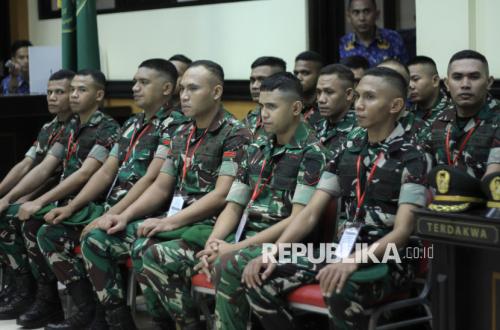
Debate regarding the authority of courts in handling cases involving TNI personnel has emerged in the public sphere. A frequent question is whether a case should be examined in a general court or a military court.
Professor of Criminal Law at Pancasila University, Agus Surono, explained that it is important for the public to understand the legal basis and system governing such authority. The aim is to prevent misunderstandings in assessing the ongoing law enforcement process.
“Constitutionally, the norms regarding the judicial system in Indonesia are regulated in Article 24 paragraph (2) of the 1945 Constitution, which affirms the existence of four judicial environments under the Supreme Court, one of which is the military court,” said Agus to media personnel in Jakarta on Tuesday (28/4/2026).
According to him, this provision is further reinforced in Law Number 48 of 2009 on Judicial Power as the general foundation for the organisation of judicial power in Indonesia. Meanwhile, more specific regulations regarding military courts to date still refer to Law Number 31 of 1997, which remains in force as positive law.
“Thus, the existence and authority of military courts have a strong legal basis, both constitutionally and in the applicable legislation,” Agus stated.
He said that in practice, the military legal system has characteristics that differ from the civilian system, particularly in terms of the speed of case handling. In cases that have attracted public attention, Agus continued, the swift steps taken by the apparatus, including the detention of rogue soldiers in a short time, demonstrate the effectiveness of the military’s internal mechanisms.
Agus acknowledged that there is often a perception that military courts tend to impose light punishments or protect their members. However, various legal facts show the opposite. “In many cases, there are actually aggravated punishments for perpetrators from the military, including additional sanctions such as dishonourable discharge and revocation of pension rights,” Agus said.