
Criminal Law Expert Commends Agriculture Minister Amran's Decisive Action Against Food Mafia as Rightful and Pro-People
Agriculture Minister Amran Sulaiman’s firm steps in dismantling food mafia practices have received support from various quarters, including academics and criminal law experts. Enforcement actions against rice mafia, counterfeit fertilisers, and cooking oil manipulation are viewed as demonstrating the state’s commitment to farmers and consumers.
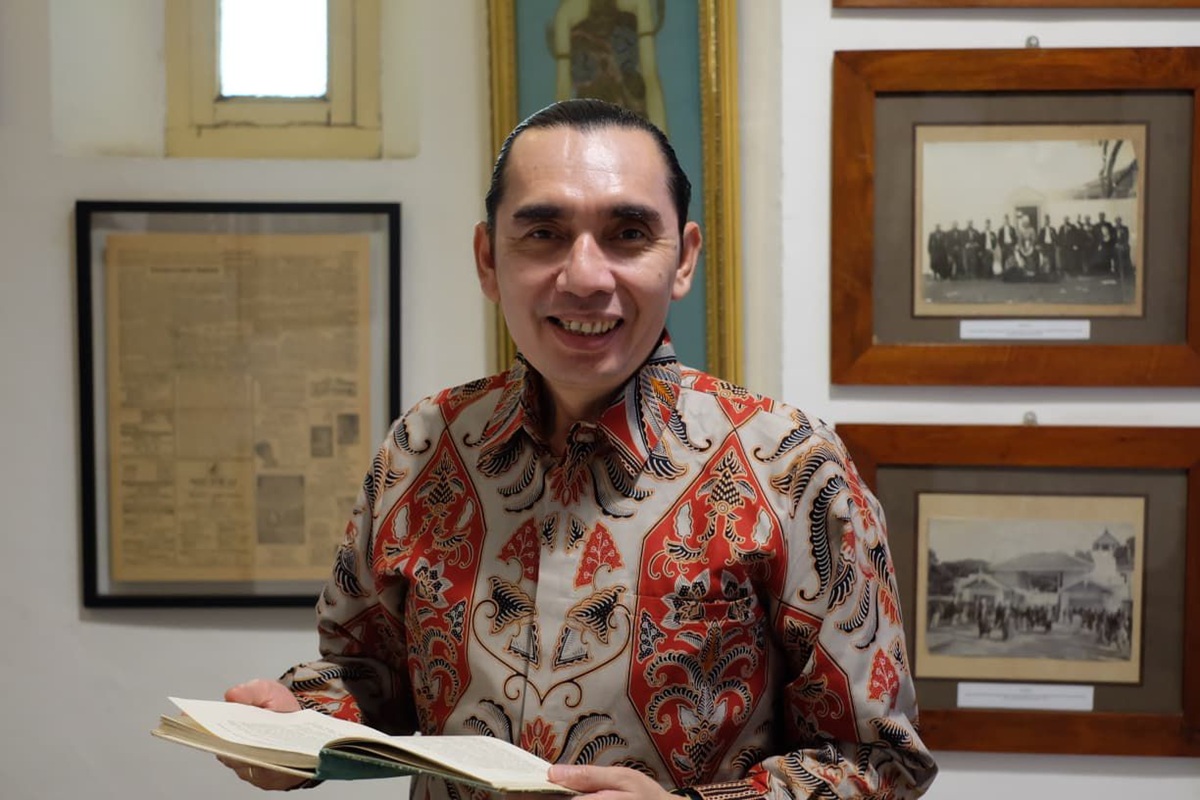
Azmi Syahputra, a criminal law expert at Trisakti University, assessed Agriculture Minister Amran’s steps in dismantling food mafia practices as appropriate and requiring close oversight until completion.
According to Azmi, food mafia is not merely ordinary commercial fraud but constitutes economic crime with widespread impact on society and state stability.
“Food mafia practices cause serious harm to the public because they concern basic necessities. When rice adulteration, distribution manipulation, illegal practices including counterfeit fertilisers, price manipulation, and cooking oil hoarding occur, the impact extends beyond economic instability and state losses to include social dimensions and national food security,” Azmi stated on Saturday (23 May 2026).
He noted that Agriculture Minister Amran’s direct involvement of law enforcement agencies demonstrated government seriousness in breaking food cartel networks that have harmed both farmers and consumers.
“Such firmness is indeed necessary. Food mafia cannot be addressed through conventional approaches because they operate systematically and in an organised manner. Therefore, law enforcement must be firm, measured, and transparent to produce a deterrent effect,” he said.
Azmi assessed that Agriculture Minister Amran’s courage in uncovering various major cases demonstrated a strong commitment to establishing clean and transparent food governance.
One major case receiving significant attention involved a scandal regarding adulterated rice brands not meeting quality standards, estimated to cause public losses of approximately Rp99–100 trillion annually.
In that case, hundreds of premium and medium rice brands were found not meeting quality standards, weight, or maximum retail price requirements. Additionally, SPHP rice was discovered being repackaged and resold as premium rice at higher prices.
According to Azmi, such practices can be categorised as consumer fraud.
“If the label indicates premium but quality does not match, then clearly consumers are harmed. The state is obliged to provide legal protection,” he stated.
He also highlighted the uncovering of counterfeit fertiliser distribution causing farmer losses of Rp3.2–3.3 trillion. In that case, fertilisers lacking nutrient elements and essential substances were discovered being sold to farmers, with perpetrators now designated as suspects.
“This is extremely dangerous because smallholder farmers are the victims. They have incurred costs, even some using agricultural credit facilities, but harvest failed due to counterfeit fertiliser. Therefore, criminal prosecution must be pursued maximally,” he said.
Azmi also appreciated Agriculture Minister Amran’s internal housekeeping measures against Agriculture Ministry officials involved in food mafia.
According to him, such steps demonstrated law enforcement conducted impartially.
“This is important. When enforcement also targets internal actors, the public perceives seriousness and integrity in food governance reform,” he explained.
He added that food mafia must be viewed as extraordinary crime because its impact is directly felt by the broad population.
“When food is manipulated, many people are affected. Therefore, Agriculture Minister Amran’s consistent steps in uncovering food mafia deserve appreciation and support,” Azmi concluded.
The government continues strengthening its fight against food mafia, fertiliser mafia, distribution manipulation, and illegal land control that have harmed people and the state for years.
President Prabowo Subianto reaffirmed his commitment to eradicating food mafia.
One major case addressed involved discovery of five types of counterfeit fertiliser circulating in Central Java, with potential farmer losses reaching Rp3.2 trillion nationally.
Garlic prices have been attracting attention due to showing upward trends.
The Agriculture Ministry confirmed smallholder livestock farmers remain the top priority in developing Indonesia’s poultry industry.
The Agriculture Ministry, through its Directorate General of Livestock and Animal Health, is accelerating stabilisation of layer chicken farming amidst egg price fluctuations.