
Criminal Expert Explains the Status of the Gratification Giver in the 'Ghost Money' Case Involving NTB DPRD
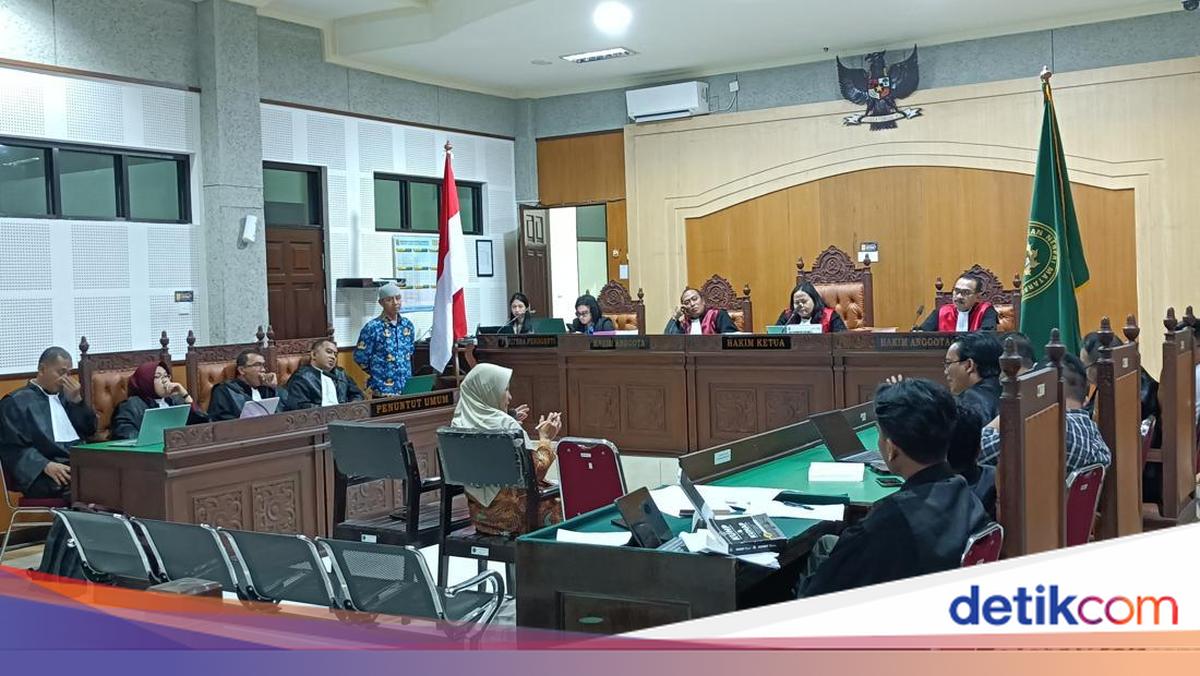
Prosecutors called Lucky Endrawati, a lecturer in criminal law at Universitas Brawijaya, Malang, as an expert witness in the continued case of ‘ghost money’ gratification that implicates three NTB DPRD members at the Mataram Corruption Court (Tipikor).
The three defendants are Hamdan Kasim, Indra Jaya Usman, and Muhammad Nashib Ikroman. In the proceedings, Lucky explained that the giver of gratification in any case can be punished, though under certain conditions they may not be punished.
The explanation was given in response to questions from the defence lawyers for the three defendants regarding NTB DPRD members who received money and then returned it to the prosecutor. The defence asked whether the party who received the money and handed it back is a criminal, and should be held accountable.
Lucky said the party who carried the money must still be held accountable. “Yes, because they were the ones who carried it,” he said on Wednesday (20 May 2026).
He explained that the money returned can also be used as evidence of criminal activity, even though the witness who handed over the money is not automatically regarded as having committed a crime.
Furthermore, Lucky said that a person who receives gratification can have their fault erased if the money received is returned to the Corruption Eradication Commission (KPK) no later than 30 days from receipt. “If they report, ‘this is me receiving gratification’. Then that would erase the fault,” he said.
According to him, the status of the returned money automatically transfers ownership to the KPK, so it does not become criminal evidence. In such a case, the person who gave the money to the recipient cannot be punished.
“Can the person who is said to be the source of the money be punished? No,” he added.
However, the money giver can be punished in a gratification case if the recipient fails to report to the KPK within 30 days of receipt.
“Regarding gratification, there are already elements to be tested. Namely, it has been reported to the KPK within 30 days. That is used as a reason for absolution or as a reason to redeem the fault,” he said.
“If that did not happen, the triggering condition does not occur, then can this be punished? Certainly it can. Because the recipient did not have a reason to erase their wrongdoing,” he added.
As is known, the three defendants are accused of being the givers of gratification to several NTB DPRD members with amounts in the hundreds of millions of rupiah. The money-distribution case within the NTB DPRD circle began with the Desa Berdaya programme. The programme is one of the NTB Governor Lalu Muhammad Iqbal’s priority programmes, funded at Rp76 billion from the governor’s directive. Iqbal assigned the programme to be undertaken by elected NTB DPRD members for the 2024-2029 term, asking the three defendants to socialise it to other NTB DPRD members.