
Creative Industry Players Build Collaborative Spaces Through Coffee Business to Survive Crisis
The Covid-119 pandemic that struck several years ago was a heavy blow to various economic sectors, including the creative industry, which had long relied on face-to-face activities and event organising.
Many business owners were forced to adapt to maintain their businesses amidst mobility restrictions and changes in consumer behaviour. Amidst this pressure, several creative industry players have instead found new opportunities through business diversification. One sector deemed capable of surviving and even growing post-pandemic is food and beverages (F&B), particularly businesses based on experience and community that can meet the public’s need for comfortable interaction spaces.
Changes in post-pandemic consumption patterns have also encouraged the emergence of business concepts that prioritise emotional experience over mere products. Coffee shops, for example, are now developing into creative spaces and gathering points for various communities, simultaneously serving as a platform for collaboration that strengthens the creative industry ecosystem in various regions.
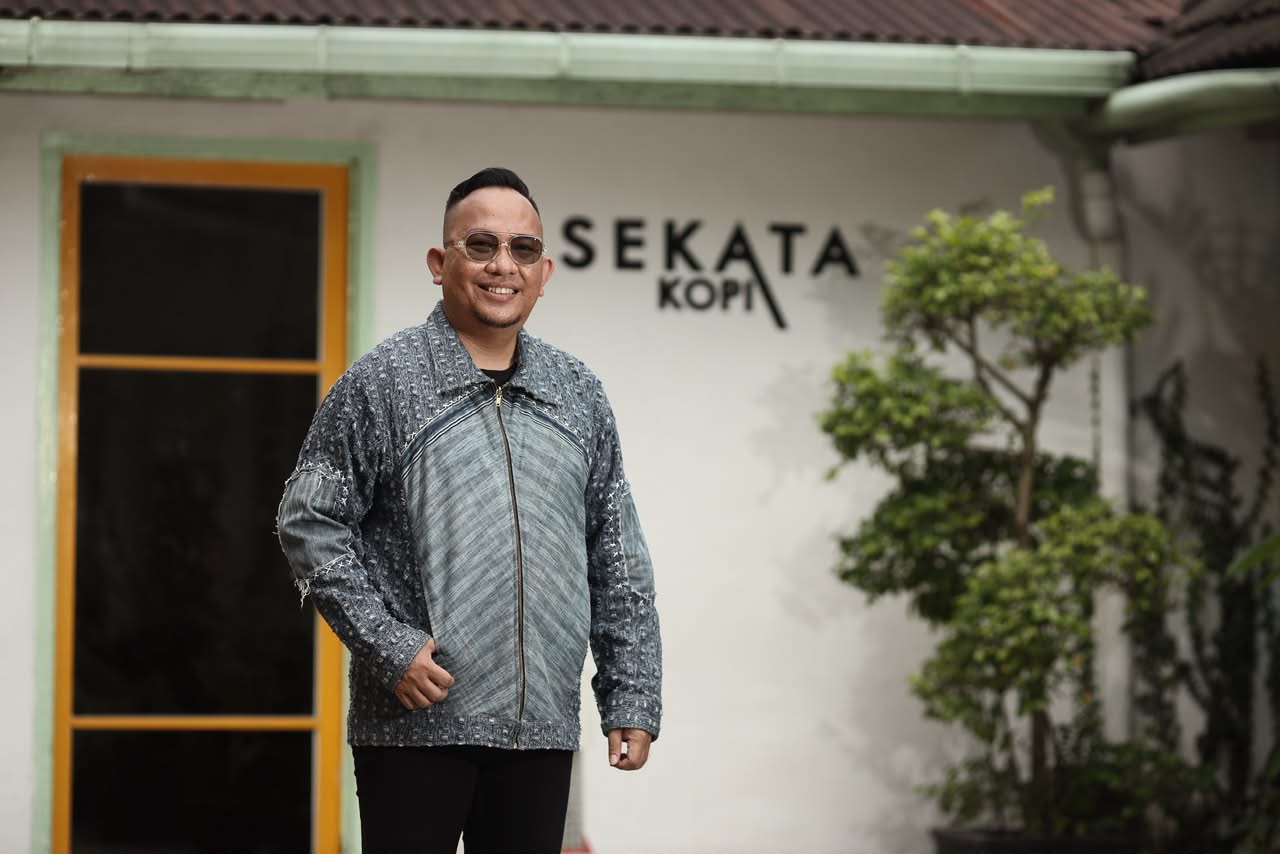
This phenomenon is reflected in the journey of Muhammad David, a businessman from Medan who previously operated in the event organiser (EO) sector. When the pandemic hit the events industry, he saw a new opportunity in the F&B sector by establishing Sekata Kopi, a coffee shop that adopts a ‘Second Home’ concept for its visitors.
The decision to pivot to the F&B industry was made through thorough research. Before starting the business, David studied various coffee shop business models by visiting 15 outlets in Jakarta and five outlets in Medan. This research was conducted to design an efficient business with measurable investment while remaining highly competitive in an increasingly crowded market.
“I sat at a roadside seafood stall and saw they only had six employees, yet their turnover was comparable to ours, which requires billions of rupiah in capital. From that, I saw that building an F&B business does not require massive amounts of money. What is most important is research and the right concept,” said David on Saturday (20/6/2026).
Amidst the proliferation of coffee shops in Medan, Sekata Kopi chose to build differentiation through a more personal approach. A warm and comfortable atmosphere is implemented so that visitors feel as if they are in their own homes. From barista service to interior design, all elements are designed to create an experience that builds an emotional connection with consumers.
“We focus on how to make it feel like home. From the baristas welcoming customers like friends. So when they come here, they feel, ‘Okay, I am returning home.’ If I am not at home, my second home is Sekata Kopi. We do not just sell coffee; our hashtag is ‘second home’,” he explained.
This approach has proven effective in building a community. Various groups, ranging from sports communities to other local groups, regularly use Sekata Kopi as a meeting place. This shows that F&B businesses now function not only as consumption venues but also as creative spaces that strengthen social interaction within society.
In addition to relying on a community concept, innovation is also a key factor in maintaining business relevance. One step taken is providing a dedicated area for users of alternative tobacco products, such as electronic cigarettes (vapes) and heated tobacco products. This initiative arose from observing the increasingly diverse changes in consumer preferences.
According to David, the presence of such an area is considered able to support the comfort of all visitors because the use of alternative tobacco products is deemed different from conventional cigarettes.
“Alternative tobacco products are not like cigarettes; they do not produce odour or smoke. Therefore, they are suitable for our coffee shop so that other visitors will not be disturbed,” he said.
Positive market responses to these innovations have encouraged management to continue developing available facilities. At the same time, business expansion is being carried out through the presence of outlets in shopping centres, with plans to expand reach to various cities in Indonesia while maintaining local wisdom as a primary identity.
For David, the success of a business is determined not only by the courage to seize opportunities but also by the ability to prepare mature business planning. He believes that the execution of an idea supported by research and a clear business plan is essential capital for creative industry players to survive and thrive amidst changing times.
“The most important thing is that when you have an idea, you must create a business plan. Whatever the business, no matter how small, a business plan must be made. And nothing is impossible,” he concluded.