
Creative Financing Becomes North Luwu Regency’s Strategy for Building Roads in Remote Areas
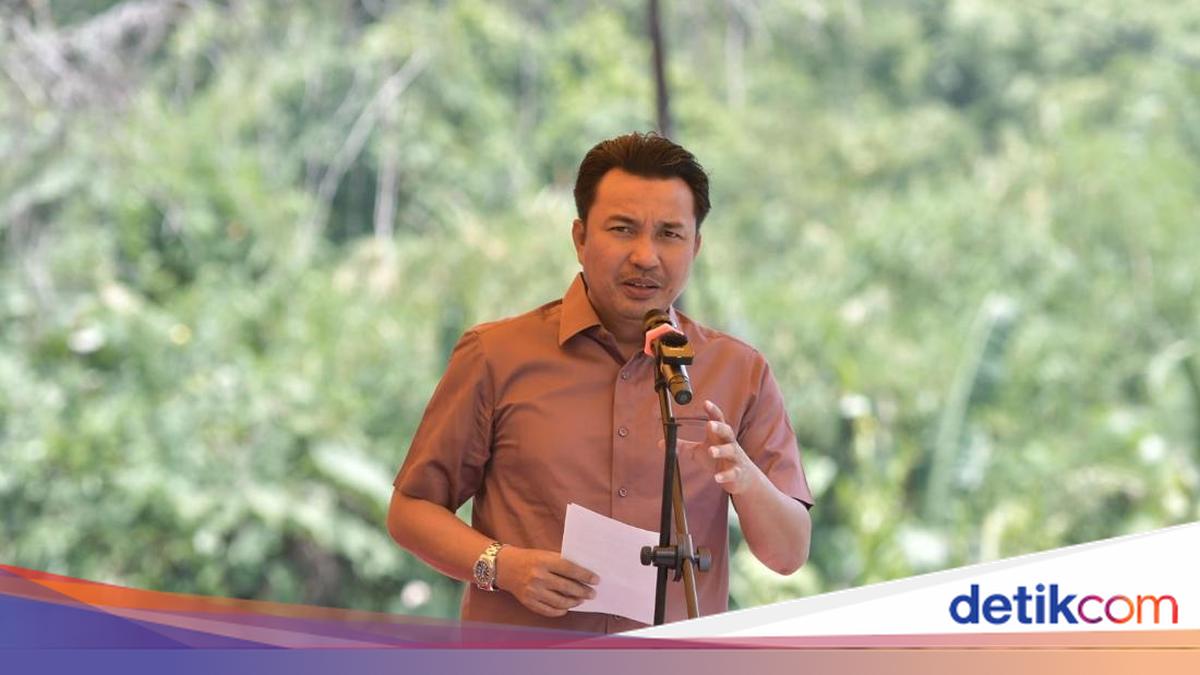
Road construction in North Luwu Regency (Lutra), South Sulawesi, has often drawn criticism, particularly over infrastructure development in the disadvantaged, frontier and outermost (3T) areas of Rongkong, Seko and Rampi.
Some have argued that development in these areas has not been funded from the regional budget (APBD), but solely by the provincial and central governments, as well as third parties through corporate social responsibility (CSR) programmes.
Rather than rejecting the criticism, North Luwu Regent Andi Abdullah Rahim thanked those who had raised it.
Rahim did not dispute the claim. Instead, he said the criticism offered an opportunity to explain the broader strategy he is pursuing: attracting non-APBD funding for the benefit of North Luwu residents through effective leadership.
“There was criticism about this recently, and I explained that it is called the creative financing method: finding substantial funding from the province, the central government and CSR for our programmes. If we rely on the APBD alone, our region will remain as it is,” Rahim said in a written statement on Thursday (15 October 2026).
Rahim said the local government was adopting a funding approach known as creative financing, which he described as a way of bringing development funds from the central government to the regions.
He said the approach should be understood so that North Luwu residents could better grasp the direction and policies guiding development in the regency, also known as Bumi La Maranginang.
“Through creative financing, the limited fiscal capacity of North Luwu’s APBD—which would otherwise have to shoulder the entire cost of physical development, often amounting to billions of rupiah—can be addressed intelligently. If a regent relies only on the APBD, infrastructure development could move very slowly or even stall,” he said.
Rahim said creative financing could bridge the APBD’s limited capacity to meet the cost of physical projects, which can run into billions of rupiah. Relying solely on the local budget, he said, risked slowing infrastructure development or bringing it to a standstill.
“Only 9–12 kilometres remain to be asphalted in Seko, out of hundreds of kilometres in total. How could we do that with the regional budget? The cost per kilometre alone reaches Rp10 billion because transporting materials is difficult, the terrain is challenging and there are other complications, making it more expensive. If we are not resourceful, Seko will remain as it is,” he said.
Rahim therefore stressed the importance of local government creativity in securing funding support from the central and provincial governments.
“This is why we need to understand the creative financing strategy we are applying. With a high degree of creativity, we do not simply sit and wait; we actively pursue opportunities at the provincial and central levels,” he added.
Rahim said creative financing required extensive networks and skilful lobbying. He said it could bring programmes and assistance to North Luwu without placing the burden on the APBD.
“Equitable and fair development, particularly in remote areas such as Rongkong, Seko and Rampi, cannot rely on the APBD alone. We must move quickly to accelerate infrastructure development through strategic cross-sector collaboration. Limited fiscal capacity requires us to bring various parties together to deliver fair development,” he said.
Rahim added that criticism claiming the 3T areas were being developed without APBD funding was, in his view, evidence of effective diplomacy on behalf of North Luwu. He cited Rongkong as one area benefiting from the creative financing strategy.
“Thankfully, several roads in the district have now been built through collaboration with investors, with corporate CSR funds effectively channelled to open up road access there, as well as in Seko. The Bailey bridge is another example of building a strong relationship with the provincial government, which enabled the bridge to be delivered,” he said.
Rahim also discussed efforts to address persistent flooding in Malangke, North Luwu.
He said creative financing had helped tackle the annual flooding problem by securing provincial budget funding to repair embankments.
“Creative financing is a strategic form of adaptation in response to the direction set by the central government. It involves accelerating the implementation of various central policies, including building multi-party collaboration through close co-operation. This is how we creatively interpret and follow up on each central government policy,” he said.
Rahim stressed that infrastructure development required strategy and collaboration with various parties to secure funding.
“In essence, we build with intelligence, commitment and strong networks at every level of government. Criticism of the local government is, at its heart, a sign of concern. Infrastructure is built through skilful lobbying with the central and provincial governments, as well as investors,” he concluded.
Source: jawawa.id (https://jawawa.id/newsitem/creative-financing-becomes-north-luwu-regencys-strategy-for-building-roads-in-remote-areas-1792054356)
Originally published by detikcom (https://news.detik.com/berita/d-8708455/creative-financing-jadi-strategi-pemkab-lutra-bangun-jalan-di-wilayah-3t), translated from Indonesian