
Creative Economy Ministry trains creative businesses to develop Banyuwangi batik
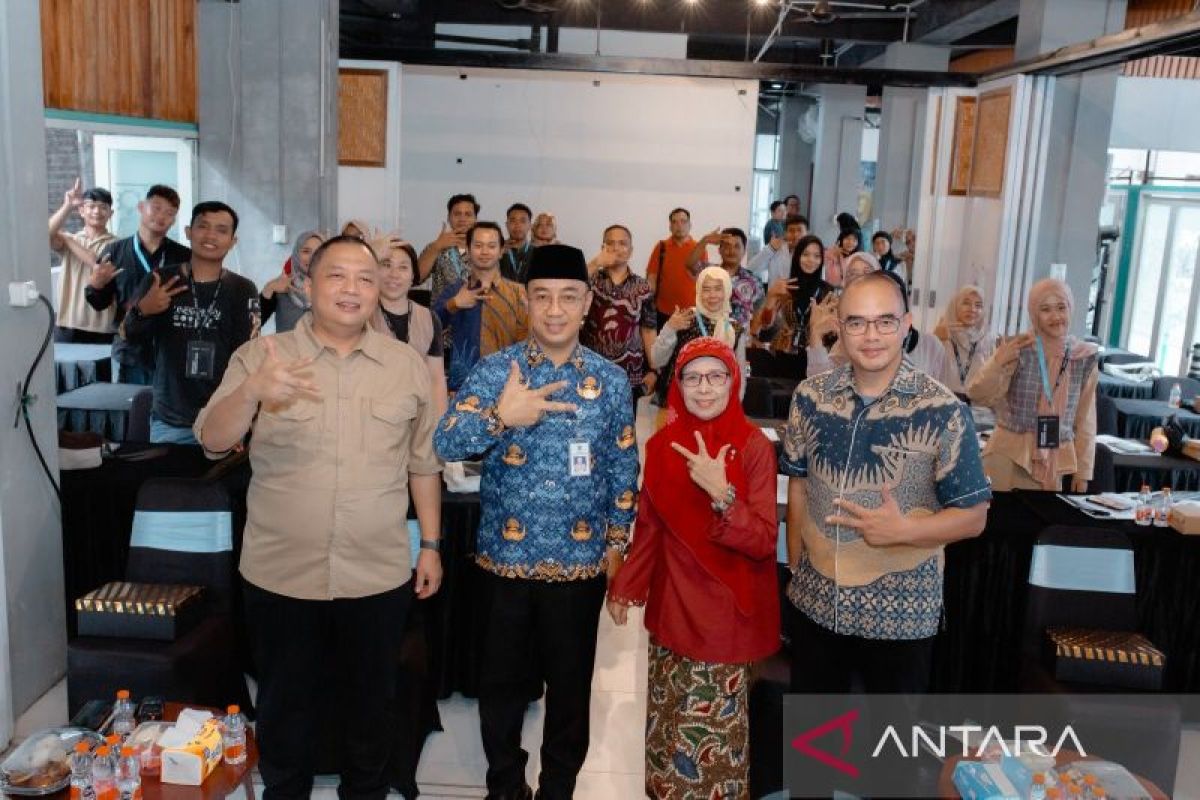
Jakarta (ANTARA) – The Ministry of Creative Economy (Kemenekraf) is developing the potential of Banyuwangi’s creative economy practitioners through competency-based training and competency certification for batik motif designers, with the aim of enabling them to produce innovative and competitive work.
R Adi Mukhtar Rivaik, head of Kemenekraf’s Centre for Creative Economy Human Resources Development, said in a statement received in Jakarta on Wednesday that the training, delivered through the centre, forms part of the Creative Hub Activation programme. The programme is one of the government’s efforts to make better use of regional creative spaces while building the capacity of the creative economy workforce.
“Banyuwangi is one of the regions with great potential because its creative economy ecosystem has developed well. Creative spaces therefore need to be continually optimised through activities that build people’s capacity and competencies,” Adi said.
He said the programme was not focused on constructing new buildings or facilities, but on making better use of existing creative spaces as hubs for activities, collaboration and the development of creative economy practitioners’ potential.
The competency-based training and certification scheme for batik motif designers is designed to strengthen participants’ knowledge, skills and work attitudes, with guidance from experienced instructors of national standing.
The training will take place on 10–11 November 2026, followed by competency assessments on 12 November 2026.
H Hartono, acting head of the Banyuwangi Regency Tourism and Culture Office, said Banyuwangi was rich in batik culture, with a variety of motifs reflecting the identity, philosophy and characteristics of the local community.
In addition to the widely known Gajah Oling motif, Banyuwangi has dozens of other batik designs inspired by cultural values, community life and the region’s natural beauty.
This diversity offers potential that should be further developed and preserved by improving the creativity and skills of those working in the batik industry.
“Banyuwangi’s batik motifs are not only visually beautiful, but also carry philosophical meanings closely connected to the region’s culture and natural beauty. We hope this programme runs smoothly and has a positive impact, particularly by improving the skills of Banyuwangi’s batik artisans and motif designers,” Hartono said.
He said the programme was expected not only to improve individual competencies, but also to encourage new batik designs rooted in local cultural identity while remaining competitive in wider markets.
Through cooperation between Kemenekraf, local government, Creative Hub managers and creative economy practitioners, the programme is expected to strengthen Creative Hubs as spaces for capacity-building, knowledge-sharing and collaboration among creative workers.
Kemenekraf, he added, was committed to continuing to promote the better use of creative spaces across the country through its Creative Hub Activation programme, tailored to each region’s potential and needs.
Creative Hubs are intended to become more than physical facilities: they are expected to develop into productive spaces connecting local potential with opportunities for sustainable growth in the creative economy.
Source: jawawa.id (https://jawawa.id/newsitem/creative-economy-ministry-trains-creative-businesses-to-develop-banyuwangi-batik-1794369148)
Originally published by Antara (Indonesian) (https://www.antaranews.com/berita/5845707/kemenekraf-latih-pelaku-ekraf-kembangkan-potensi-batik-banyuwangi), translated from Indonesian