
Creative Economy Ministry to Discuss MSME Final Income Tax Implementation with Associations
Jakarta (ANTARA) - The Ministry of Creative Economy will discuss the implementation of the 0.5 per cent Final Income Tax (PPh Final) provisions for micro, small, and medium enterprises (MSMEs) under Government Regulation No. 20 of 2026 with relevant business associations.
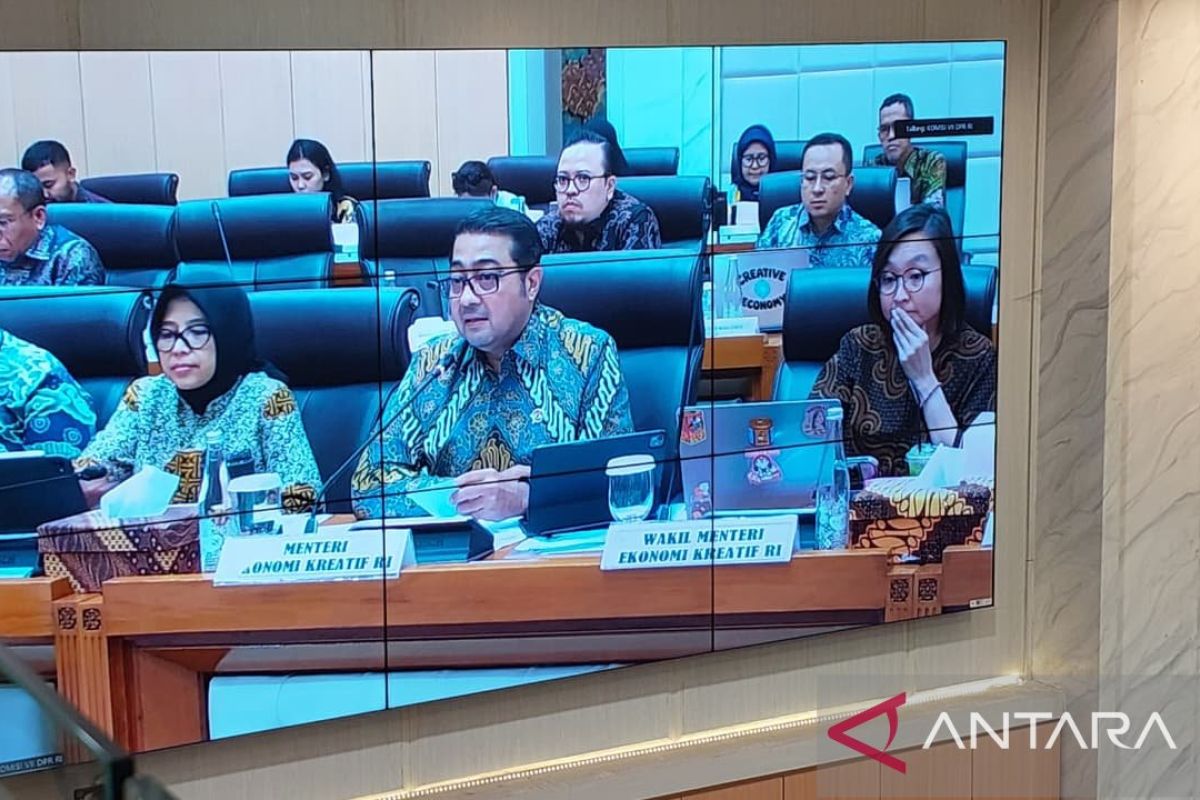
“At this time, I have instructed the 15 directors overseeing 21 or 17 creative economy sub-sectors to immediately communicate with associations, as our approach will be more comprehensive once we receive input from them,” stated the Minister of Creative Economy, Teuku Riefky Harsya, during a working meeting with Commission VII of the Indonesian House of Representatives (DPR RI) at the Parliament Complex, Senayan, Jakarta, on Tuesday.
The Ministry of Creative Economy will also coordinate with the Ministry of Finance to ensure that the concerns of creative economy entrepreneurs regarding the implementation of new MSME Final Income Tax rules do not affect business continuity.
According to Government Regulation (PP) No. 20 of 2026, which amends Government Regulation No. 55 of 2022 regarding adjustments to Income Tax regulations, the MSME Final Income Tax facility is now only applicable to individual taxpayers, sole proprietorships established by one person, and cooperatives.
“PP 20/2026 clarifies that several professions classified as independent work are not eligible for the MSME Income Tax facility; this data includes musicians, artists, influencers, selebgrams, content creators, advertising agents, and so on,” he said.
According to him, these creative entrepreneurs will be subject to income tax in accordance with the provisions for individual or personal income tax.
He also stated that the Ministry of Creative Economy will monitor the implementation of the MSME Final Income Tax alongside relevant parties.
“We will certainly monitor and coordinate with the ecosystem so that if there are matters we need to voice or coordinate across ministries, we will do so. We will provide further updates once we have coordinated with the associations,” he explained.
He added that the Ministry of Creative Economy needs to convey the differences in business models and business forms within the creative economy compared to other types of industries.
“They should not apply a one-size-fits-all approach. After we meet with creative economy players, if they find the regulations unacceptable, we can bring those concerns back to the Ministry of Finance,” he concluded.