
Creative Economy Ministry pushes new tech talent to produce competitive products
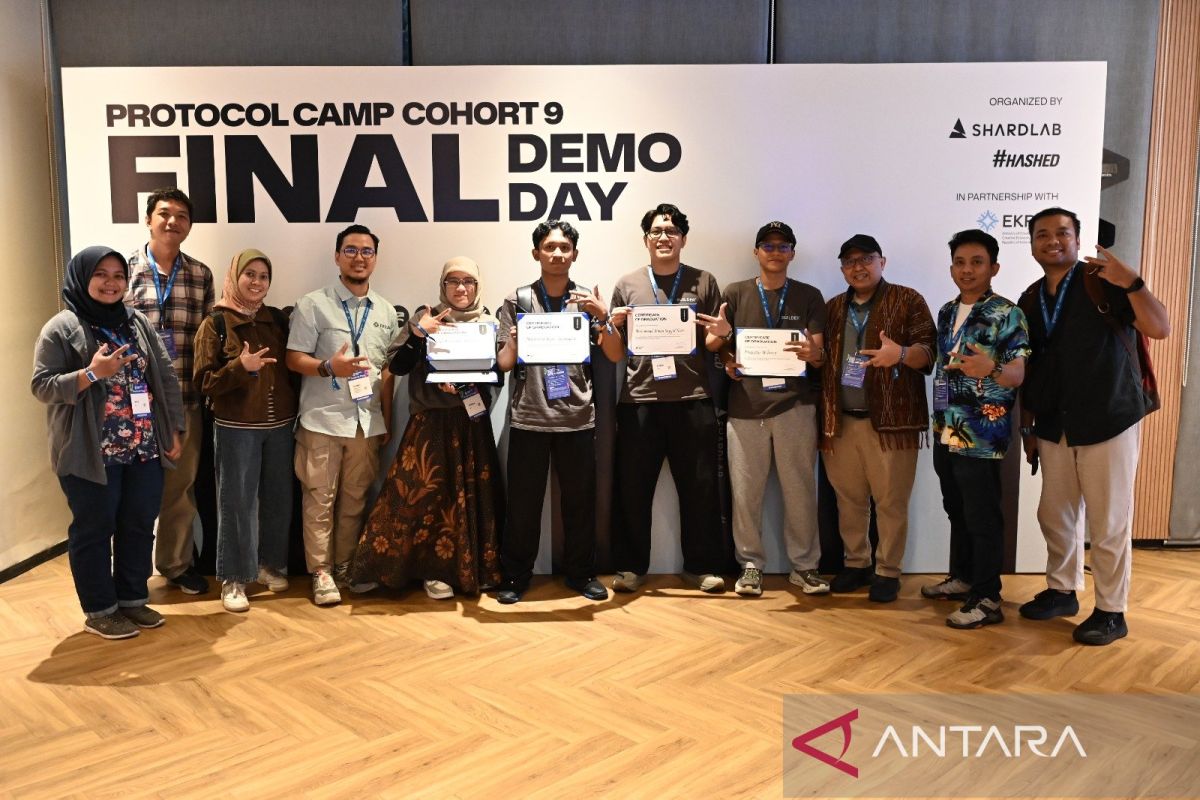
The Creative Economy Ministry (Kemenekraf) is encouraging the strengthening of new technology talent so that Indonesia is not merely a market for technological developments, but is able to produce products, intellectual property and digital business models that are globally competitive.
Creative Economy Minister Teuku Riefky Harsya said talent development in blockchain, Web3 and other emerging technologies is important to create new sources of economic growth while increasing the added value of Indonesia’s creative economy.
“The government wants Indonesia to be not only a market, but also a builder. We want more Indonesian founders, developers, creators and entrepreneurs to build world-class solutions and bring intellectual property from the local level to become national champions and be able to compete in the global market,” Riefky said in a statement received on Wednesday.
One of these efforts is being carried out through collaboration between Kemenekraf and ShardLab.Ltd in the Final Demo Day of Protocol Camp Cohort 9, held as part of the Coinfest Asia 2026 series in Bali.
The Protocol Camp programme is a 12-week bootcamp and mentorship scheme that brings together builders from various Asian countries. Six Indonesian talents took part in Cohort 9, having previously undergone the Mid Demo stage in Seoul in July 2026.
Riefky said strengthening technology talent is in line with the Creative Economy Master Plan (Rindekraf) 2026-2045, which places New Technology as one of the creative economy subsectors. The subsector includes blockchain, artificial intelligence (AI), Internet of Things (IoT), cyber security, robotics, semiconductors and quantum computing.
According to him, new technology no longer functions merely as supporting technology, but can become a source of new economic value creation.
“New technologies such as blockchain and AI are no longer seen as supporting technologies, but as part of the development of the creative economy ecosystem that can create new economic value,” he said.
Deputy for Digital Creativity and Technology at Kemenekraf Muhammad Neil El Himam said the next challenge is to ensure that technological capabilities are translated into products and business models that deliver economic impact.
“Our focus must not stop at the technology itself, but on how that technology is translated into products, business models and solutions that provide real impact and create added value for the creative economy,” he said.
The Final Demo Day of Cohort 9 brought together 10 builder teams from a number of Asian countries to present products developed during the programme. One of them was Serenade Data from Indonesia, which developed a gamification-based financial literacy platform for children through savings and investment simulations.
The presence of Indonesian talent in the programme is considered able to open access to mentors, industry networks and the regional technology ecosystem.
Thus, the development of new technology is directed not only at increasing the number of users domestically, but also at creating Indonesian digital companies and products capable of entering the Asian and global markets.