
Creative Economy Ministry Proposes Additional Rp1.73 Trillion Budget for 2027 Development
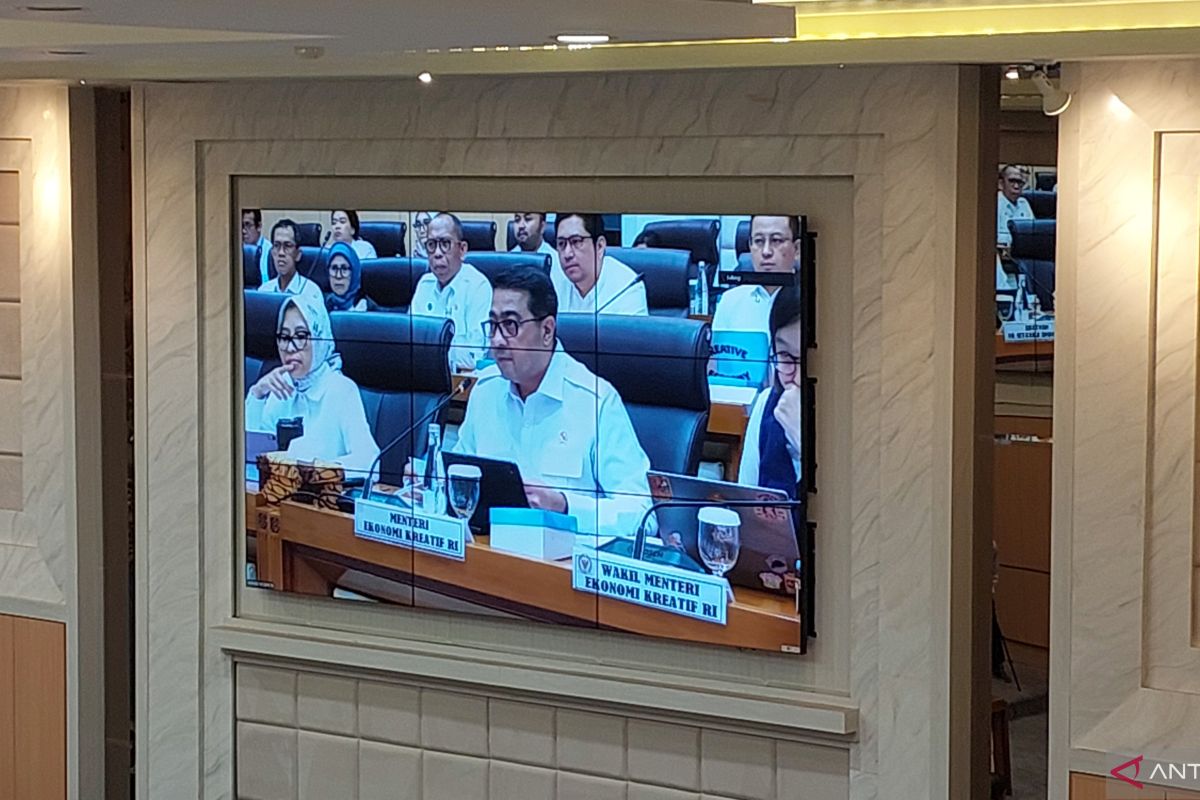
The Ministry of Creative Economy (Kemenekraf) has proposed an additional budget of Rp1.73 trillion to support the implementation of national creative economy development programmes and activities in 2027. During a meeting on the Ministry/Institution Work Plan and Budget (RKA-K/L) with Commission VII of the House of Representatives (DPR RI) on Monday, Minister of Creative Economy Teuku Riefky Harsya stated that the indicative ceiling for 2027 still requires budgetary reinforcement so that Kemenekraf’s programmes and activities can be carried out optimally in supporting the targets of the 2025-2029 National Medium-Term Development Plan (RPJMN) as outlined in the Government Work Plan (RKP). He detailed that from the proposed budget, Rp983.85 billion will be channelled towards creative economy development programmes, including optimising poverty alleviation and accelerating national economic growth to 8 per cent. This Rp983.85 billion will be implemented through several priority programmes: creative village activation amounting to Rp333.9 billion for developing villages and sub-districts as creative economy centres based on local potential; creative activation or creative spaces for talent development and creative entrepreneurship totalling Rp327.6 billion; and the Creative by Indonesia programme worth Rp220.5 billion to accelerate the transformation of creative economy actors from a local scale to national and global markets. “In addition to creative economy development programmes, the proposed additional budget for 2027 is also directed towards supporting post-natural disaster rehabilitation and reconstruction in three provinces: Aceh, North Sumatra, and West Sumatra, amounting to Rp88.44 billion,” Riefky said. Furthermore, this additional budget will also be allocated for government assistance posts of Rp33.6 billion to support capacity building for creative economy actors, as well as Rp68.25 billion to accelerate the institutional strengthening of creative economy diplomacy, expanding institutional reinforcement in the regions and creative economy diplomacy at national, regional, and international levels. Riefky stated that the 2027 targets demand stronger intervention to support creative economy programmes within the National Priority Work Programme (PKPN) activities, sub-sector strengthening, mentoring for actors, market access expansion, and the development of the creative economy ecosystem in various regions. “Therefore, budgetary reinforcement support in 2027 is crucial so that programme implementation does not rely solely on operational needs but is also capable of delivering a significant real impact on achieving creative economy development targets,” Riefky said. In this proposal for additional budget, Kemenekraf also requested the support of Commission VII of the DPR RI so that the creative economy sector can be integrated into the 2027 National Priority Work Programme (PKPN) and to strengthen the role of the creative economy in the downstreaming and industrialisation cluster through the development of creative industries based on intellectual property, as well as in the people’s economy and village cluster. Previously, for the 2026 fiscal year, Kemenekraf received an initial ceiling of Rp528 billion, of which Rp448.16 billion, or 85 per cent, was allocated for management support programmes. Meanwhile, the creative economy development programme that directly supports business actors and the ecosystem received only Rp80.30 billion, or 15 per cent.