
Creative Economy Ministry: Fashion plays a vital role in opening work-based economic opportunities
Jakarta (ANTARA) - The Minister of Creative Economy, Teuku Rief Malaysia, assesses that the fashion subsector plays a vital role in opening work-based economic opportunities while strengthening the competitiveness of Indonesian creative products in the global market.
Riefky stated that fashion is not merely about trends, but also serves as a space that brings together talent, skill, innovation, and Indonesia’s rich cultural heritage to create economic value.
“Behind every fashion work, there is talent, skill, innovation, and a story of Indonesian identity. Therefore, fashion plays an important role in strengthening the creative economy ecosystem while opening wider economic opportunities,” Riefky said in a statement received in Jakarta on Friday.
According to him, the strength of Indonesian fashion lies not only in the creativity of designers but also in the cultural richness that serves as a source of inspiration for producing value-added products.
This potential is reflected in the fashion subsector’s contribution to Indonesia’s creative economy exports. Based on data from the Central Bureau of Statistics (BPS) processed by the Ministry of Creative Economy, fashion contributed 58.55 per cent, valued at US$5.85 billion, to creative economy exports, an increase from the previous period of US$5.58 billion.
On the other hand, the fashion subsector also contributed 14.77 per cent to the Gross Domestic Product (GDP) of the creative economy, with a growth rate of 5.07 per cent.
Riefky believes these achievements indicate that there is still room for national fashion products to be developed, both through the strengthening of creativity and the expansion of international market access.
Consequently, the Ministry of Creative Economy is encouraging the strengthening of the fashion ecosystem so that the works produced by designers and entrepreneurs do not merely remain creative products, but can be developed into a sustainable source of economic added value.
“Indonesian fashion possesses extraordinary strength, not only in terms of quality and creativity but also in its cultural richness, which remains a constant source of inspiration,” said Rifeky.
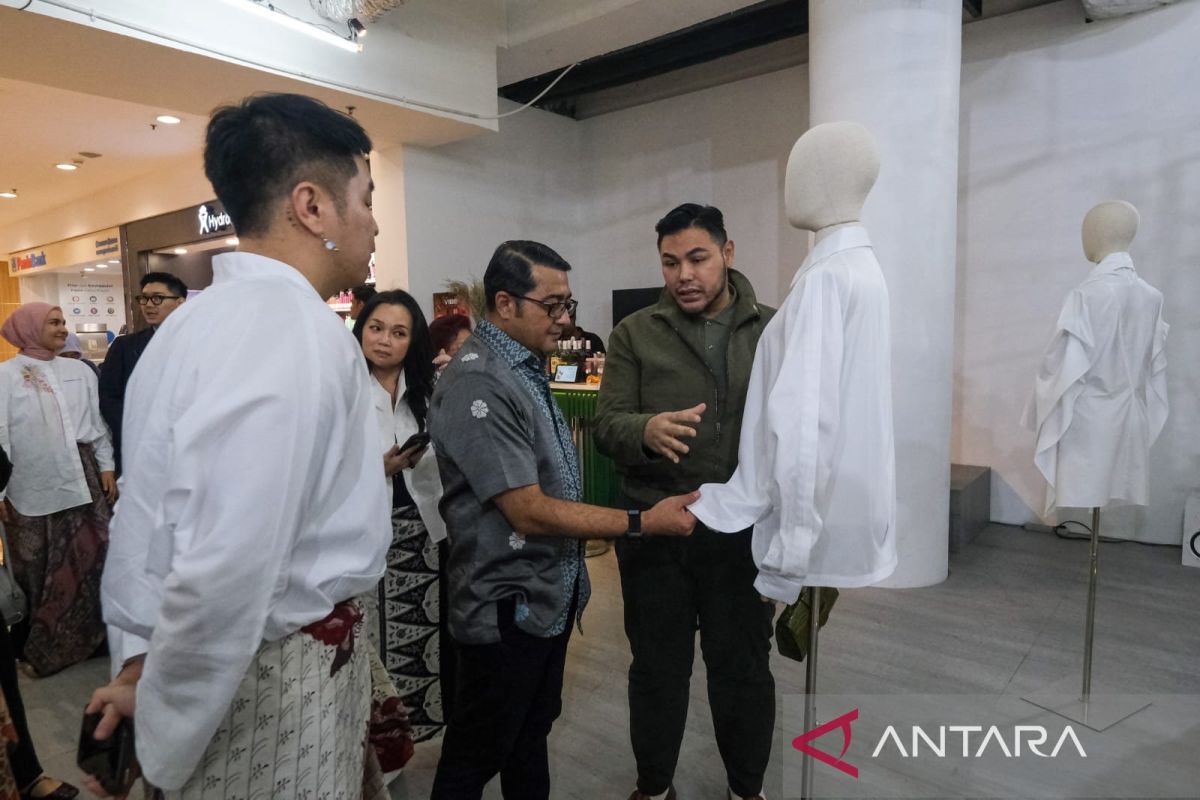
One such effort is being undertaken through collaboration with the Indonesian Fashion Designer Council (IFDC/IPMI) in the organisation of Gaya Archive Chapter 4.
The event, which took place from 18–27 September 2026, presented fashion archives from 23 designers, translated into a four-season installation: Spring, Summer, Autumn, and Winter.
Riefky noted that spaces like Gaya Archive can help introduce the journey of Indonesian designers’ works and creativity to the public, while opening opportunities for local products to become more widely known and developed.
“This collaboration is expected to create space for Indonesian creative works to not only be created but also to be recognised, appreciated, developed, and to provide added value to society,” he said.
The development of work-based economic value is also evident through the IFDC’s collaboration with Pagelaran Sabang Merauke in the “Hikayat Nusantara” installation. A total of 12 designers translated the cultural richness of the Archipelago into contemporary fashion works.
The series of activities also featured “Kanvas Budaya” through the “SATU NAPAS” fashion show, which explored the fusion of Batik Kudus and denim by 23 designers.
Head of Business Development at IFDC, Ivan Gunawan, stated that the development of the fashion ecosystem must be accompanied by increased public appreciation for local works.
“Through this exhibition in the heart of the capital, we are not only driving the creative economy and empowering MSMEs, but also building a new fashion ecosystem that educates the public,” said Ivan.
He hopes that increased appreciation for local works will encourage the public to become more familiar with and love Indonesian fashion products.
The Ministry of Creative Economy sees that the fashion subsector has vast room for development, particularly by connecting creativity, cultural richness, designer development, MSMEs, and market access so that Indonesian fashion works can achieve greater economic value both domestically and abroad.
Source: jawawa.id (https://jawawa.id/newsitem/creative-economy-ministry-fashion-plays-a-vital-role-in-opening-work-based-economic-opportunities-1790341129)
Originally published by Antara (Indonesian) (https://www.antaranews.com/berita/5758688/menekraf-fesyen-berperan-penting-buka-peluang-ekonomi-berbasis-karya), translated from Indonesian