
Creative Economy Ministry accelerates Payakumbuh craft artisans' post-disaster recovery
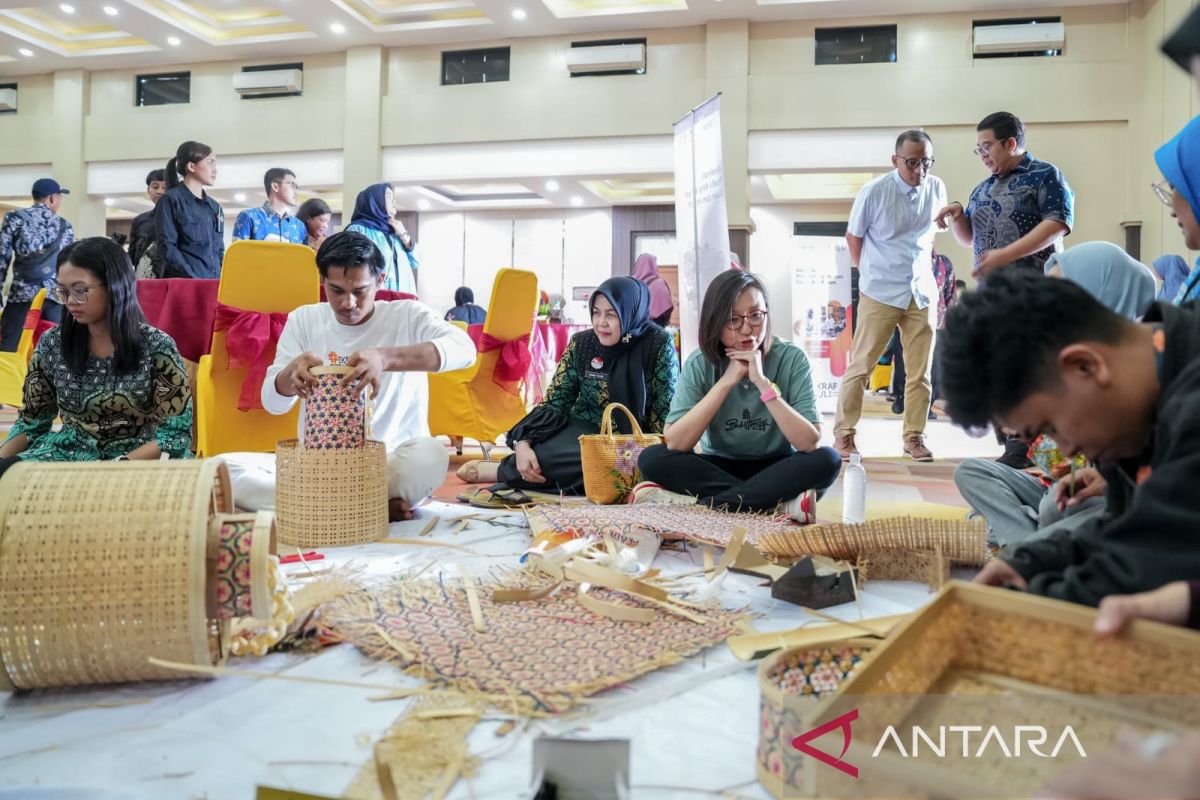
The Ministry of Creative Economy/Creative Economy Agency is continuing to drive post-disaster creative economy recovery in West Sumatra, particularly in Payakumbuh, through its Woven and Embroidery Craft Product Acceleration Programme (Kriyasi) to revive the productivity and competitiveness of local craft practitioners. Deputy Creative Economy Minister Irene Umar said the activity is part of the Ekraf Peduli agenda, reflecting the ministry’s concern and commitment to assisting creative economy actors in recovering, strengthening their businesses, and rising again under the spirit of ‘Pulih Bersama, Bangkit Berdaya’ (Recover Together, Rise Empowered). She noted that sustainable mentoring will ensure the regional craft ecosystem becomes increasingly resilient in facing challenges.
Irene said the weaving and embroidery sector is both a cultural heritage and a potential pillar of the people’s economy in Payakumbuh. In efforts to restore the creative economy in West Sumatra, embroidered and woven products need to be continuously developed so they have added value and become more competitive in both national and international markets. This strengthening of local potential aligns with the national creative economy growth trend. Based on Statistics Indonesia (BPS) data processed by the ministry, the craft subsector continues to show positive performance, with export value rising from 3.47 billion US dollars in January-April 2025 to 3.82 billion US dollars in the same period of 2026. In 2025, the craft subsector also contributed 10.7 percent to the creative economy, with growth of 2.36 percent.
Irene said that for local products to penetrate wider markets, artisans should create products with historical storytelling value and deep meaning so buyers understand the high value behind the physical product. She emphasised that the story behind a product is important so buyers know the reason and meaning behind what they purchase. Without a story, people will only see an item in terms of its beauty and price, whereas handmade goods contain historical value and prayers that can never be replaced by machines. When buyers understand the story behind a product, she is confident local products will not only be highly valued but also able to penetrate wider markets.
The ministry’s Woven Kriyasi Programme collaborates with the Payakumbuh city government to accelerate recovery and improve the capacity of craft business actors affected by the disaster. Mentoring is provided through design development, production skills improvement, and product development suited to market needs. The workshop was attended by 50 participants, consisting of 25 woven craft artisans and 25 embroidery craft artisans. Participants received presentations and hands-on practice from Rumpun Consulting for embroidery products and the Centre for Handicrafts and Batik for woven products.
Through this training, artisans are expected to revitalise materials and craft knowledge through product development relevant to market needs, increase awareness of the importance of design thinking, and improve the quality and added value of their work. All of this is expected to lead to better economic improvement. Maipanis, a participant in the Woven and Embroidery Craft Product Acceleration Programme, said the activity is beneficial not only for knowledge and mentoring but also for motivation to continue innovating and developing woven products with better quality and competitiveness. She expressed hope that through this activity, local craft products can advance further and have greater opportunities to be recognised in wider markets.
Source: jawawa.id (https://jawawa.id/newsitem/creative-economy-ministry-accelerates-payakumbuh-craft-artisans-post-disaster-recovery-1787982758)
Originally published by Antara (Indonesian) (https://www.antaranews.com/berita/5716560/kemenekraf-akselerasi-perajin-kriya-payakumbuh-bangkit-pasca-bencana), translated from Indonesian