
Creative Economy Minister Seeks New ‘Gadis Kretek’ Stories to Take Indonesian Narratives to the World
JAKARTA – Ratih Kumala’s novel Gadis Kretek has shown that stories rooted in local history and culture can reach a global audience. Adapted into a Netflix series, its tale of love, women’s struggles and Indonesia’s kretek cigarette industry entered Netflix’s Top 10 non-English TV series in November 2023.
According to Netflix data for 6–12 November 2023, Gadis Kretek ranked tenth globally, with 1.6 million views in one week. The series also entered the Top 10 in six countries, including Indonesia and Malaysia.
The achievement began with the novel, published in 2012. Ratih spent almost four years writing it, including researching several cities in Central Java, such as Kudus, Magelang and Semarang.
Her extended family’s background in the kretek business also helped inspire the world she created in the novel.
Ratih had imagined that the story might one day appear on screen. At the time, however, Indonesian television was dominated by soap operas, while the historical fiction genre of her novel faced censorship challenges. A series adaptation was not yet a realistic option. Ratih never insisted that the novel had to be adapted, allowing the story to find its own moment. Eleven years later, Gadis Kretek became a Netflix series that reached audiences around the world.
Dasiyah, or Jeng Yah, a woman determined to blend kretek sauce in an industry dominated by men, is one of the story’s central characters. When the novel was adapted into a series released on 2 November 2023, Ratih joined the adaptation team in writing the screenplay. The series was directed by Kamila Andini and Ifa Isfansyah, with Dian Sastrowardoyo playing Dasiyah.
The journey of Gadis Kretek shows how a literary work can grow beyond the page, opening up opportunities for audiovisual adaptations and reaching audiences in different countries.
“Seeing this work embraced by a global audience, and seeing them understand both the story and its context, is what matters most to me,” Ratih said.
“To reach international audiences and leave an impression, a distinctive local character that makes a work stand out is needed. All of this can be designed; it is not just a matter of chance,” added Ratih, who has published six works of fiction.
Similar potential was previously demonstrated by Andrea Hirata’s Laskar Pelangi. Published in 2005, the novel became a national literary phenomenon and was adapted into a film in 2008. In addition, Eka Kurniawan’s works have reached international readers and been translated into dozens of languages.
The Ministry of Creative Economy sees the success of these works as evidence of literature’s potential to develop intellectual property (IP). Through translation, international publishing, and film and series adaptations, writers’ works can generate greater revenue while expanding the reach of Indonesian stories.
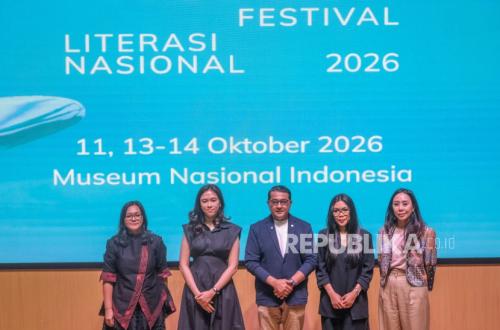
This potential is among the focuses of Literaia: the 2026 National Literacy Festival, held at the National Museum of Indonesia in Jakarta from 11 to 14 October 2026. Organised by the Ministry of Creative Economy, the festival brings together writers, publishers, literacy communities and creative-industry practitioners to discuss developing literary works and opportunities to enter wider markets.
The programme includes sessions on the relationship between literature and film, children’s book development, literary agencies, local comics in international digital markets, and strategies for bringing Indonesian writers to the world stage. Workshops also cover preparing loglines and pitch decks to present works to film producers.
Creative Economy Minister Teuku Riefky Harsya said Indonesia needs more writers who can produce high-quality work and reach readers across borders. He said strengthening the ecosystem is essential so that writers’ work does not stop at book publication, but has the opportunity to develop across different media.
“We want to see more new Andrea Hiratas, new Ratih Kumalas and new Eka Kurniawans. Indonesian writers have a wealth of ideas, imagination and stories that deserve wider recognition. Hopefully, this festival will give rise to more new ‘Gadis Kretek’ stories,” Teuku Riefky said.
He said the Ministry of Creative Economy would encourage collaboration, open up market access, and strengthen IP protection and commercialisation so Indonesian creators’ work has a better chance of entering international markets.
“Our task is to strengthen the ecosystem, facilitate collaboration, open up market access, and promote IP protection and commercialisation—in other words, turning creative works into income. That way, the work of Indonesians can reach the world and bring economic benefits to its creators,” he said.
Through Literaia, Teuku Riefky hopes more Indonesian stories will grow from books into works across different media, reach global audiences, and create jobs and new sources of income for writers and the national creative industry.
Source: jawawa.id (https://jawawa.id/newsitem/creative-economy-minister-seeks-new-gadis-kretek-stories-to-take-indonesian-narratives-to-the-world-1791895938)
Originally published by Republika (https://news.republika.co.id/berita/tmui33430/menteri-ekraf-ingin-lahirkan-gadis-kretek-baru-bawa-cerita-indonesia-ke-panggung-dunia), translated from Indonesian