
Creative Economy Minister Says Creative Sector is Growth Engine for Transmigration Areas
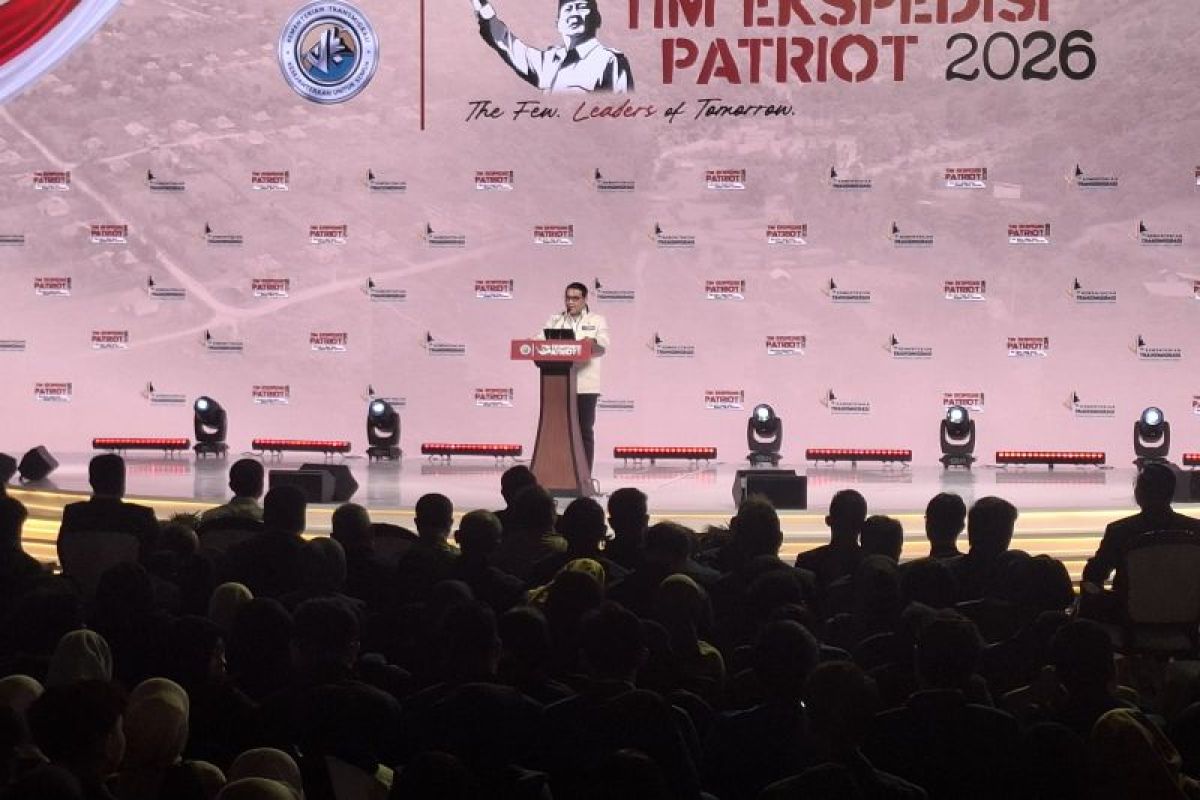
Minister of Creative Economy Teuku Riefky Harsya has said the creative economy will become a new growth engine for transmigration areas through the development of local potential, innovation, and increased value-added of community products.
“The creative economy is Indonesia’s future, and the Patriot Team is a strategic partner in strengthening the creative economy as a new engine of national economic growth, starting from transmigration areas across Indonesia,” said Riefky during the briefing of the Patriot Expedition Team 2026 in Jakarta on Wednesday.
He noted that each transmigration area has creative economic potential that can be developed according to regional characteristics, ranging from culinary, crafts, fashion and performing arts to technology and digital-based subsectors.
The Patriot Expedition Team is therefore expected to identify leading creative economy subsectors with the potential to drive local economies, map ecosystem strengthening needs, and formulate development strategy recommendations.
“The Patriot Expedition Team can identify leading creative economy subsectors in each area, map the creative ecosystem strengthening needs, and formulate development strategy recommendations,” he said.
According to the Minister, the mapping results will be processed together with the Ministry of Creative Economy and the Ministry of Transmigration to devise strategies for raising per capita income and implementing programmes suited to each area’s needs.
“From that data, we will collaborate with the Ministry of Transmigration,” he added.
Follow-up on the mapping results can be carried out through three main programmes: Creative Village Activation, Creative Hub Activation, and Creative by Indonesia.
Creative Village Activation is aimed at strengthening villages and urban wards based on creative economic potential, including transmigration areas.
Meanwhile, Creative Hub Activation is intended to develop talent, entrepreneurship, and the capacity of creative actors. Creative by Indonesia is directed at strengthening intellectual property and local brands so they can grow from the regional level to national and global markets.
Riefky explained that this development covers 21 creative economy subsectors, including culinary, crafts, fashion, architecture, design, film, animation, music, photography, games, applications, digital content, and new technology.
The new technologies include artificial intelligence (AI), blockchain, the Internet of Things (IoT), and cybersecurity.
The direction of creative economy development refers to Presidential Regulation Number 37 of 2026 concerning the National Creative Economy Development Master Plan 2026-2045.
Its implementation uses a collaborative hexahelix approach involving government, businesses, academics, communities or associations, media, and financial institutions.
This collaboration is directed at strengthening research, education, financing, infrastructure provision, marketing, and intellectual property protection.
He said the creative economy sector’s performance shows considerable room for development.
Creative economy investment realisation in 2025 reached Rp183.01 trillion, or 134 percent of the 2025 National Medium-Term Development Plan (RPJMN) target, which ranged from Rp123.85 trillion to Rp136.28 trillion.
This investment value is equivalent to approximately 9.48 percent of total national investment realisation.
Meanwhile, the ministry recorded creative economy exports at US$31.94 billion (around Rp576.73 trillion), or 120 percent of the target of US$26.44 billion (around Rp477.44 trillion).
As of November 2025, these exports contributed around 12 percent of total non-oil and gas exports.
Regarding employment, the creative economy sector absorbed 27.4 million workers, or 107 percent of the target of 25.55 million people. Some 63 percent of creative economy workers come from Generation Z and millennials, while 58 percent are women.
Creative economy gross domestic product (GDP) growth in 2025 reached 6.86 percent, or 1.75 percentage points above national GDP growth of 5.11 percent.
The creative economy’s contribution to national GDP stands at 7.38 percent.
Furthermore, Riefky expressed hope that developing creative economic potential in transmigration areas can increase community income and support the realisation of advanced, self-reliant villages.