
Creative Economy Minister: Rindekraf a Strategy to Strengthen Talent and Competitiveness
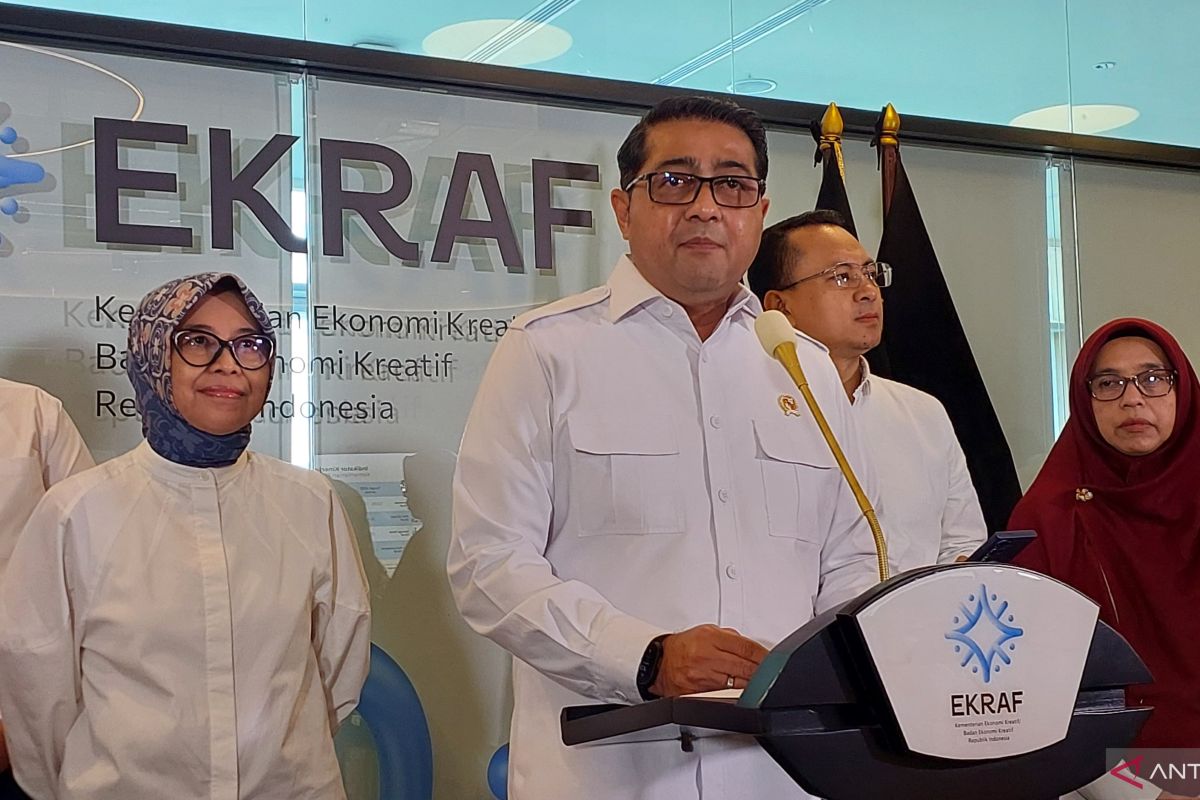
Jakarta (ANTARA) - Minister of Creative Economy Teuku Riefky Harsya announced that the government has formulated the Creative Economy Master Plan (Rindekraf) 2026-2045 as a development strategy to strengthen the sector through an inclusive, intellectual property-based ecosystem. The plan aims to bolster talent, enhance business competitiveness, and position regions as centres of growth.
“Six days ago, on 2 July 2026, President Prabowo Subianto enacted Presidential Regulation No. 37 of 2026 concerning the Creative Economy Master Plan 2026-2045. This presidential regulation serves as a crucial milestone that provides direction for national creative economy development in the medium to long term,” Riefky stated during a press conference on the Rindekraf Perpres in Jakarta on Wednesday.
Riefky explained that Rindekraf 2026-2045 outlines the direction for development and policy to strengthen the national creative economy sector. The master plan was formulated based on the mandate of Law No. 24 of 2019 concerning the Creative Economy, specifically Articles 25 and 26, to serve as a guideline for local governments in developing the creative economy. This mandate ensures that the direction of creative economy development is integrated into regional development planning documents, providing each region with a clear reference to develop its creative potential as a new source of economic growth.
Riefky elaborated that Rindekraf is built on the core values of inclusivity, taking into account the diversity of creative economy actors and ecosystems in terms of business sub-sectors, gender, business scale, demographics, development stages, and regional characteristics. It is also adaptive, adjusting to developments in digital technology and industry dynamics to remain relevant to future creative economy needs, and implementative, being translated into action plans based on the resources of the responsible ministries and agencies.
He further noted that Rindekraf provides certainty for creative economy actors regarding policy, talent development, intellectual property protection and commercialisation, as well as expanded market access and financing. The master plan also includes four new sub-sectors added to the creative economy design, technology, and digital content clusters, bringing the total number of sub-sectors to 21.
“Previously there were 17 sub-sectors, now there are four additional ones. The first is automotive modification, such as custom work, then new technologies, including AI, blockchain, big data, and cyber security. Next is digital content, including content creators, affiliates, and live commerce, as well as voice-over,” he said.
The formulation of Rindekraf was carried out in a collaborative spirit involving 26 ministries and agencies, with the Coordinating Ministry for Community Empowerment acting as the steering committee chair and the Ministry of Creative Economy serving as the daily executive chair, alongside 20 other ministries and agencies as programme managers. Riefky expressed hope that the policy direction of Rindekraf would strengthen the creative economy ecosystem and address future industry challenges, serving as a new engine for national economic growth starting from the regions.
Source: jawawa.id (https://jawawa.id/newsitem/creative-economy-minister-rindekraf-a-strategy-to-strengthen-talent-and-competitiveness-1783511720)
Originally published by Antara (Indonesian) (https://www.antaranews.com/berita/5640912/menekraf-rindekraf-strategi-perkuat-talenta-dan-daya-saing-industri), translated from Indonesian