
Creative Economy Minister Promotes Blockchain Utilisation for Middle-Class Financing
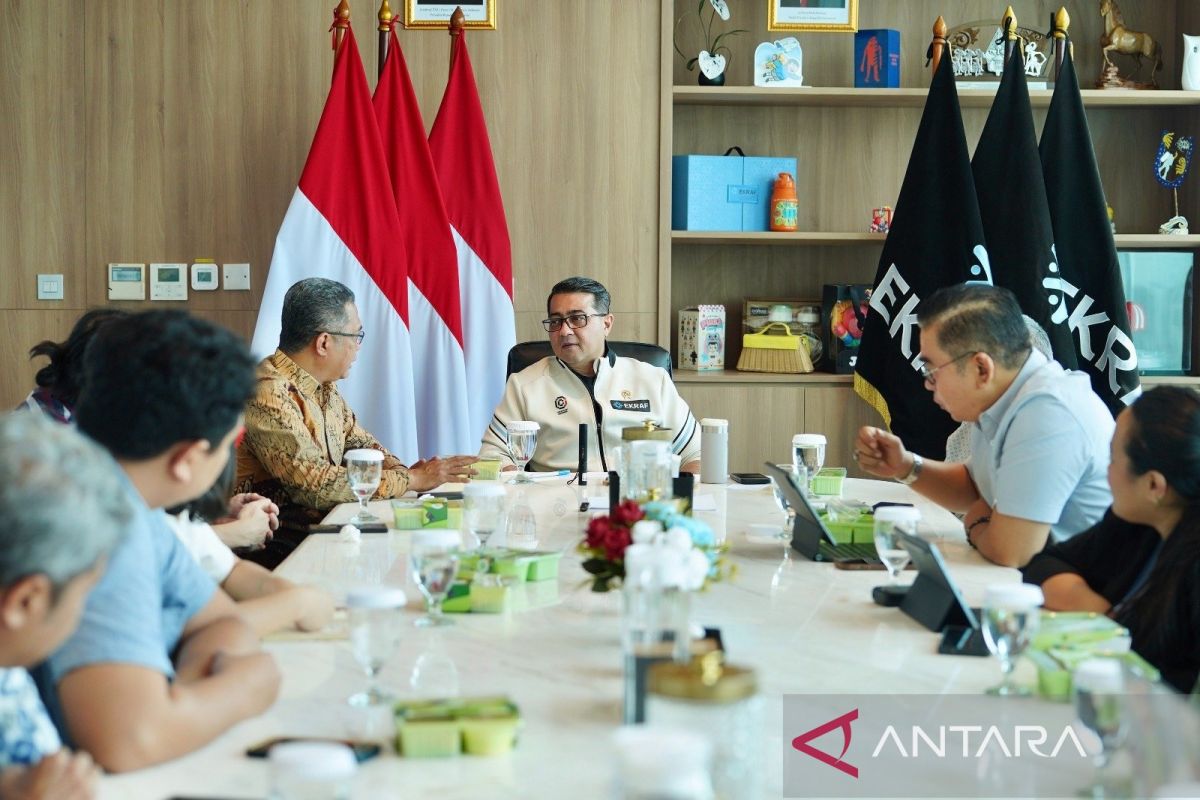
Jakarta (ANTARA) - The Minister of Creative Economy, Teuku Riefky Harsya, alongside the independent research institution Indonesia Fasilitator (InFast) Bestari, is encouraging the use of blockchain technology to broaden access to financing for creative economy actors and to create quality jobs for the middle class.
Riefky stated that the creative economy plays a strategic role in addressing the challenges of job creation for the younger generation, while simultaneously supporting the middle class by increasing income and purchasing power.
“Currently, approximately 63 per cent of the 27.4 million creative economy workers are from Gen Z and Millennials. This means every sub-sector of the creative economy has great potential to open up employment opportunities while serving as a pillar for the middle class through increased income and strengthened public purchasing power,” Riefky said in a statement received in Jakarta on Wednesday.
According to him, strengthening the financing ecosystem is a crucial element in driving the growth of creative economy actors. To this end, the Ministry of Creative Economy is encouraging collaboration between the government, academics, business actors, communities, media, and financial institutions through a hexa-helix approach.
Under this scheme, digital technologies such as blockchain can be utilised as part of the effort to provide alternative financing for creative economy players. The use of such technology is directed towards supporting improved access to funding, particularly for creative actors who have historically faced capital barriers in expanding their businesses and downstreaming their works.
“We want to introduce financing breakthroughs that utilise developments in digital technology, such as blockchain, to strengthen Indonesia’s creative economy ecosystem,” said Riefky.
He mentioned that the development of this scheme could be collaborated with Bank Indonesia and the Financial Services Authority (OJK), including through several programmes such as Creative Economy Data and Creative Economy Funds.
The Ministry of Creative Economy also views that strengthening creative economy financing is not only related to business growth but is also linked to the sustainability of the middle class. With wider access to funding, creative entrepreneurs are expected to be able to expand production capacity, create jobs, and increase income.
During the meeting, InFast Bestari also highlighted the economic vulnerability of the middle-class group. The Director of Research and Database at InFast Besterm, Hizkia Yosias Polimpung, referred to this group as ‘the missing middle’—those who do not qualify for social assistance but face significant economic pressure.
“This middle-class group is too wealthy to receive social assistance, but too poor to be said to live decently. This is why we propose they should be provided with scaffolding, a cushion, so that their economic status does not decline further,” said Hizkia.
Strengthening access to financing for the creative economy is part of this effort. With stronger financial support and a more robust business ecosystem, the creative industry is expected to become a source of job growth and support the consumption of the middle class.
Discussions regarding the use of blockchain will subsequently be brought to the National Symposium, “Blockchain-Based Urban Cooperative Ecosystem: Economic Growth Strategy Based on the Urban Creative Middle Class,” to be held on 30 September 2026.
The forum is projected to bring together approximately 300-400 stakeholders to discuss the development of a cooperative-based economic ecosystem, blockchain technology, and the urban creative middle class.