
Creative Economy Minister: Gen Z and Millennials Dominate Creative Industry Workforce
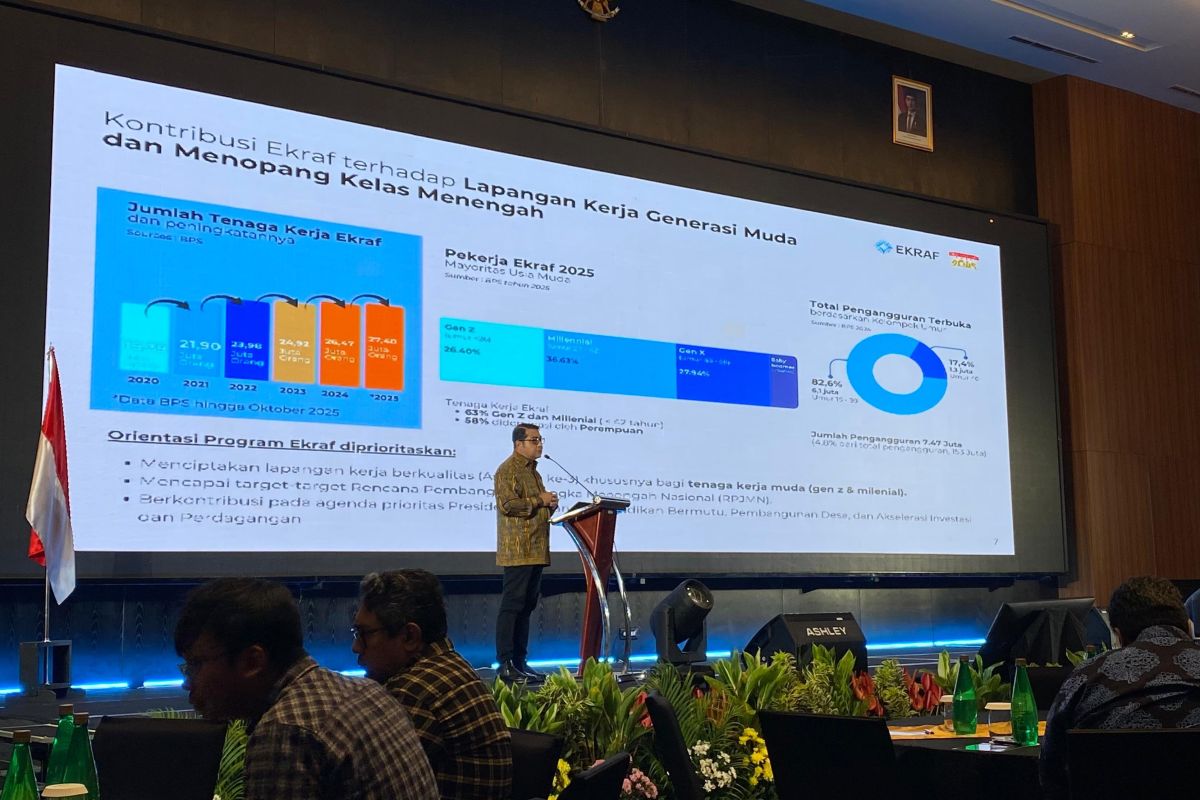
Surabaya, East Java - Creative Economy Minister Teuku Riefky Harsya stated that Generation Z and millennials dominate the workforce in the creative industry sector, making its development a potential solution to reduce unemployment, particularly among the productive age group.
“As many as 63 percent of creative economy workers or practitioners are Gen Z and millennials. This shows that the creative industry is the sector most in demand by the younger generation,” the Minister said during the Jatim Media Summit 2026 in Surabaya, East Java, on Thursday.
In addition to being dominated by the younger generation, he noted that the creative economy sector also has a high level of inclusivity, as 58 percent of its practitioners or workers are women.
According to Teuku, the development of the creative industry over the past five years has continued to show a positive trend, absorbing approximately 1 million to 1.5 million new workers annually. Currently, the number of workers in the creative economy sector has reached around 27.4 million people, with the majority coming from Gen Z and millennial groups.
He assessed that the characteristics of the working world in the creative industry are one of the factors attracting the younger generation to pursue careers in the sector. “Gen Z and millennials want to work according to their passions or hobbies. They also desire flexible working hours and opportunities to earn higher incomes. In today’s digital era, this is very possible to achieve through the creative industry,” he said.
According to him, the digital transformation has opened wider space for creative workers to develop businesses or professions based on skills without being limited by location and working hours.
On the other hand, Teuku highlighted the high proportion of open unemployment originating from the young age group, noting that out of approximately 7.47 million unemployed people in Indonesia, the majority are Gen Z and millennials. This condition, he continued, demonstrates the importance of strengthening the creative industry ecosystem as a sector capable of absorbing young workers and reducing unemployment.
“If the desire of Gen Z and millennials to work in the creative industry is so great, while the majority of the unemployed also come from the same group, then the creative industry can be one of the solutions to reduce open unemployment,” he said.
He believes a similar condition also occurs in East Java, which has great potential in developing the creative economy through the strength of human resources, creative communities, and the development of digital technology. Therefore, the government continues to encourage the strengthening of the creative economy ecosystem through skills enhancement, access to financing, business mentoring, and the utilisation of digital technology so that more young people can be absorbed into the sector.
Teuku expressed hope that collaboration between the central government, regional governments, industry players, educational institutions, and creative communities can expand job opportunities while giving birth to more new entrepreneurs based on creativity. Moreover, the development of the creative industry not only contributes to national economic growth but is also an important instrument in creating quality jobs for Indonesia’s young generation.