
Creative Economy Minister: Economic Census Part of Indonesia's Creative Economy Development
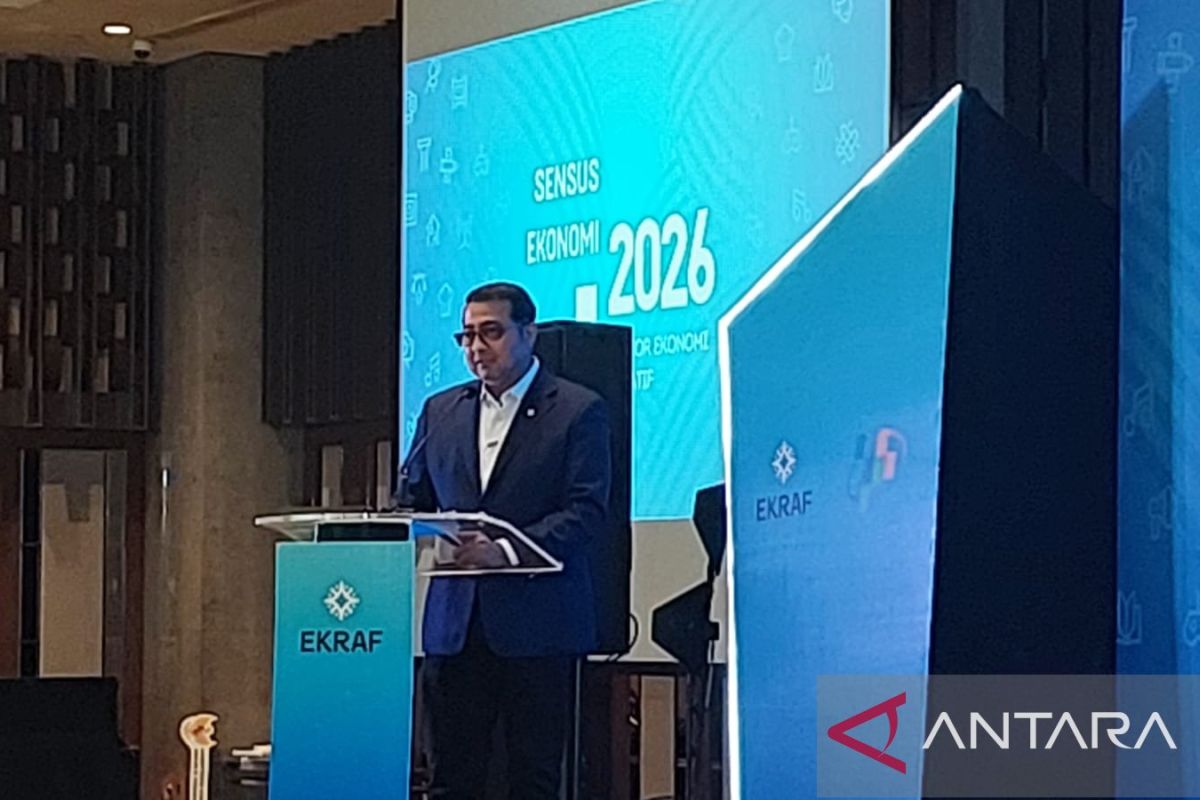
Creative Economy Minister Teuku Riefky Harsya stated that the Economic Census being conducted by Statistics Indonesia (BPS) is part of building the foundation for Indonesia’s creative economy and plays an important role in further mapping the potential of regional creative economies that can contribute to the country’s GDP. “With the success of the national Economic Census, data on Indonesia’s creative economy will become clearer, enabling collaboration between the government, associations, academics, and practitioners. The government can also support business actors in gaining access to funding, including credit for subsectors that can be developed,” he said during a press conference for the 2026 Economic Census for the creative economy sector in Jakarta on Monday. BPS data records that several subsectors have contributed to state revenue, including culinary, fashion, and television and radio, reaching 68.42 percent. Meanwhile, three high-growth subsectors include application and game developers, animated films and video, and photography, supported by the utilisation of new technology. He stated that BPS will deploy 251,000 official officers and will knock on 92 million doors by the end of August 2026 to inquire about occupations and business activities, including deeper questions regarding creative economy activities that the target population may be engaged in. “So that after these results, we can map more clearly where our creative economy subsector practitioners are located, from Sabang to Merauke, that is the hope,” he said. He noted that although the census results do not focus specifically on creative economy questions, the data obtained can serve as a microdata base for further in-depth studies or surveys conducted by the ministry. This data will also be used to support targeted policies with the government and associations to improve the regional creative economy ecosystem. He also expressed hope that the economic census will help revive 17 to 21 subsectors to catch up with the national economic growth target of 8 percent.