
Creative Economy Minister: Downstreaming and Commercialisation of Intellectual Property to Strengthen Fashion Industry
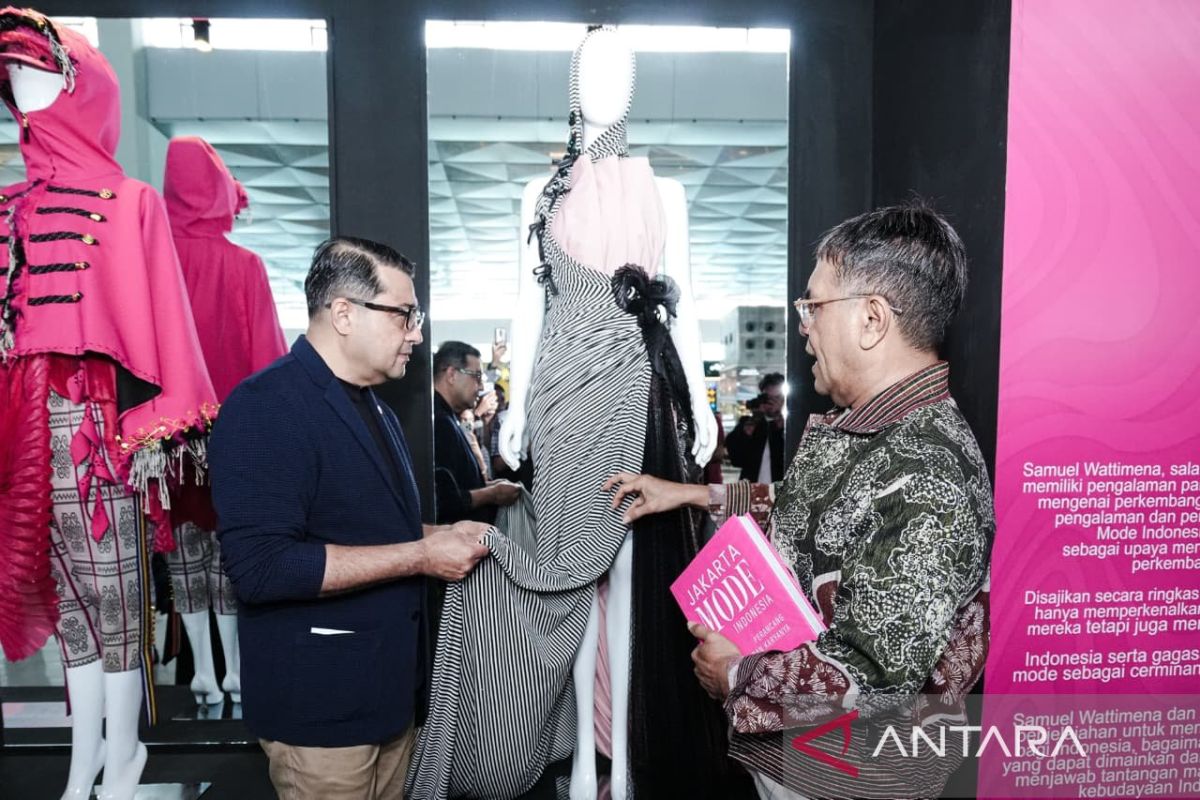
Jakarta (ANTARA) – Creative Economy Minister Teuku Riefky Harsya says strengthening the national fashion industry requires the downstreaming and commercialisation of intellectual property (IP), so that designers’ work and products based on local culture gain added value and can compete in global markets.
According to Teuku Riefky, the fashion industry cannot simply produce creative work; it must also ensure that the work can be developed into commercial products that provide sustainable economic benefits for those involved, including artisans in the regions.
“Creative work must no longer stop on the runway. Through the downstreaming and commercialisation of intellectual property (IP), tradition is transformed into a sustainable economic asset that brings prosperity to designers, excels in global markets and endures for Indonesia,” Riefky said in a statement received in Jakarta on Monday.
He said the fashion subsector played a strategic role in the national creative economy. Data from Statistics Indonesia (BPS), processed by the Ministry of Creative Economy, show that fashion is the largest contributor to creative-economy exports, accounting for 58.55 per cent, or US$5.85 billion.
That figure was up from US$5.58 billion in the previous period. The fashion subsector also contributed 14.77 per cent to the creative economy’s gross domestic product (GDP), with growth of 5.07 per cent.
In view of this contribution, the government is encouraging the fashion industry ecosystem to be strengthened through collaboration among various parties, including academics, associations, financial institutions, media, businesses and the government.
Teuku Riefky said such collaboration was important to ensure that fashion product development not only improved designers’ competitiveness but also delivered broader economic benefits to industry players and the public.
Senior designer Samuel JD Wattimena said that developing fashion based on culture must respect the boundaries around customary and traditional motifs, while also explaining the background of Indonesia’s traditional textiles, known as wastra nusantara.
He said the development of the fashion industry must also ensure that artisans in the regions benefit economically, rather than designers alone.
“Indonesian fashion is here to respect the boundaries around customary and traditional motifs while educating people about the background of our traditional textiles. The Ministry of Creative Economy’s role is to guide artisans’ innovation so that its economic impact truly reaches artisans in the regions, rather than being enjoyed only by designers,” Samuel said.
The “Mode Indonesia: Designers and Their Works” exhibition, running from 1 to 15 November 2026 at Terminal 3 of Soekarno-Hatta Airport, is one effort to introduce Indonesian fashion to the wider public and international visitors.
The airport was chosen for the fashion installation because of its high passenger traffic, in line with the aim of showing that fashion is not only for the elite.
The exhibition also reaffirms the government’s commitment to promoting fashion as the creative economy’s largest export-contributing subsector, helping it compete globally while delivering inclusive and sustainable economic benefits.
Source: jawawa.id (https://jawawa.id/newsitem/creative-economy-minister-downstreaming-and-commercialisation-of-intellectual-property-to-strengthen-fashion-1794228786)
Originally published by Antara (Indonesian) (https://www.antaranews.com/berita/5842243/menekraf-hilirisasi-dan-komersialisasi-ki-perkuat-industri-fesyen), translated from Indonesian