
Creative Economy Minister Discusses Economic Potential of Digital Applications
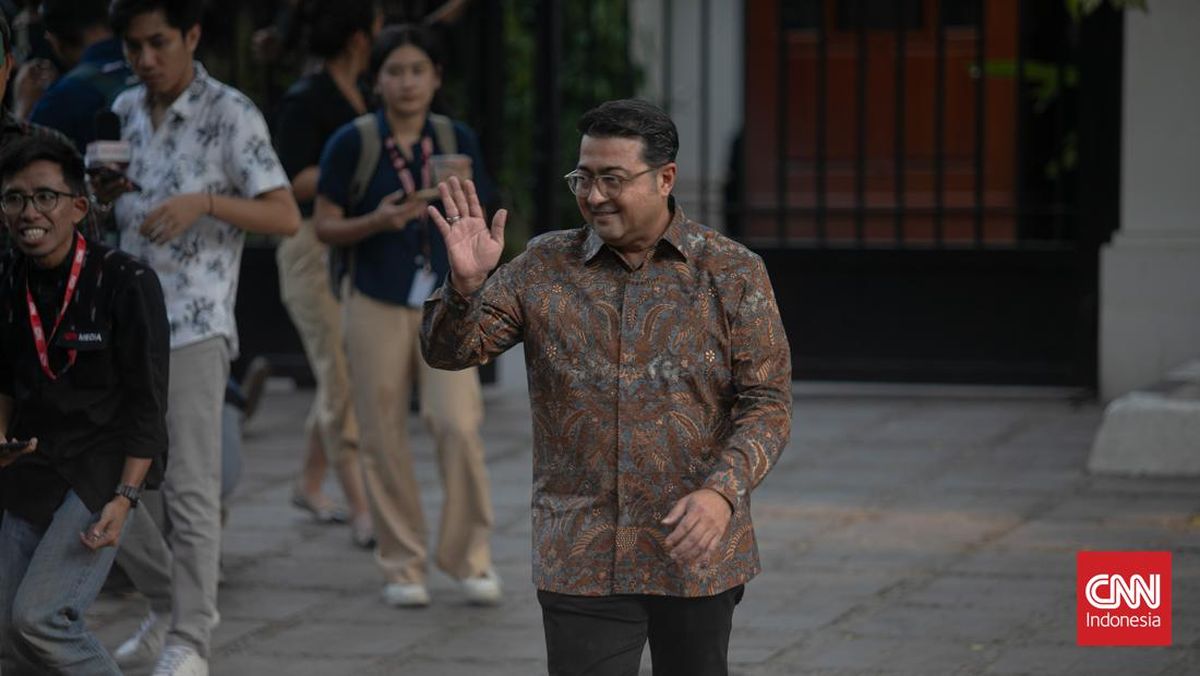
The Minister of Creative Economy, Teuku Riefky Harsya, stated that digital applications have become an inseparable part of daily life. Teuku Riefky also revealed the significant economic potential held by these applications.
“We work through applications, learn through applications, transact, enjoy entertainment, and even build businesses through applications,” said Teuku Rlo Riefky during his opening remarks at the Indonesia Application Summit (InApps) 2026.
According to him, this condition demonstrates that the application industry is not merely related to technological advancement, but has become a vital component of the future of Indonesia’s digital economy. “Therefore, when we speak about the application industry, we are essentially speaking about the future of Indonesia’s digital economy,” he added.
He noted that the development of artificial intelligence presents even greater opportunities for the application industry in Indonesia. However, such technological progress must go hand in hand with the implementation of good ethics and governance.
Teuku Riefky stated that President Prabowo Subianto has positioned the creative economy as one of the new engines for Indonesia’s economic growth. This policy is being translated through the Creative Economy Master Plan (Rindekraf) 2026-2045.
The Master Plan involves approximately 24 ministries and agencies in its implementation, aiming to strengthen national creative economy development and support local governments.
“Within this Master Plan, there are 21 sub-sectors of the creative economy. Some are based on culture, design, digital technology, and media. From these 21 sub-sectors, seven are priorities, including the application sub-sector,” he said.
Teuku Riefky explained that the number of creative economy sub-sectors has increased from 17 to 21. Several new sub-sectors are closely linked to digital technology developments, including new technology, digital content, and voice-over.
He noted that the new technology sub-sector covers various creative economic activities utilising artificial intelligence, blockchain, the Internet of Things (IoT), Web3 technology, big data, and cybersecurity. “We have made this a separate sub-sector with its own directorate. The same applies to digital content, which also has its own director and directorate,” he said.
Teuku Riefky stated that the development of the creative economy sector is reflected in the large amount of incoming investment. In 2025, the investment value of the creative economy sector reached approximately Rp180 trillion, with the application sub-sector being one of the largest contributors, at around Rp54.23 trillion.
Meanwhile, the creative economy’s contribution to Indonesia’s Gross Domestic Product (GDP) currently stands at approximately 7.38 percent.
Teuku Riefky highlighted the significant involvement of young people and women in the creative economy sector. Based on the data presented, approximately 63 percent of the workforce in this sector consists of Generation Z and Millennials, while 58 percent are women.
“Thus, this sector is very inclusive and sustainable. It is sustainable because of the high involvement of the younger generation, and inclusive because women significantly dominate the creative economy sector,” he said.
Teuku Riefky is optimistic that the creative economy sector, including the application sub-sector, can continue to contribute to national economic growth targets.
He noted that applications hold a strategic position as a meeting point for various digital ecosystems. When an application grows, the benefits are not only felt by the developing companies but also drive job creation, investment, and increased national competitiveness.
“When an application grows, it is not just the company that grows, but also jobs, investment, and national competitiveness,” he remarked.
However, Teuku Riefky warned that the development of the application industry faces challenges, particularly the increasing demand for digital talent amidst rapid technological advancement.
Therefore, the government is encouraging closer collaboration between digital talent, business players, investors, and the government, both at national and international levels.
“We want to bring together the works of our nation’s children to collaborate with friends from friendly nations and international investors, so they can enter the global market,” said Teuku Riefky.
He emphasised that Indonesia must not merely be a market for applications and technology from other countries. Digital products and innovations created by the nation’s people must be able to grow, compete, and penetrate the global market.
Teuku Riefky stated that organising the Indonesia Application Summit 2026 is one of the government’s efforts to bring various parties within the application industry ecosystem together. He noted that InApps serves not only as a forum for exchanging ideas but also as a platform for building real partnerships and collaborations.
He hopes that collaboration between talent, the business world, investors, and the government can ensure that Indonesia’s digital innovations do not stop at being mere ideas, but evolve into solutions that provide real benefits to society.
“Ultimately, our success will be measured by the increasing number of Indonesian applications that are able to grow, compete, and make their mark on the global stage,” said Teuku Riefky.
Source: jawawa.id (https://jawawa.id/newsitem/creative-economy-minister-discusses-economic-potential-of-digital-applications-1789415482)
Originally published by CNN Indonesia (https://www.cnnindonesia.com/nasional/20260915012506-20-1403926/menteri-ekraf-buka-bukaan-soal-potensi-ekonomi-dari-aplikasi-digital), translated from Indonesian