
Creative Economy Minister: Applications Have Become Part of Daily Life
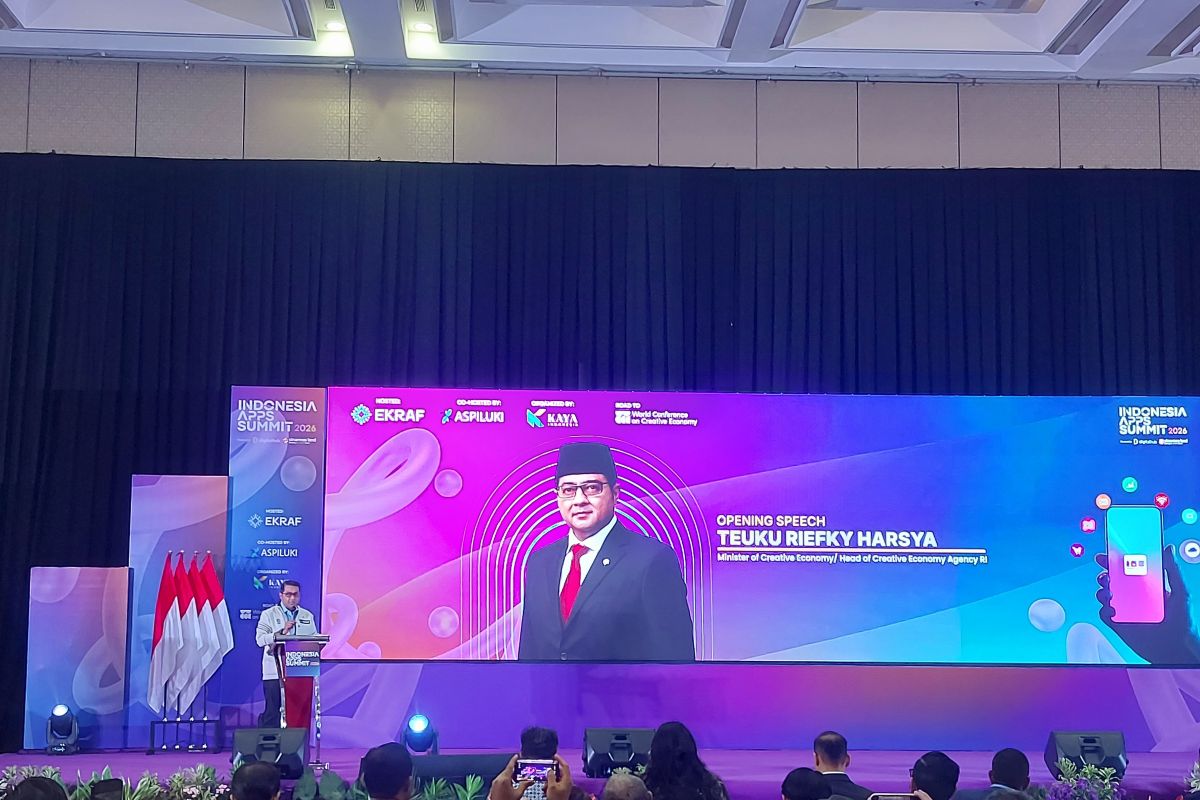
The Minister of Creative Economy, Teuku Riefky Harsya, stated that digital applications have become an inseparable part of society’s daily lives, spanning work, education, transactions, entertainment, and business development.
Speaking at the Indonesia Application Summit (InApps) 2026 in Tangerang, Banten, on Monday, Teuku Riefky noted that this condition demonstrates that the application industry is not merely about technological advancement, but is a vital component of the future of Indonesia’s digital economy. He added that the development of artificial intelligence presents even greater opportunities for the Indonesian application industry, provided that technological progress is accompanied by proper ethics and governance.
Teuku Riefky mentioned that President Prabowo Subianto has positioned the creative economy as a new engine for Indonesia’s economic growth. This policy is implemented through the Creative Economy Master Plan (Rindekraf) 2026-2045, which involves approximately 24 ministries and agencies to strengthen national creative economy development and support local governments.
Within the Rindekraf, there are 21 creative economy sub-sectors, including culture, design, digital technology, and media. Seven of these sub-sectors are prioritised, including the application sub-sector. The number of sub-sectors has increased from 17 to 21, with new additions closely linked to digital technology, such as new technology, digital content, and voice-over.
The new technology sub-sector encompasses various creative economic activities utilising artificial intelligence, blockchain, the Internet of Things (IoT), Web3 technology, big data, and cybersecurity. These have been established as distinct sub-sectors with their own dedicated directorates, alongside digital content.
The growth of the creative economy sector is reflected in the significant influx of investment. In 2025, the investment value in the creative economy sector reached approximately Rp180 trillion, with the application sub-sector being one of the largest contributors at around Rp54.23 trillion. Meanwhile, the creative economy’s contribution to Indonesia’s Gross Domestic Product (GDP) currently stands at approximately 7.38 percent.
Teuku Riefky also highlighted the significant involvement of young people and women in the creative economy sector. Data shows that approximately 63 percent of the workforce in this sector consists of Generation Z and Millennials, while 58 percent are women. He described the sector as highly inclusive and sustainable due to this high level of engagement.
The Minister expressed optimism that the creative economy, including the application sub-sector, can continue to contribute to national economic growth targets. He noted that applications hold a strategic position as meeting points for various digital ecosystems. When an application grows, the benefits extend beyond the developer to include job creation, investment, and increased national competitiveness.
However, Teuku Riefky warned that the development of the application industry faces challenges, particularly the increasing demand for digital talent amidst rapid technological advancement. Consequently, the government is encouraging closer collaboration between digital talent, businesses, investors, and the government, both nationally and internationally.
He emphasised that Indonesia must not merely be a market for foreign applications and technologies. Digital products and innovations created by Indonesians must be able to grow, compete, and penetrate the global market. The Indonesia Application Summit 2026 serves as a government effort to bring various stakeholders within the application industry ecosystem together.
He expressed hope that collaboration between talent, the business world, investors, and the government would ensure that Indonesian digital innovation does not remain just an idea, but evolves into solutions that provide real benefits to society. “Ultimately, our success will be measured by the increasing number of Indonesian applications that can grow, compete, and demonstrate their presence on a global level,” concluded Teuku Riefky.
Source: jawawa.id (https://jawawa.id/newsitem/creative-economy-minister-applications-have-become-part-of-daily-life-1789380657)
Originally published by Antara (Indonesian) (https://www.antaranews.com/berita/5740037/menteri-ekraf-aplikasi-telah-jadi-bagian-dari-kehidupan-sehari-hari), translated from Indonesian