
Creative Economy Gains Momentum as Local Content Investment Expands Employment
Investment in the digital content industry is beginning to contribute to the development of Indonesia’s creative economy. In addition to broadening the public’s entertainment choices, local series production is stimulating activity across several business sectors, from creative labour and production services to transport, accommodation and other supporting needs.
One company developing its business through investment in local content is WeTV Indonesia. During its six years of operations in Indonesia, the digital entertainment platform has produced more than 57 local original series, involving over 10,000 crew members and creative talents.
This production activity forms part of WeTV’s contribution to expanding economic activity in the national creative industry. The involvement of thousands of workers in various projects shows that developing digital content is not only about distributing programmes; it also creates demand for workers and services across different sectors.
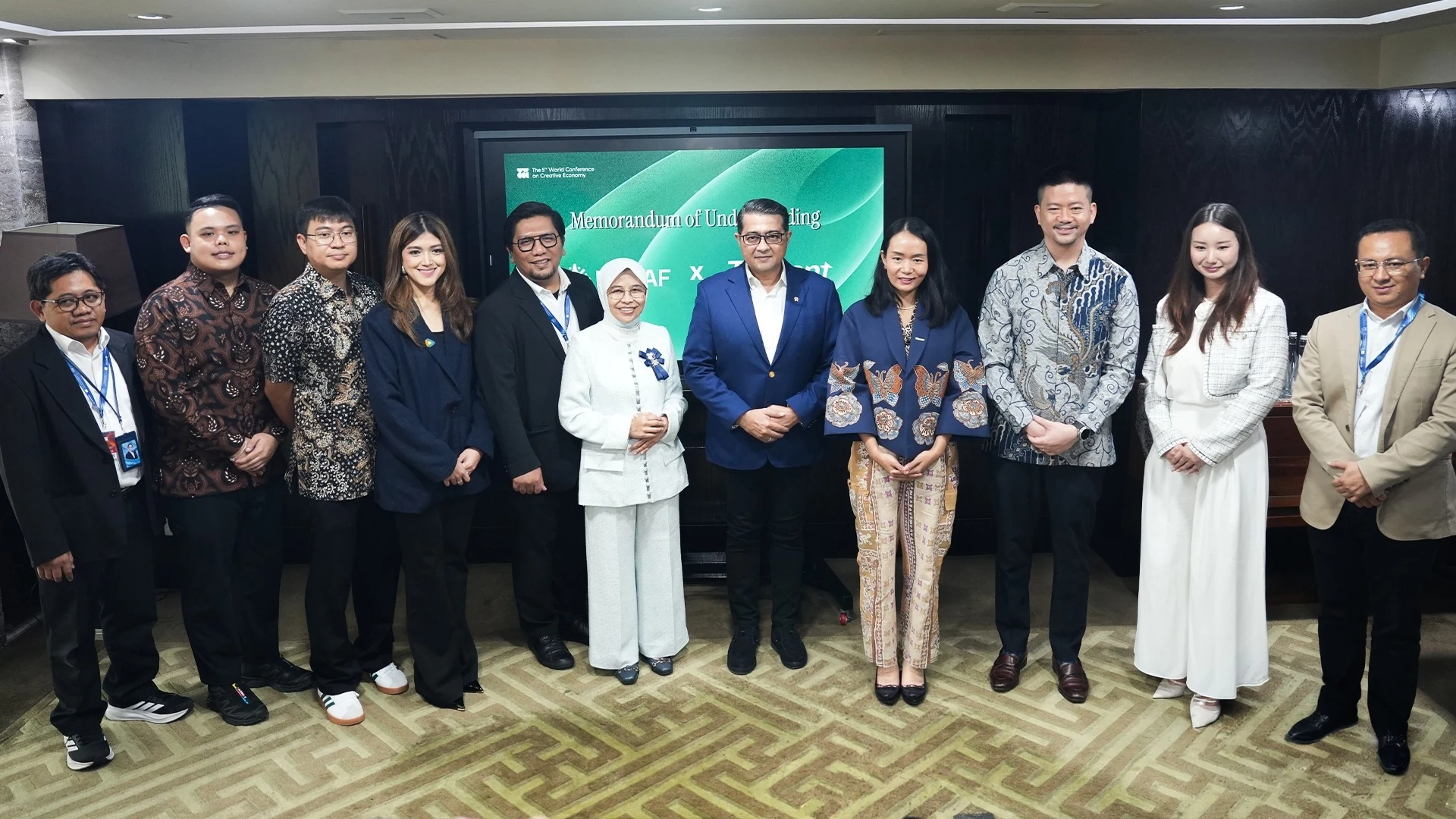
This commitment is in line with cooperation between Tencent and Indonesia’s Ministry of Creative Economy/Creative Economy Agency, formalised through a memorandum of understanding (MoU) at the World Conference on Creative Economy (WCCE) 2026 in Jakarta on 21 October 2026.
The cooperation is intended to support the development of Indonesia’s creative and digital industries. In this context, WeTV Indonesia says it will continue contributing through the development of intellectual property (IP), investment in local content production, and the empowerment of talent and creative industry players.
WeTV Indonesia Country Head Febriamy Hutapea said investment in local content was intended not only to provide programmes for the public, but also to build an industry capable of delivering sustainable economic benefits.
“For WeTV, investing in local content is not just about providing quality programmes, but also about building a sustainable industry. Every production involves many talents, creative workers and supporting sectors that also experience the economic impact. This is the contribution we want to continue promoting, while creating more opportunities for Indonesian stories and talent to grow,” Febriamy said.
Content production chains drive activity across sectors
Producing a series involves a lengthy sequence of work. The process begins with story development, scriptwriting and production planning, followed by filming and the completion of material before it is shown to audiences.
At every stage, production companies require a range of professionals, including writers, directors, actors, producers, camera crew, art directors, and editing and post-production staff.
Production needs also extend beyond the entertainment industry. Location hire, transport, accommodation, catering, costume design, production equipment and various creative services all form part of the economic activity generated while a series is being made.
The involvement of these supporting sectors creates business links between the content industry and a range of service providers. Production activity can therefore create employment not only for creative workers directly involved, but also for businesses supplying operational needs.
The multiplier effect of this activity is one of the factors WeTV considers in developing its investment in local content. The broader the production requirements, the more types of work and supporting services become involved in the ecosystem.
However, the economic contribution of the content industry is not determined solely by the number of productions. Story development, programme quality, sustained partnerships with production companies and the ability to reach audiences are also part of building a creative industry.
Local IP development targets international markets
Alongside increasing local series production, WeTV is also promoting the development of Indonesian intellectual property, or IP. IP development is an important part of the digital entertainment industry, as a work can be developed further through different forms of content distribution and use.
Through collaboration with Indonesian production companies and creators, WeTV aims to tell stories connected to people’s lives while creating opportunities for local works to reach wider audiences.
IP development also gives creators room to build characters, stories and creative identities that can be developed over the long term. In the entertainment industry, the strength of an IP is not limited to the release of a single series; it also lies in the potential to develop the work across different formats and markets.
WeTV says it wants to help more Indonesian stories reach international audiences. It is pursuing this through collaboration with local industry players and the use of the distribution networks owned by the platform and Tencent.
Febriamy said WeTV’s first six years in Indonesia had laid the foundation for the next stage of its business. The company plans to continue investing in local content, expand opportunities for creative talent and help Indonesian IP enter global markets.
“The first six years have provided an important foundation for WeTV’s journey in Indonesia. Going forward, we want to continue bringing compelling local stories to audiences, create more opportunities for creative talent and help Indonesian IP reach global markets. We believe closer collaboration between industry players, digital platforms and the government will be key to strengthening the competitiveness of Indonesia’s creative industry,” Febriamy added.
Distribution expanded through more than 50 channels
On the distribution side, WeTV is developing a partnership network to broaden public access to digital entertainment. The company says it has established partnerships through more than 50 distribution channels, working with telecommunications partners, internet service providers, e-commerce companies and payment service providers.
The network is one way of extending the reach of content. Collaboration with various partners enables digital entertainment services to be accessed through more channels, including by audiences outside major cities.
Expanding distribution is also part of connecting content production with a larger audience market. For the creative industry, reach is important because it opens access to audiences and increases the chances of a work becoming known to the public.
Through the WeTV platform and Tencent’s network, the company also says it has opportunities to introduce Indonesian works to global audiences. With this distribution support, local content is intended not only for the domestic market but also has the opportunity to enter international markets.
WeTV says it will continue working with the government, production companies, creators and other industry players. Content development, talent empowerment and the expansion of distribution networks form part of the company’s strategy to support the growth of Indonesia’s digital entertainment industry.
Tencent’s MoU with the Ministry of Creative Economy at WCCE 2026 is also part of efforts to strengthen cooperation between the government and digital industry players.
With more than 57 local original series produced and over 10,000 crew members and creative talents involved during its six years of operations, WeTV presents content investment as one of its contributions to the national creative economy.
The company also aims to develop local IP and expand distribution so Indonesian works and talent have greater opportunities to grow in both domestic and international markets.
Source: jawawa.id (https://jawawa.id/newsitem/creative-economy-gains-momentum-as-local-content-investment-expands-employment-1793631034)
Originally published by kabarbursa.com (https://www.kabarbursa.com/makro/ekonomi-kreatif-semakin-bergairah-investasi-konten-lokal-perluas-lapangan-kerja), translated from Indonesian