
Creative Economy and Education Advocate Praises PPG and School Revitalisation
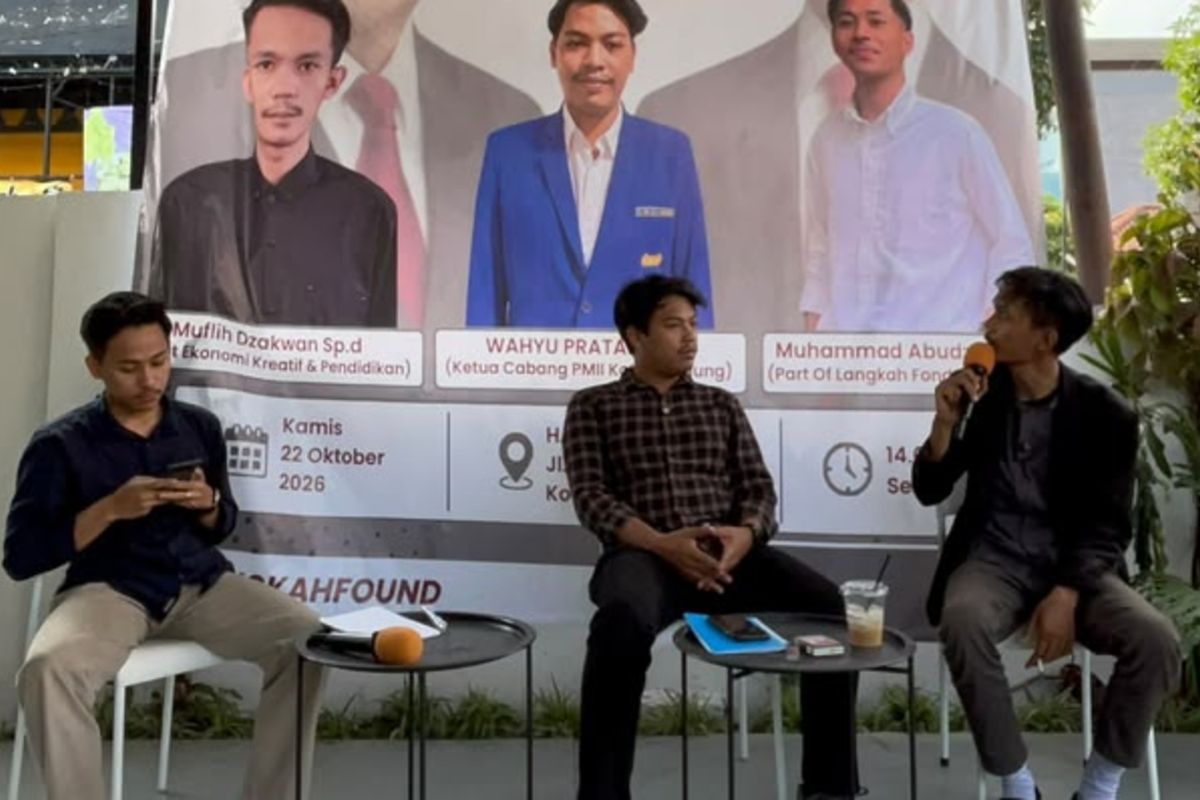
Jakarta (ANTARA) – Creative economy and education advocate Muflih Dzakwan has welcomed programmes to improve teachers’ welfare and revitalise schools during the first two years of President Prabowo Subianto and Vice-President Gibran Rakabuming Raka’s administration.
He said the government’s attention to education was beginning to be felt through opportunities for teachers to take part in the Teacher Professional Education (PPG) programme and access to school infrastructure improvement schemes.
“With the change in leadership, Mr Prabowo has shown a commitment to improving teachers’ welfare. Thankfully, that teacher was called up for PPG,” Muflih said in a statement received in Jakarta on Friday.
He made the remarks at a public discussion organised by Langkah Foundation in Bandung, West Java, on Thursday (22 October).
Muflih cited the example of an honorary teacher who had served for decades and had finally been given the opportunity to take part in PPG.
In his view, access to professional training is important for improving teachers’ competencies and providing a pathway to obtain an educator certificate, subject to the applicable requirements.
As part of efforts to improve educators’ welfare, the government has also raised the monthly professional allowance for non-civil servant teachers who do not yet hold an equivalency decree from Rp1.5 million to Rp2 million, starting in 2025, for eligible recipients.
Muflih also praised the school revitalisation programme, saying it gave educational institutions wider opportunities to improve learning facilities.
He said the school he manages applied for the programme in 2025 and was given the opportunity to take part in 2026.
“In the past, schools had to wait quite a long time to receive a revitalisation programme. Now, access feels easier,” he said.
According to data from the Ministry of Primary and Secondary Education (Kemendikdasmen), the government completed revitalisation work at 16,167 educational institutions in 2025, exceeding its initial target of 10,440.
By mid-October 2026, 35,769 educational institutions had signed cooperation agreements for the revitalisation programme, the ministry recorded, with construction completed at 4,374 of them.
The government had previously set a target of revitalising 71,744 educational institutions in 2026. In early October, Primary and Secondary Education Minister Abdul Mu’ti said the target could be increased by around 6,000 schools.
Muflih hopes the programme will continue to be strengthened so its benefits are distributed more evenly, particularly to remote schools still facing limitations in facilities and infrastructure.
He said the government needs to map schools’ needs comprehensively so assistance can be tailored to the circumstances of each institution.
“My greatest hope is that the government can map schools’ needs. Not every school is a business. Many schools in remote areas are genuinely focused on improving the quality of human resources,” he said.
Muflih added that strengthening education should be linked to the development of the creative economy to broaden employment opportunities for young people.
He said school leavers needed practical skills, creativity, digital literacy and the ability to adapt to industry needs, so they would be better prepared to enter the workforce or start their own businesses.
To achieve this, he said cooperation among government, educational institutions, communities and industry players should be strengthened through training, business mentoring and the development of business networks for young people.
Meanwhile, Bandung City branch chair of the Indonesian Islamic Students Movement (PMII), Wahyu Pratama, said the government’s achievements should be further strengthened through constructive input from students and the public.
“Students and young people have a responsibility to remind those in power. We hope this discussion can produce improvements and constructive ideas, so that all policies, including the government’s agenda, can be implemented better in the future,” Wahyu said.
He hopes government policies will continue to take regional needs into account, particularly in education and health services and job creation.
The discussion, entitled “Reflecting on Two Years of Asta Cita: Assessing the Realisation of the Creative Economy as a Solution to Youth Unemployment in West Java”, was held in Bandung and organised by Langkah Foundation.
The event examined the achievements and challenges of education development and the creative economy in improving human resource quality and expanding job opportunities for young people in West Java.
Source: jawawa.id (https://jawawa.id/newsitem/creative-economy-and-education-advocate-praises-ppg-and-school-revitalisation-1792749399)
Originally published by Antara (Indonesian) (https://www.antaranews.com/berita/5807415/pegiat-ekraf-dan-pendidikan-apresiasi-ppg-dan-revitalisasi-sekolah), translated from Indonesian