
Cracks in the Wall Were Covered Up, Mall Collapsed—Management Bosses Fled Instead
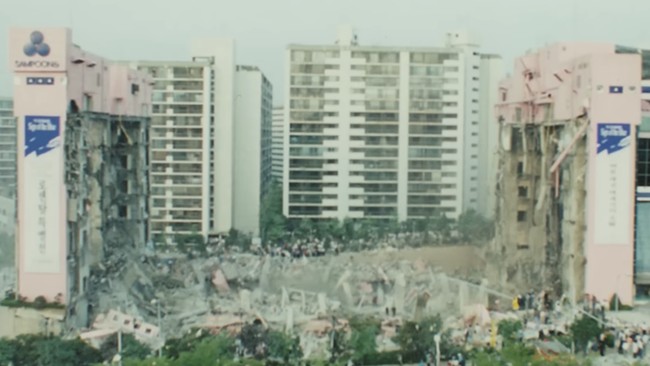
The tragedy of the Sampoong Department Store collapse in South Korea remains one of the deadliest building disasters triggered by human negligence. The country’s largest mall collapsed on 29 June 1995, after management ignored large cracks that had been appearing for months. As a result, more than 1,500 people were buried under the rubble, 502 people died, and six others were never found.
According to a report by The Guardian, Sampoong management had actually known the building’s condition was dangerous since April 1s, 1995. Long cracks were visible on the roof and the walls of the fifth floor, but instead of halting operations for a thorough inspection, managers merely moved shops from that floor to lower levels. Activities on the other four floors continued as normal.
The situation worsened on 29 June 1995, when the cracks widened and spread to the fourth floor. However, management chose once again to maintain mall operations. While the fourth floor was closed and the air conditioning system was turned off, the shopping centre remained open because the managers did not want to lose revenue from the high volume of transactions on that day.
Ironically, after realising the building’s condition was becoming critical, several top managers actually fled the building. Meanwhile, thousands of employees were still required to work, serving visitors who were unaware of the level of damage to the building. They only noticed that the temperature inside the mall was getting hotter due to the air conditioning being switched off.
At approximately 5:50 pm local time, the sound of loud cracking began to emanate from within the building. Panic broke out as visitors ran towards the exits and danger alarms were sounded. However, the time to escape was extremely limited.
“From across the shop, a sound like a subway train entering a station could be heard, and when we heard that sound, people started running around. Suddenly, a piece of concrete fell on my head and I lost consciousness,” said survivor Park Seung-hyun, as quoted by the BBC.
Only seven minutes after the first cracking sound was heard, the Sampoong building collapsed in about 20 seconds. According to data from Britannica, rescue teams managed to evacuate 937 injured victims. 502 people were declared dead, while six other victims were never found.
Investigations later revealed that the root of the problem had emerged during the construction phase in 1987. The land used was a former landfill that was deemed unstable enough to support a large-scale shopping centre.
The original contractor had even warned of this risk and proposed building apartments with a stronger concrete structure. However, the owner of Sampoong, Lee Joon, rejected the proposal and insisted on the construction of the mall. When the contractor refused to follow the design deemed dangerous to safety, Lee Joon dismissed them and appointed another contractor willing to carry out his wishes.
The investigation concluded that the collapse of the Sampoong Department Store was the result of a combination of construction planning failures and management negligence, which ignored safety warnings in order to maintain profits.
The court subsequently sentenced Lee Joon to 10 years in prison, while his son, Lee Han-sang, was sentenced to seven years in prison for their roles in the tragedy, which remains one of the deadliest building disasters in South Korea.