
Crackdown on Refined Sugar Imports to Protect Sugarcane Farmers
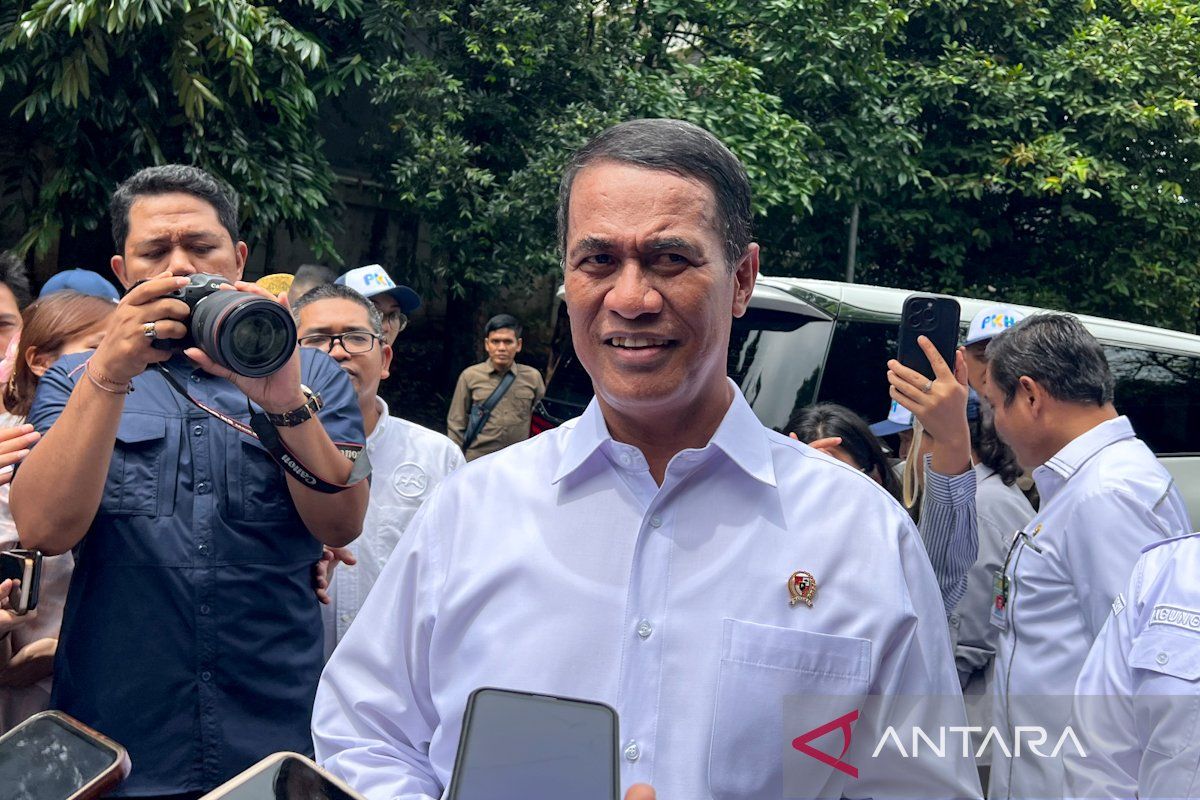
Bandung Regency, West Java (ANTARA) - Agriculture Minister Andi Amran Sulaiman has affirmed that the crackdown on refined sugar is being carried out to protect farmers, improve national sugar governance, and achieve sugar self-sufficiency in line with President Prabowo’s two-year target.
“The Agriculture Minister revealed that uncontrolled imported refined sugar has flooded the domestic consumer market, not merely leaked into it,” he said in a confirmed statement in Bandung Regency, West Java, on Wednesday.
He said the situation has directly hit the performance of PT Perkebunan Nusantara (PTPN), with losses of around Rp600 billion, as the company’s sugar that should have sold on the market was instead squeezed out by seeping refined sugar.
Some time ago, Amran continued, Head of the SOE Regulatory Agency Dony Oskaria also noted that the state-owned sugar entity, PT Sinergi Gula Nusantara, lost Rp680 billion in 2025 due to a similar problem.
“At the farmer level, the impact is visible in the collapse of molasses prices, from around Rp1,900 to around Rp1,000 per litre in March 2026, nearly half the previous price,” he explained.
In addition, sugarcane farmers in East Java even threatened a mass strike after tens of thousands of tonnes of harvested sugar piled up in warehouses with no market uptake, whilst awaiting the disbursement of Rp1.5 trillion from Danantara to buy farmers’ sugar, delayed for up to eight harvest seasons.
Amran said total losses from unsold farmers’ sugar were estimated at 1.6 million tonnes, with estimated economic losses for farmers of between Rp4 trillion and Rp7 trillion.
“What is happening on the ground, let’s be open about it, refined sugar is flooding in. If it were a leak, it would be a small leak — this is a flood and sugarcane farmers are suffering extraordinary losses,” Amran said.
According to him, the problem of unsold harvests has triggered a series of protests by sugarcane farmers recently. In Blora, Central Java, thousands of farmers grouped under the Indonesian Smallholder Sugarcane Farmers Association took to the streets twice, in April and June 2026.
In the second action, farmers even spilled their sugarcane harvest in front of a factory as a form of protest.
“In response to this situation, support for rule enforcement has come from the House of Representatives (DPR),” Amran said.
The Agriculture Minister revealed that Commission VI of the DPR has expressed support for President Prabowo Subianto to defend sugarcane farmers by requiring all sugar factories to have their own plantations.
That support was conveyed at a working meeting with the Agriculture Minister, Head of Bapanas, the Trade Minister, the Industry Minister, the President Director of ID Food and PTPN on 6 April 2026, whose minutes approved the obligation for refined sugar importers to own sugarcane plantations.
The government is now extending the plantation ownership requirement to refined crystal sugar factories, which have so far relied solely on imported raw sugar without a similar obligation being consistently enforced.
The Agriculture Minister stressed that all private companies and sugar importers, without exception, must comply with the requirement.
“All private companies in the sugar industry must build their own plantations. The same goes for importers. There is no longer any tolerance for those who rely solely on imports without contributing to developing plantations domestically,” Amran said.
“Refined sugar importers are obliged to build sugarcane plantations. They cannot keep depending on imported raw materials whilst domestic sugarcane farmers struggle to sell their harvest,” he said.
Under Agriculture Ministerial Regulation (Permentan) Number 98/Permentan/OT.140/9/2013, the rules on sugar factories and their fulfilment of sugarcane raw material supply are strictly regulated.
The regulation was issued to resolve raw material conflicts and ensure that sugar factories based on national sugarcane have a sustainable supply. Processing companies are required to own plantations supplying at least 20 per cent of their factory’s total sugarcane raw material needs.
Although the rule has long been in force, compliance over the years has been very low. Of the 11 refined sugar companies operating, only one has genuinely complied with the plantation ownership obligation since the regulation took effect in 2014.
The other ten companies are suspected of having no sugarcane plantations at all, despite enjoying years of freedom to import raw materials.
“Of the 11 refined sugar companies, only one has complied since 2014. The rest are suspected of having no plantations whatsoever. This is what we must put right,” the Agriculture Minister said.
Source: jawawa.id (https://jawawa.id/newsitem/crackdown-on-refined-sugar-imports-to-protect-sugarcane-farmers-1785334864)
Originally published by Antara (Indonesian) (https://www.antaranews.com/berita/5671552/mentan-penertiban-gula-rafinasi-penting-lindungi-petani-tebu-nasional), translated from Indonesian