
Crackdown on Illegal Cigarettes: Public Urged Not to Buy or Distribute
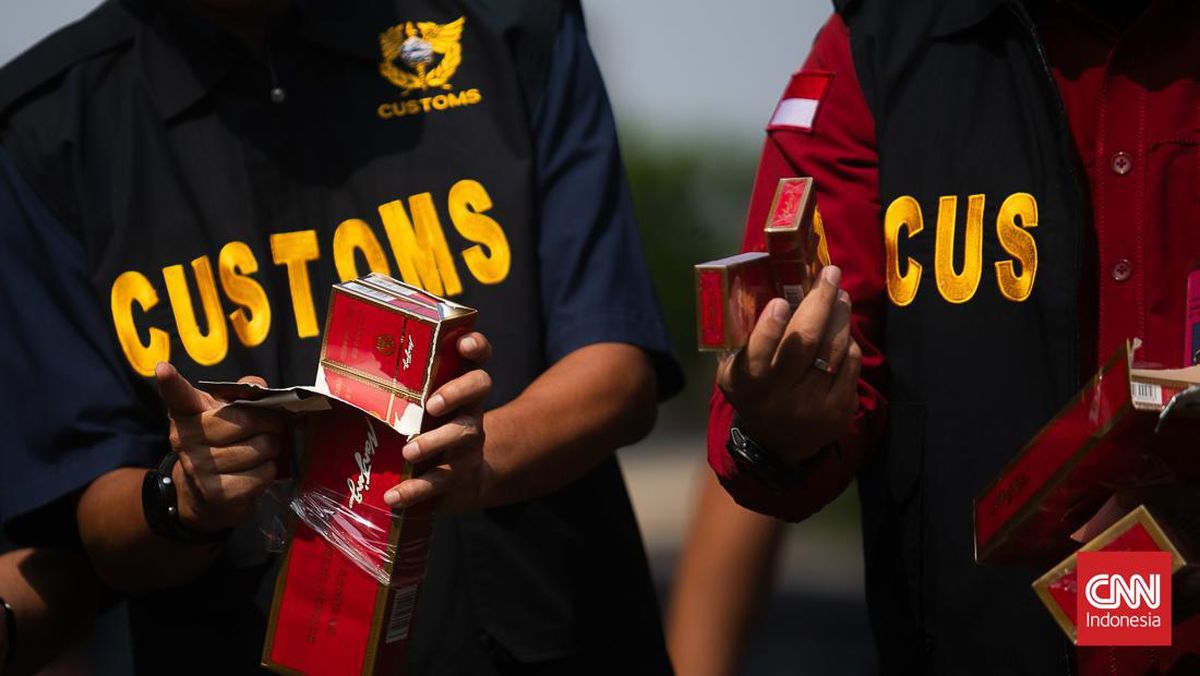
The Jakarta Regional Office of Customs and Excise has stated that it will strengthen the eradication of illegal cigarette circulation, which not only harms state revenue but also creates unfair business competition and threatens the sustainability of the legal tobacco industry (IHT).
The Head of the Jakarta Customs and Excise Regional Office, Hendri Darnadi, noted that cigarettes are a key commodity for state revenue through excise duties. Consequently, the circulation of illegal cigarettes has the potential to erode fiscal revenue and disrupt the tobacco industry ecosystem.
“Moving forward, we are committed to continuously strengthening supervision based on risk management, conducting more prudent intelligence activities, and fostering inter-agency collaboration,” Hendri said in a statement on Wednesday.
Hendri added that the circulation of illegal cigarettes encourages unfair competition, which disadvantages businesses that have fulfilled their excise obligations and complied with applicable regulations.
He emphasised that synergy between relevant parties is necessary to maintain a healthy business climate, protect the legal tobacco industry, safeguard employment, and provide certainty for businesses that have met their obligations.
“We also hope and invite the public and business actors to join together in supporting the ‘Crackdown on Illegal Cigarettes Movement’. Do not buy, sell, store, distribute, or consume illegal cigarettes,” he said.
Meanwhile, Yulia Astuti, Secretary of the Directorate General of Agro-Industry at the Ministry of Industry, stated that the circulation of illegal cigarettes is highly detrimental to the legal tobacco industry and its ecosystem, both upstream and downstream.
She noted that the prevalence of illegal cigarettes is also putting pressure on the performance of the tobacco industry. According to Ministry of Industry records, the production of cigarettes marketed domestically has decreased by approximately 3 per cent.
This pressure is also reflected in the Gross Domestic Product (GDP) growth of the tobacco industry sector. In 2024, growth in this sector was recorded at 3.49 per cent, before dropping to minus 1.37 per cent, and contracting further to minus 1.96 per cent in the second quarter of 2026.
“In line with this, state revenue related to tobacco excise has also been impacted. One of the reasons is certainly the prevalence of illegal cigarettes recently,” she said.
According to Yulia, the pressure on the legal industry could ultimately impact the workforce. The tobacco industry and its related sectors employ more than 6 million workers.
She stated that weakening production could prompt industries to reduce working hours or days, potentially leading to layoffs.
Beyond the downstream impact, the circulation of illegal cigarettes could also affect tobacco farmers. A decrease in domestic cigarette production may reduce the absorption of tobacco raw materials from farmers.
Therefore, Yulia believes that the eradication of illegal cigarettes cannot rely on a single agency or ministry. Public participation is needed to help the government uncover illegal production and distribution practices.
“We also hope for public participation to report any illegal cigarette production or distribution practices to the Directorate General of Customs and Excise so they can be followed up in accordance with laws and regulations,” she said.
Similarly, the Deputy Head of the Jakarta Provincial Regional Revenue Agency, Elvarinsa, stated that enforcement against illegal cigarettes is also vital for maintaining regional revenue. This is because legally circulating cigarettes contribute to regional original income (PAD) through tobacco taxes.
“The tobacco tax is set at 10 per cent of the excise duty. For 2026, the Jakarta Provincial Government targets tobacco tax revenue to reach IDR 1.1 trillion,” said Elvarinsa.
Elvarinsa expressed hope that strengthened enforcement against illegal cigarettes would help boost regional revenue, particularly from the tobacco tax sector.
“Hopefully, through these enforcement actions, we can increase our revenue, especially regional original income, specifically from tobacco taxes,” he concluded.