
CPO Prices Plummet! Indonesian Business Owners Won't Be Partying
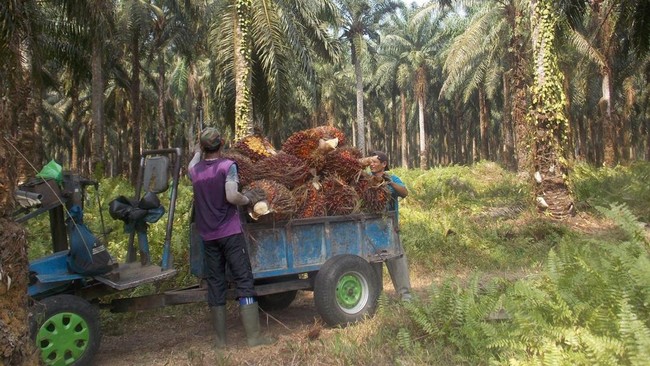
Jakarta, CNBC Indonesia - Crude Palm Oil (CPO) prices plunged by more than 3% during Wednesday’s trading (08/4/2026), hitting the lowest level in the past two weeks.
This extreme drop is a response to the decline in global crude oil prices following the ceasefire agreement between the United States and Iran on Tuesday night (07/4/2026) US time, or Wednesday (08/4/2026) Indonesian time.
Referring to the FCPOc3 benchmark, the June delivery CPO price on the Bursa Malaysia Derivatives Exchange closed at MYR 4,586 per metric tonne, down MYR 179 (-3.76%), marking the lowest level since 26 March 2026 on Wednesday (08/4/2026).
After experiencing a correction in yesterday’s trading, CPO prices on Thursday (09/4/2026) at 09:10 WIB began showing signs of recovery with a 0.50% increase to MYR 4,609 per tonne. This rise represents a rebound following the strong pressure in the previous session.
Global Oil Prices Fall, Palm Oil Follows Suit
According to Refinitiv, global crude oil prices fell below US$100 per barrel after US President Donald Trump approved a two-week ceasefire with Iran, on the condition that the Strait of Hormuz is safely reopened immediately.
The weakening of global crude oil prices has made CPO, as a biodiesel raw material, less attractive.
According to Sandeep Singh, director of The Farm Trade based in Kuala Lumpur, palm oil prices are expected to find support at around 4,500 ringgit, supported by the potential implementation of mandatory B20 biodiesel in Malaysia and a decline in inventory levels.
The Malaysian government itself plans to gradually expand the B20 programme nationwide while still considering the sensitivity of palm oil prices to crude oil prices.
On the other hand, palm oil price movements also follow the dynamics of competing vegetable oils due to competition in the global market.
However, the strengthening of the ringgit by 1.34% against the US dollar has made palm oil relatively more expensive for foreign buyers.
Meanwhile, Indonesia is also strengthening its energy policy through the issuance of the implementation schedule for mandatory biofuel blending, as part of efforts to achieve national energy transition targets and energy independence.