
CPO Prices Begin to Recover, But Bad News Persists
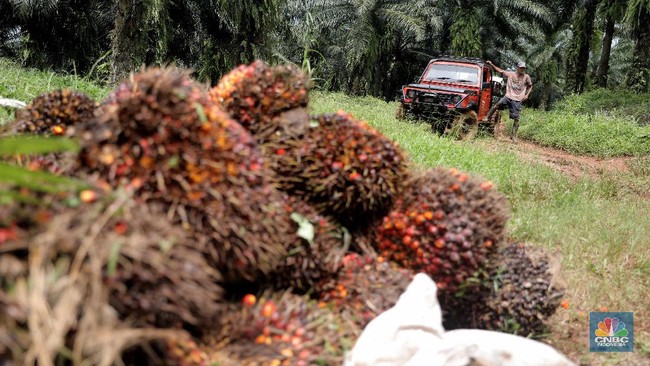
Crude palm oil (CPO) prices have begun to improve after flattening out at the end of last week. CPO prices weakened at the close of trading on Friday (2/10/2026), extending a decline of six consecutive sessions. Prices began to move upwards in Monday morning trading (5/10/2026), although the recovery remains limited.
According to Refinitiv data, the benchmark CPO contract on the Bursa Malaysia Derivatives closed at MYR 4,535 per tonne on Friday, down MYR 19 or 0.42% compared to the previous close of 4,554 per tonne. Throughout last week, CPO prices weakened by approximately 2.93% from the MYR 4,672 per tonne position recorded on Friday (25/9/2026). This decline marked the second consecutive weekly drop.
As of 10:30 WIB on Monday (5/10/2026), CPO prices were trading at MYR 4,537 per tonne, a slight increase of MYR 2 or 0.04% compared to Friday’s close.
Weak exports and concerns over rising inventories triggered last week’s price pressure. Citing Reuters, surveys by Intertek Testing Services and AmSpec Agri Malaysia showed that Malaysian palm oil product exports throughout September fell between 17.1% and 28.8% compared to August.
A trader in Kuala Lumpur noted that production increased sharply in September. This situation has led to estimates that end-of-month stocks could rise to over 3 million tonnes, adding further pressure on prices.
During Monday morning trading, the strengthening of soybean oil in Chicago provided support for CPO. Reuters reported that soybean oil prices rose by 0.48%. As both commodities compete in the global vegetable oil market, their price movements often influence one another. Additionally, the Malaysian Ringgit weakened by 0.07% against the US Dollar, making palm oil relatively cheaper for buyers using foreign currencies.
However, the decline in crude oil prices has limited the CPO recovery. Increased oil exports from the Middle East and the release of oil reserves by G7 nations have added to the supply, amidst concerns regarding oil infrastructure damage due to the Iran conflict. Lower crude oil prices reduce the attractiveness of palm oil as a feedstock for biodiesel.
From a technical perspective, Reuters analyst Wang Tao suggests that palm oil prices are still moving within a downward channel. Prices could potentially test the support level of MYR 4,499 per tonne. If this level is breached, the decline could continue towards MYR 4,445 per tonne. Conversely, breaking above the MYR 4,567 level could signal a trend reversal, opening opportunities for gains within the MYR 4,588-4,622 per tonne range. Wang noted that Monday’s closing price will be the deciding factor; a close above MYR 4,529 could confirm an upward reversal pattern, while a close below it could indicate a continuation of the downward trend.
In Indonesia, Danantara Sumberdaya Indonesia (DSI) has begun testing the National Data Intelligence (NADI) platform to improve the transparency of commodity exports, including palm oil. According to Reuters, the platform entered its trial phase on Thursday (1/10/2026). Initial monitoring is being conducted on shipments from selected exporters before being rolled out gradually to others. The collected data includes export volumes, prices, shipments, and transaction settlement reconciliations. This information will be analysed to detect discrepancies and strengthen the oversight of Indonesia’s export revenues.
Source: jawawa.id (https://jawawa.id/newsitem/cpo-prices-begin-to-recover-but-bad-news-persists-1791179586)
Originally published by CNBC Indonesia (https://www.cnbcindonesia.com/research/20261005091221-128-773256/harga-cpo-mulai-bangkit-tapi-banyak-kabar-buruk), translated from Indonesian