
CPI Introduces Independent Transmission Company Model and Its Purpose
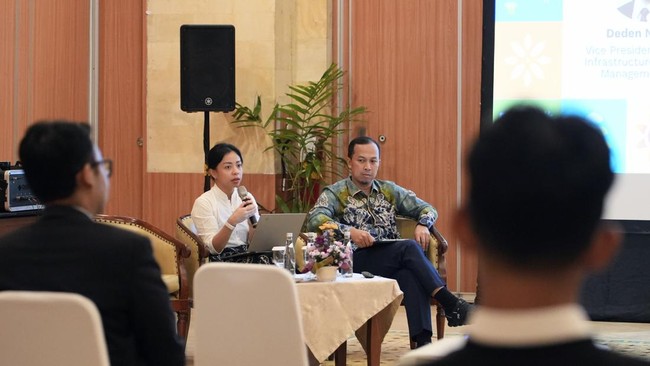
Climate Policy Initiative (CPI) Indonesia has introduced the Independent Transmission Company (ITC) model as an alternative way to address the financing challenges involved in expanding Indonesia’s electricity transmission network. The model would allow private-sector participation in transmission infrastructure development while preserving state control and PLN’s strategic role, as mandated by Article 33 of the 1945 Constitution.
Indonesia needs around US$24 billion to build nearly 48,000 circuit-kilometres of transmission lines, according to the 2025–2034 Electricity Supply Business Plan (RUPTL). CPI’s analysis shows that only 5.5% of this requirement has secured financing, leaving a gap of US$22.7 billion, or around Rp400 trillion.
The shortfall highlights the need to explore alternative financing options to support grid expansion and the integration of renewable energy.
PLN Vice President for Electricity Infrastructure Feasibility Management Deden Nabudu said transmission development requires substantial investment to strengthen system reliability and increase national electricity supply capacity.
“Through the ITC model, strong private investment interest can be channelled into strategic transmission projects in the RUPTL, including the Sumatra–Java, Java–Kalimantan and Java–Madura–Bali interconnections,” he said, according to a written statement on Wednesday (14 October 2026).
Drawing on the Independent Power Producer (IPP) scheme, the ITC model would allow private companies to finance, build and maintain electricity transmission assets. System operations, technical standards and tariff regulation would remain under the authority of PLN and the Ministry of Energy and Mineral Resources. All transmission capacity built through an ITC would be made available exclusively to PLN at government-regulated tariffs.
CPI Indonesia Senior Manager Luthfyana Larasati said the ITC model was a potential solution worth exploring to meet Indonesia’s transmission network financing needs.
“Through this study, we hope to open up discussion on alternative financing involving the private sector while maintaining state control and PLN’s strategic role,” she said.
CPI’s study also identified policy and regulatory requirements for implementing the model, including the development of a dedicated transmission tariff, accounting adjustments to enable off-balance-sheet financing for PLN, and fiscal policy support. These measures could broaden funding sources for electricity grid infrastructure and support renewable energy development and Indonesia’s energy transition.