
CPI and Bank Indonesia Launch Sustainable UMKM Business Model Implementation Guidebook: Mitigation Action
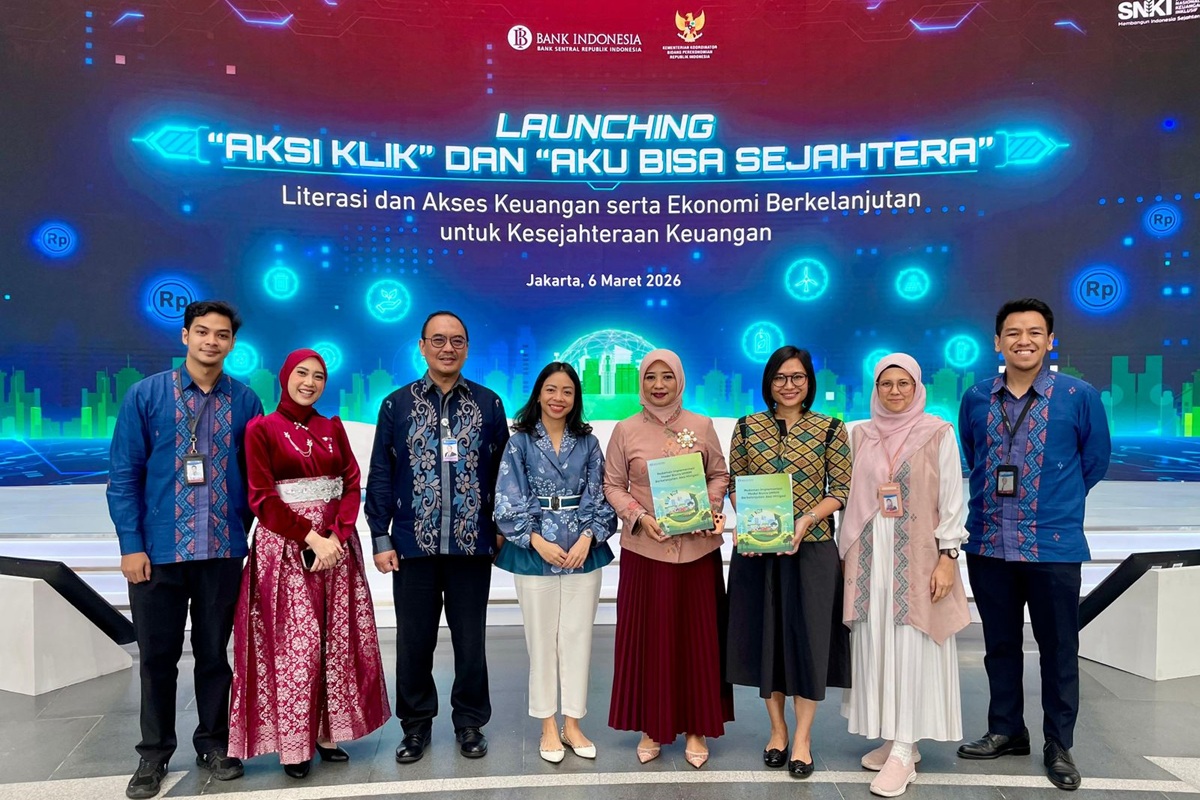
The Climate Policy Initiative (CPI), in collaboration with Bank Indonesia (BI), has launched the Guidebook for Implementing Sustainable UMKM Business Models: Mitigation Action. This guidebook serves as a comprehensive reference for micro, small, and medium enterprise (UMKM) operators, financial institutions, and other stakeholders in driving the transformation of UMKM towards sustainable and inclusive business practices.
The guidebook represents an enhancement of the Green UMKM Development Guidelines previously published by Bank Indonesia in 2024, with expanded coverage across business sectors, more practical implementation benchmarks for UMKM, and indicators aligned with sustainability taxonomy to guide green financing distribution by banks. The document presents classifications of sustainable UMKM business models, more applicable assessment indicators and metrics, and a self-assessment framework adapted to the capacity and characteristics of Indonesian UMKM.
As part of the self-assessment framework, Bank Indonesia provides forms to facilitate UMKM operators in conducting straightforward and structured self-evaluation. This includes questions regarding business profiles and key sustainability indicators based on climate change mitigation criteria, the do no significant harm principle, social aspects, and financial and governance considerations.
Assessment results will reveal the stage of sustainable business practice adoption achieved by UMKM, which comprises three categories: Eco-Adopter, Eco-Entrepreneur, and Eco-Innovator. The guidebook is expected to help UMKM improve competitiveness, expand access to sustainable financing, and respond to increasing market demand for environmentally friendly and sustainable products and services.
Bank Indonesia Governor Perry Warjiyo stated that Bank Indonesia has launched the Guidebook for Implementing Sustainable UMKM Business Models: Mitigation Action as a foundation to strengthen business governance and promote sustainability aspects in UMKM business models. The guidebook is designed in a practical and phased manner to enable business operators to mitigate emissions by integrating production and operational processes within sustainability principles.
Meanwhile, CPI Indonesia Director Tiza Mafira stated that the guidebook launch represents a strategic step to bridge policy, financing, and field practice needs. “UMKM are the backbone of Indonesia’s economy, yet still face significant challenges in adopting sustainable practices. Through this guidebook, we want to present an instrument that is practical, relevant, and contextual so that UMKM can begin their transition gradually, whilst also improving their access to sustainable markets and financing,” said Tiza.
The formulation and preparation of this guidebook referenced various national and international standards and best practices, and was validated through focus group discussions with regulators, academics, financial institutions, civil society organisations, and UMKM representatives. Thus, the guidebook is expected to serve as a shared reference in supporting the green and low-carbon economic development agenda in Indonesia.
Subsequently, CPI and Bank Indonesia will support the guidebook’s implementation through socialisation phases, pilot testing, and capacity-building efforts, so that its benefits can be widely felt by UMKM across various sectors and regions.