
Court Verdict Review Exposes Weaknesses in Corruption Case Evidence
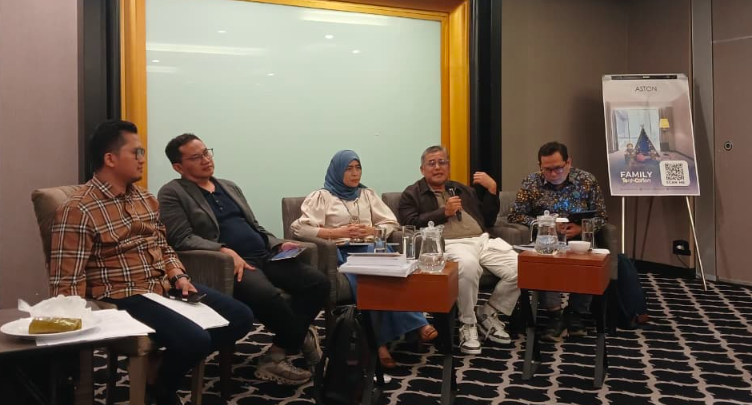
A group of legal experts from various universities have argued that defendant Muhammad Kerry Adrianto Riza in the oil and refinery governance corruption case should be acquitted. They contend that the elements of the crime alleged by the prosecutors have not been proven. These views were expressed by UI criminal law professor Topo Santoso, UI legal expert Febby Mutiara Nelson, Jakarta Muhammadiyah University legal expert Chairul Huda, and Brawijaya University criminal law expert and Chairman of the Indonesian Association of Criminal Law and Criminology Lecturers (Asperhupiki) Fachrizal Affandi during a verdict dissemination event in Jakarta on Monday (1/6). Topo Santoso stressed that if even one element of the alleged crime was unproven, it should be sufficient to acquit Kerry. He added that multiple elements in Kerry Riza’s case remain unproven, hence the verdict should be not guilty. ‘In criminal law, it’s simple: if even one element is unproven, the defendant should be acquitted—there’s no need for multiple unproven elements,’ he stated when asked by moderator Imam Nasef what the verdict for Kerry Adrianto Riza should be. In his presentation, Topo highlighted fundamental flaws in the first-instance verdict by the Jakarta Corruption Court, including unproven elements of illegality, state financial loss, complicity, and causality. ‘If even one element is unmet, the defendant should be acquitted, as I stated. I concur with Justice Mulyono’s dissenting opinion that several elements were unmet—including illegality, enrichment of self and corporation, state financial loss, mens rea, and causality,’ he said. Topo stated that academics’ role is to critique and analyse court rulings based on existing legal theories, concepts, and principles. He argued that cases lacking corruption elements must not be forced into corruption charges. ‘If there is corruption—such as bribery, gratuities to influence policies, or abuse of power—then it should be prosecuted. But if there’s no corruption, it shouldn’t be fabricated as such. If it’s a civil matter, don’t convert it into a corruption case; if it’s administrative misconduct, don’t force it into a corruption charge,’ Topo said. According to Topo, a key point in the review is the dissenting opinion of Justice Mulyono, who criticised three fundamental aspects: failed forensic audit, absence of mens rea, and business issues wrongly classified as criminal corruption. He explained that the first critique concerns the calculation of state financial loss emerging during the ongoing criminal process. However, he noted that state loss is a core element of corruption that should be quantified before the investigation begins. Topo also highlighted the absence of mens rea or malicious intent from Kerry Riza. He stated there was no evidence of active unlawful acts such as bribery, threats, or coercion by private parties against others in the case. ‘In legal maxim, there’s the principle of res ipsa loquitur, which means ’let the facts speak for themselves’. So when mens rea can’t be proven, the facts are assumed to imply mens rea. This is dangerous,’ he said. Topo stressed that such an approach is risky in criminal law due to the higher burden of proof compared to civil or administrative cases. Topo viewed Kerry Riza’s case as indicative of broader issues in Indonesia’s corruption enforcement, where the boundaries between criminal, civil, and administrative law are blurred. He argued that business and criminal matters must be clearly distinguished. ‘In business, profits and losses occur under various conditions. However, as long as decisions are made in good faith, without fraud or conflict of interest, they are protected by the business judgment rule,’ he said. ‘We must establish clear demarcation between criminal law on one side, and civil and administrative matters on the other. When this isn’t done, as seen in many rulings, such as the Kerry case,’ he said. According to Topo, the logic in Kerry Riza’s verdict used organisational workflow violations (TKO) as the basis for corruption charges. However, internal company procedure breaches are fundamentally administrative or civil matters. ‘The verdict’s logic convicted Kerry based on TKO violations, deeming it a criminal act. But legally and in business terms, internal procedure breaches fall under administrative or civil domains. Yet, it’s being treated as a criminal matter,’ he stressed. Additionally, Topo criticised the ‘unlawful act’ element in the case. He argued that SOP or organisational procedure breaches do not automatically constitute unlawful acts under the Corruption Eradication Law. ‘The error here is that, in legal and business contexts, or under Article 2 of the Corruption Eradication Law or the new Article 603 of the Criminal Code, ’unlawful act’ is merely a means. There must also be intent to enrich oneself unlawfully,’ he said.