
Countries with the Most Lakes in the World, Indonesia Ranks 21st
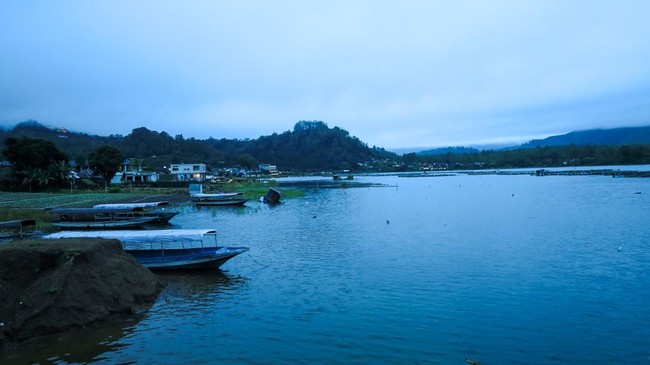
The number of lakes in a country is not merely a matter of landscape. Lakes serve as natural water reservoirs, support ecosystems, and are an important source for human water needs and economic activity.
However, the number of lakes does not always reflect the size of a country’s water reserves. Area, depth, and geographical conditions also determine how significant a lake’s role is in water availability.
Traces of ancient ice sheets are still clearly visible in the distribution of lakes around the world today, especially in the northern hemisphere. Glacial processes in the past shaped landscapes with a very high concentration of lakes in several countries.
Based on HydroLAKES data, the number of lakes is calculated with a minimum area threshold of 0.1 square kilometres. This data does not include reservoirs or artificially regulated lakes. For lakes that cross borders, recording is based on the country where the lake’s water flows out.
Canada leads by a wide margin
Canada is the country with the most lakes in the world, with a very large gap compared to other countries.
In second place is Russia with 201,240 lakes, followed by the United States with 102,519 lakes. China is in fourth place with 23,751 lakes.
Overall, Canada, Russia, and the United States account for more than 83% of the approximately 1.42 million lakes recorded in the dataset.
However, the number of lakes does not always correspond to their total surface area. Lakes in Canada cover an area of about 313,800 square miles, while Russia’s cover about 240,400 square miles.
Russia’s total area also includes the Caspian Sea, which is geographically categorised as a lake and is the largest lake in the world by surface area.
The minimum lake size threshold also greatly affects rankings. Finland, for example, has about 168,000 lakes if using a minimum area threshold of 0.0002 square miles. However, only 7,898 lakes meet the minimum threshold of 0.04 square miles used in this dataset.
Why do Canada and Russia have so many lakes?
The large number of lakes in Canada and Russia is closely related to their geographical location in the northern region.
During several ice age periods, giant ice sheets reshaped the landscape in these areas. When the ice later melted and retreated, the basins that formed and changes to water flow systems filled with water and created many lakes.
Russia also has one of the most remarkable freshwater lakes in the world, namely Lake Baikal in Siberia. This lake is the deepest lake in the world and holds about 20% of the world’s unfrozen freshwater reserves.
The number of lakes is not the only benchmark
The number of lakes does not always correspond to their total surface area. Kazakhstan, for example, has about half the number of lakes as Sweden, but its total lake area is more than twice as large, reaching about 22,300 square miles.
Indonesia itself ranks 21st in the world in the HydroLAKES data, with 3,022 lakes meeting the minimum area criterion of 0.1 square kilometres.
This position shows that Indonesia has a fairly large number of lakes globally, but remains far below countries in the northern hemisphere whose landscapes were largely shaped by glacial processes.
Conversely, many of the world’s driest countries have only a few permanent lakes. In several parts of the Middle East and North Africa, water supply relies more on groundwater, rivers, and desalination than on lakes.
Source: jawawa.id (https://jawawa.id/newsitem/countries-with-the-most-lakes-in-the-world-indonesia-ranks-21st-1788691879)
Originally published by CNBC Indonesia (https://www.cnbcindonesia.com/research/20260906063152-128-765395/negara-dengan-danau-terbanyak-di-dunia-ri-peringkat-21), translated from Indonesian