
Countries with the Highest Upper Secondary Education Completion Rates in the World
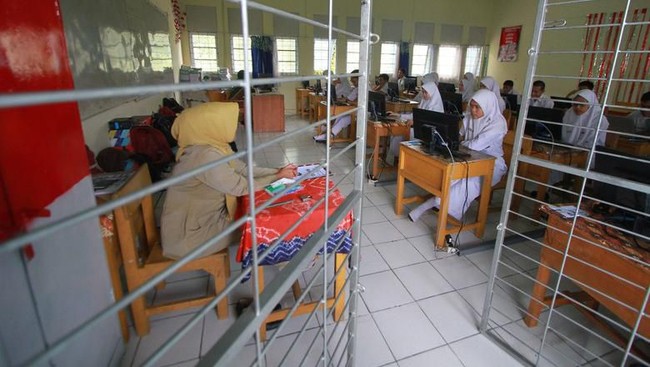
Upper secondary education completion rates in several countries reach 90% or more, even approaching 100% when students are granted additional time of up to two years after the theoretical duration of the programme ends.
Data from the Organisation for Economic Co-operation and Development (OECD) in ‘Education at a Glance 2026’ shows cumulative upper secondary completion rates for the student cohort expected to complete their upper secondary education programme by the end of the theoretical duration in 2022.
The OECD compares completion rates at the end of the theoretical programme duration (N), one year later (N+1), and two years later (N+2). In this dataset, 2022 represents the end of the theoretical programme duration, 2023 is one year later, and 2024 represents two years after the end of the theoretical duration for most countries. Consequently, the N+2 figure shows the proportion of students in that cohort who have completed upper secondary education up to two years after the theoretical programme end.
It should be noted that the completion rate differs from a simple annual graduation rate. The OECD measures the completion rate based on the proportion of new entrants in a cohort who have completed the programme at a specific point in time. Student entry years may also vary between countries because the theoretical duration of upper secondary education programmes is not uniform.
Turkey leads the way, with interesting trends observed in other nations. Turkey, for instance, recorded a completion rate of 89% at the end of its theoretical duration. This figure subsequently rose to 98% after one year and reached 99% after two years. This means almost all students in that group completed upper secondary education within two years of the theoretical programme end.
A similar pattern of increase is visible in Switzerland. The completion rate at the end of the theoretical duration stood at 74%, then increased to 86% after one year and reached 90% after two years.
Meanwhile, some countries maintain relatively stable completion rates. In Ireland, the completion rate reached 93% at the end of the theoretical duration and remained at 93% after one and two additional years. The OECD cites Ireland and Lithuania as examples of education systems that experience only slight increases in completion rates between N and N+1. In Lithuania, for example, the completion rate rose slightly from 86% at the end of the theoretical duration to 87% after one year and remained at 87% after two years.
Several other countries recorded N+2 completion rates below 90%, with diverse results. Chile reached 8,8%, while Hungary recorded 86%, Portugal 84%, Italy 84%, Sweden 83%, Latvia 83%, Finland 83%, Estonia 82%, Spain 81%, Norway 81%, New Zealand 80%, and Luxembourg 80%.
For Belgium, the OECD presents data separately for the Flemish Community and the French Community, making it inaccurate to include a single national figure in this comparison.
The OECD also found that completion rates remain below 80% after two additional years in Austria, Brazil, and Denmark. Austria recorded a completion rate of 78%, Brazil 79%, and Denmark 75%. Regarding Brazil specifically, the OECD noted that its reference year differs from most countries in the table, meaning Brazil’s figure cannot be directly compared to the 2024 figure used for other nations.
These conditions demonstrate that differences between countries are evident not only in how many students complete education at the end of the theoretical programme duration but also in the ability of the education system to provide additional time for students who have not yet met the requirements to obtain upper secondary qualifications.
On average, the OECD noted that completion rates increase by approximately 6 percentage points between N and N+1, and then increase by approximately 3 percentage points between N+1 and N+2. This indicates that an additional year provides a significant contribution to education completion for students who have not successfully finished the programme by the end of the theoretical duration, while the second additional year provides a smaller average increase.
Source: jawawa.id (https://jawawa.id/newsitem/countries-with-the-highest-upper-secondary-education-completion-rates-in-the-world-1791374011)
Originally published by CNBC Indonesia (https://www.cnbcindonesia.com/research/20261007153351-128-774146/negara-dengan-penyelesaian-pendidikan-menengah-atas-tertinggi-di-dunia), translated from Indonesian