
Countries That Have Left the Vice-Presidency Vacant: A List
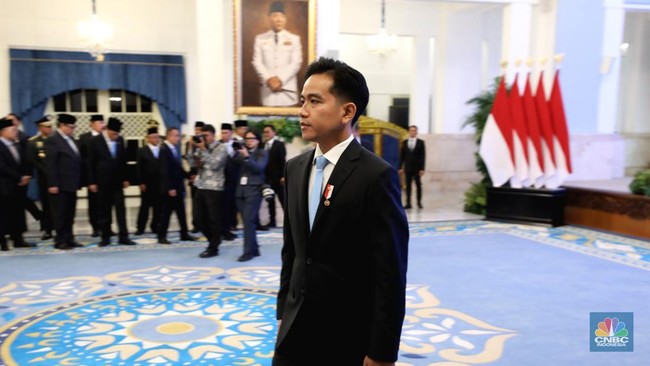
Plans for Vice-President Gibran Rakabuming Raka to resign, as proposed to President Prabowo Subianto, have revived questions about whether a country can govern without a vice-president.
Historically, several countries have experienced vacancies in the second-highest office in government, whether because of a resignation, death or the vice-president’s succession to the presidency.
The phenomenon has occurred in the United States, Brazil, the Philippines, Argentina, Bolivia, Peru and Indonesia. The causes and duration of the vacancies varied, depending on each country’s constitutional rules and political circumstances.
The following is a list of countries that have experienced vacancies in the vice-presidency during a government’s term, compiled from various sources on Wednesday, 11 November 2026.
1. United States
Several US presidents served the remainder of their terms without a vice-president: John Tyler (1841–1845), Millard Fillmore (1850–1853), Andrew Johnson (1865–1869) and Chester A. Arthur (1881–1885). All four became president after their predecessors died, but their vacated vice-presidential offices could not be filled immediately.
According to the US Senate’s historical records, the vice-presidency remained vacant until the end of each term. A mechanism for filling the vacancy was only established by the 25th Amendment to the US Constitution, ratified in 1967.
The provision allows the president to nominate a new vice-president, subject to approval by a majority in both houses of Congress.
2. Brazil
Brazil has also had several presidents who continued in office without a vice-president after moving up from the second-highest position. Floriano Peixoto became president in 1891 after Deodoro da Fonseca resigned, while Café Filho succeeded Getúlio Vargas, who died in 1954.
A similar situation arose with José Sarney, who took over the presidency in 1985 after president-elect Tancredo Neves died before being sworn in. Itamar Franco succeeded Fernando Collor in 1992 following impeachment proceedings, while Michel Temer became president in 2016 after Dilma Rousseff was impeached.
In these cases, the vacated vice-presidential office was not filled immediately for the remainder of the term.
3. The Philippines
In the Philippines, Carlos P. Garcia became president in March 1957 after President Ramon Magsaysay died in a plane crash. Garcia had been vice-president, leaving that office vacant when he took over the presidency.
The vacancy lasted until the presidential and vice-presidential elections in November 1957. Garcia was then elected to a full term, while Diosdado Macapagal won the vice-presidential election.
The Philippines therefore had no vice-president for several months in 1957.
4. Argentina
Argentina’s vice-presidency became vacant after Carlos Álvarez resigned on 6 October 2000 amid political conflict within President Fernando de la Rúa’s government.
Unlike some countries that promptly fill the office through an election or constitutional procedure, Argentina left it vacant until de la Rúa’s term ended in December 2001. The vacancy lasted for more than a year.
5. Bolivia
Bolivia faced a similar situation when Carlos Mesa became president in October 2003 after President Gonzalo Sánchez de Lozada resigned amid a political crisis. Mesa had been vice-president, leaving the second-highest office vacant when he took over the presidency.
The vice-presidency remained unfilled while Mesa was in office, until January 2006. Mesa himself resigned in June 2005, before his term ended. The episode shows that Bolivia governed without a vice-president following a change of head of state.
6. Peru
Peru has also experienced a vacant vice-presidency during a political crisis. In March 2018, Vice-President Martín Vizcarra became president after Pedro Pablo Kuczynski resigned. At the time, Mercedes Aráoz still held the other vice-presidential post.
The situation changed when Aráoz resigned in October 2019. With neither vice-presidential post occupied, Peru had no second-in-command until the political crisis peaked again in November 2020.
When Congress removed President Vizcarra, its president, Manuel Merino, took over as head of state through the constitutional succession mechanism.
7. Indonesia
Indonesia, too, experienced a prolonged vacancy in the vice-presidency. Mohammad Hatta resigned from the office on 1 December 1956 amid political differences with President Soekarno.
The office remained vacant until 1973, when Sri Sultan Hamengkubuwono IX was elected vice-president under President Soeharto. Indonesia therefore had no vice-president for more than 16 years, spanning the final years of Soekarno’s government and the beginning of Soeharto’s.
Rules determine how vacancies are filled
A vacant vice-presidency does not necessarily mean a country lacks a mechanism for leadership succession. In some cases, the constitution or rules then in force did not provide for the automatic appointment of a replacement when a vice-president became president or resigned.
In Indonesia, the current procedure for filling the office is set out in Article 8, paragraph 2 of the 1945 Constitution. If the vice-presidency becomes vacant, the People’s Consultative Assembly (MPR) must elect a vice-president from two candidates proposed by the president within 60 days. This provision forms part of the constitutional rules introduced after amendments to the 1945 Constitution.
Source: jawawa.id (https://jawawa.id/newsitem/countries-that-have-left-the-vice-presidency-vacant-a-list-1794358232)
Originally published by CNBC Indonesia (https://www.cnbcindonesia.com/news/20261110121420-4-783861/sejumlah-negara-pernah-kosongkan-jabatan-wapres-ini-daftarnya), translated from Indonesian