
Countries Rush to Adopt Social Media Age Restrictions, from America to Europe
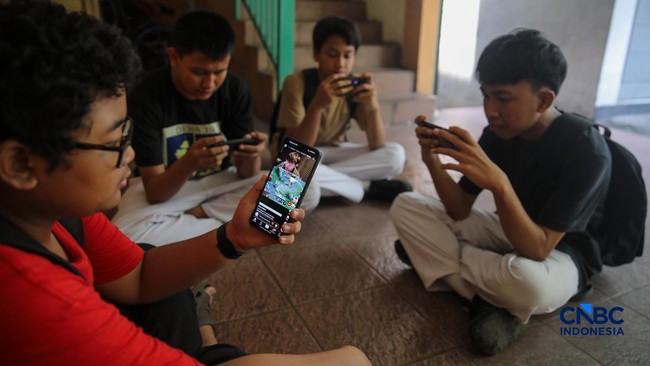
The Indonesian government has officially implemented Government Regulation Number 17 of 2025 concerning the Governance of Electrolyte System Implementation in Child Protection (PP Tunas). This regulation serves as the legal umbrella for protecting children within digital spaces.
Through its derivative regulation, Ministerial Regulation Number 0 of 2026, access to social media for children under the age of 16 is now restricted. This type of regulation is increasingly being implemented in other countries.
Previously, Australia took decisive action to block social media access for children under 16 starting in December 2025. Now, countries in Europe and other parts of Asia have either implemented or are planning to introduce similar rules.
Recently, the state of Ohio in the United States (US) also received the green light to implement regulations requiring social media companies to obtain parental consent before allowing children under the age of 16 to use their platforms. This is quite surprising, considering the US is the ‘home’ of the tech giants that develop social media, such as Meta Platforms (Facebook, Instagram, Threads), Alphabet (YouTube), and X.
How, then, is the US public responding to the discourse on limiting social media access for children? Unexpectedly, according to a survey by the research firm Pew Research Center, nearly 6 out of 10 adults in the US support a ban on social media for children under 16. Approximately 1 in 5 US adults oppose the ban, while about a quarter remain uncertain regarding the proposed regulation. This survey was conducted from 26 May to 1 June 2026.
Many countries, including Indonesia, Australia, Canada, and the UK, have already implemented or are considering regulations to prohibit social media access for minors. In the US, in addition to Ohio, policymakers in California are also considering the formulation of similar regulations.
Many social media platforms currently require users to be at least 13 years old to create an account independently. According to Pew Research findings, more parents with children under 18 support the ban on social media access for minors than parents without children under 18.
The idea for this regulation also enjoys bipartisan support. US adults from both the Republican and Democratic parties are more likely to support a ban on social media for teenagers than to oppose it.
In addition to the discussion regarding restricting social media access for teenagers under 16, the Pew Research survey also measured US adult preferences regarding social media use. As many as 85% of US adults support social media companies implementing parental consent for children to open social media accounts. This percentage has increased from 81% in 2023.
Furthermore, 78% support age verification requirements for using social media platforms, an increase from 71% in 2023. Finally, 78% also support features that limit the duration of social media access for children, up from the previous 69% in 2023.
Source: jawawa.id (https://jawawa.id/newsitem/countries-rush-to-adopt-social-media-age-restrictions-from-america-to-europe-1783223444)
Originally published by CNBC Indonesia (https://www.cnbcindonesia.com/tech/20260705094804-37-748124/ramai-ramai-negara-terapkan-aturan-ri-dari-amerika-hingga-eropa), translated from Indonesian