
Counterfeit Stamp Duty Syndicate Exposed: Used Sewing Machine to Perforate
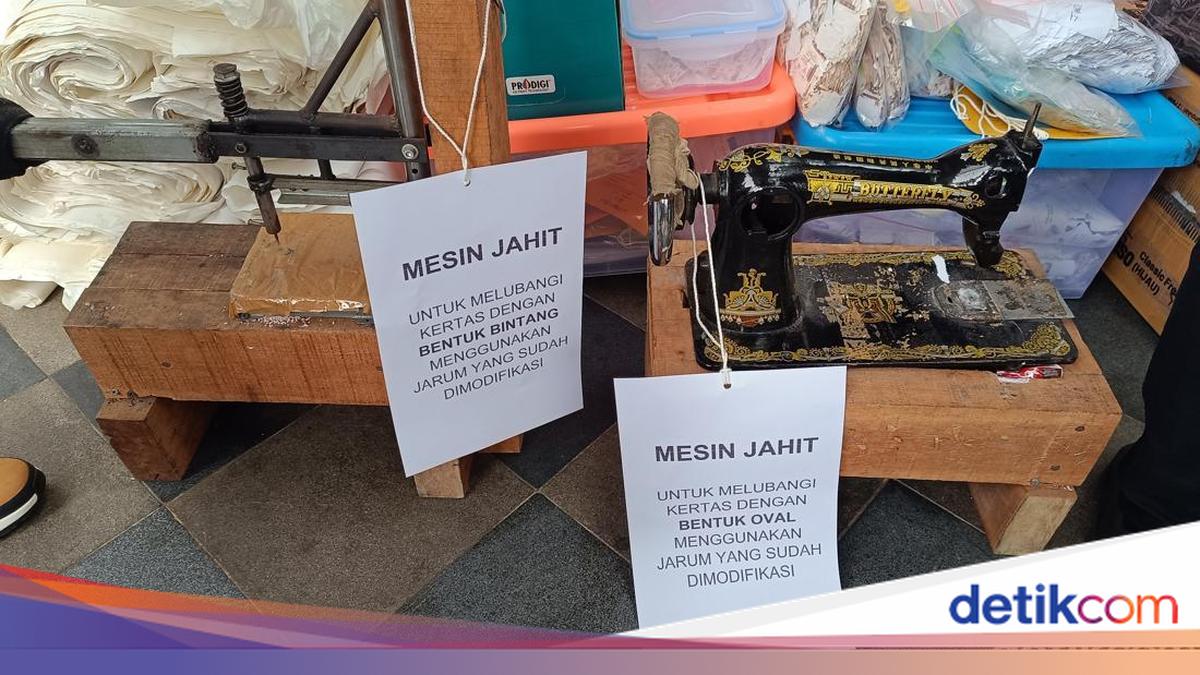
The Directorate General of Taxes at the Ministry of Finance has revealed the modus operandi of a syndicate producing millions of counterfeit duty stamps. Several methods were used. “From the results of the investigation, the methods used were quite varied. There are stamps that were produced from scratch using raw materials to be sold resembling genuine stamps,” said Director General of Taxes Bimo Wijayanto at a press conference in Jakarta on Wednesday (19/8/2026).
Additionally, some used stamps were reused. The stamps had their signs of prior use removed. “There are also stamps that had been used and were then reconditioned to remove signs of use so they could be sold again,” he explained.
He revealed that the counterfeit stamps were sold directly. Sales were also conducted through marketplaces or online. “Sales were not only through physical shops but also through marketplaces. This is a concern for us because current trading patterns have changed, and illegal products are also taking advantage of digital channels to reach consumers more widely,” he said.
“Therefore, we are conducting supervision together with law enforcement officials and continuously adapting to the modus operandi,” he added.
In the case investigation together with the Metro Jaya Regional Police, officers seized a number of equipment used to produce counterfeit stamps. One of them was a sewing machine. “A sewing machine used to perforate paper in an oval shape using a modified needle,” according to the description on the sewing machine evidence.
Previously, the Metro Jaya Regional Police together with the Directorate General of Taxes at the Ministry of Finance dismantled a syndicate producing counterfeit duty stamps. A total of 3.4 million counterfeit stamps were seized. “Officers managed to secure more than 3.4 million illegal stamps, one production machine set, and three rolls of raw materials that could still be used to produce stamps in very large quantities,” said Director General of Taxes Bimo Wijayanto.
His team then conducted an investigation into the evidence found. According to him, it is estimated that the secured evidence could still be used to produce 33 million counterfeit stamps. Bimo said that if the syndicate’s counterfeit stamp production activities were not stopped, the state could potentially lose revenue of up to Rp 1 trillion.
“Based on the joint investigation, the raw materials found are estimated to still be able to produce more than 33 million stamps per roll. This means that if this activity is not stopped, the potential loss of state revenue could reach around Rp 1 trillion,” he explained.
Additionally, his team received information that four million stamps had been sold. In their operation, the syndicate could produce 900,000 stamps in 10 days. “We also obtained information that around 4 million stamps have been sold with a nominal value of around Rp 40 billion. The seized machine is estimated to have a production capacity of around 900,000 stamps within 10 days,” he revealed.
The suspects detained were B, RC, M, TA, RTP, IA, F, H, RH, MIF, SNM, U, FF, NSA, P, and MO. They had different roles in the course of the investigation.