
Counterfeit Rupiah Circulated in Indonesia, Perpetrators Printed in Taiwan
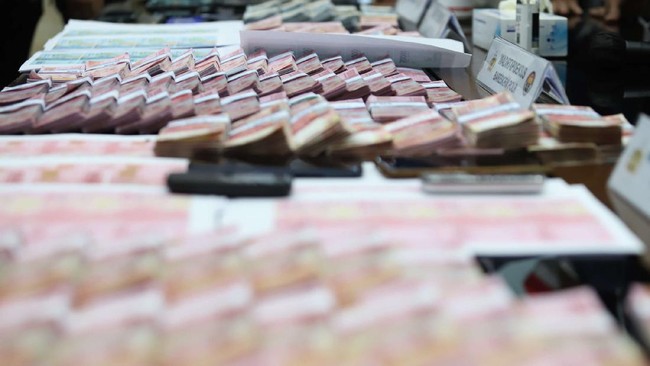
Counterfeit Rupiah was used not merely for profit, but also as a component of political conflict in Indonesia. In 1959, counterfeit notes circulating in several Indonesian regions were reportedly printed in Taiwan and smuggled into the country to support the PRRI-Permesta rebellion movement.
The case came to light after the government received reports regarding a flood of currency circulating in various regions. This situation temporarily disrupted the economy and triggered accusations against the central bank. However, government investigations uncovered a different reality: the circulating currency was not authentic Rupiah.
Even more shocking was the discovery that the source of the counterfeit money was thousands of kilometres away from Indonesia. In January 1959, Attorney General Suprapto revealed that the counterfeit Rupiah was printed in Taiwan using modern machinery.
“The Republic of Indonesia’s counterfeit money was printed in Taiwan,” stated Attorney General Suprapto, as quoted by the Umum newspaper (23 January 1959).
The currency was printed in Taiwan using modern machines and subsequently smuggled into Indonesia by irresponsible parties. The method involved transporting the money via Kuomintang ships from Taiwan to Singapore.
Once in Singapore, the money was distributed by agents and accomplices of the rebels to various regions in Indonesia. It was also revealed that the printing of this counterfeit money did not solely have an economic motive; there were political interests behind it. The counterfeit Rupiah was intended for use by the PRRI-Permesta rebels.
At that time, Indonesia was indeed facing the PRRI-Permesta rebellion. Historian Audrey Kahin, in From Rebellion to Integration: West Sumatra and Indonesian Politics, 1926-1998 (2005), notes that the movement emerged because regional groups, particularly in West Sumatra and Sulawesi, opposed the central government’s overly Jakarta-centric policies.
On this basis, to support the struggle, counterfeit money began to circulate in several areas, specifically in regions that served as rebellion bases. Sumatra and Sulawesi were the areas most affected by this circulation. The counterfeit notes appeared in several denominations, namely Rp10, Rp50, Rp100, Rp1,000, and Rp5,000.
Research by the Indonesian Army (TNI AD) titled History of the TNI-AD, 1945-1973: The Role of the TNI-AD in Defending the Unitary State of the Republic of Indonesia (1979) reveals that Taiwan became the printing location because the region was one of the places contacted by rebel figures to seek assistance.
The Taiwanese government, supported by the United States, eventually provided aid. Consequently, the territory became a primary route for supplying war equipment to the rebels in Sumatra and Sulawesi.
During that era, the government also paid serious attention to the use of currency linked to the rebellion. In fact, civil servants (PNS) caught using such money could face sanctions, including dismissal.
The circulation of the counterfeit money eventually ended alongside the conclusion of the PRRI-Permesta rebellion. The Rupiah issued by the Indonesian government remained the only legal tender.