
Could US Sanctions Paralyse Iran's Aviation Industry?
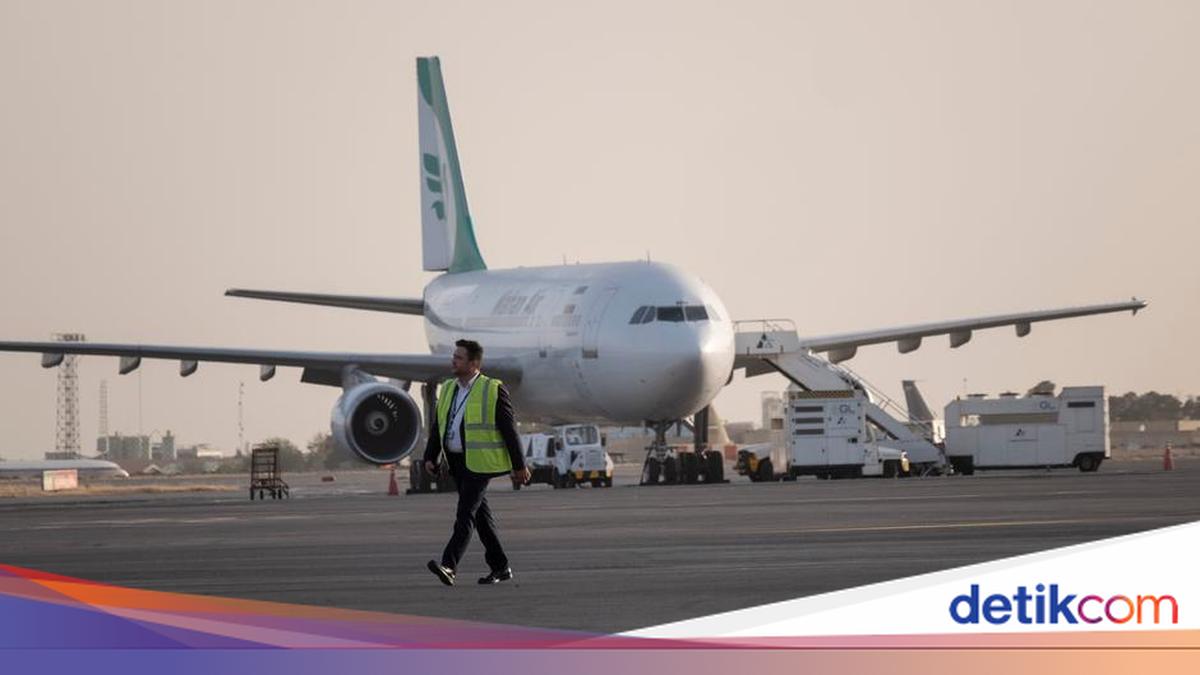
US sanctions are pushing Iran’s already weakened aviation sector into further isolation from the outside world. International air travel to and from Iran is becoming increasingly unpredictable, while new risks are emerging for trade flows and air cargo shipments.
In early September, as part of a policy termed “economic outcast,” the US Treasury Department targeted Iran’s aviation sector. This move includes Iranian airlines as well as companies providing ground services at airports, ticket sales, or other operational support. All these parties now face the threat of secondary sanctions and the potential loss of access to the US financial system.
Washington cannot directly order airports in other countries to reject Iranian aircraft. However, the threat of secondary sanctions has led many airports, fuel suppliers, and airlines to conclude that serving Iranian carriers has become too risky.
For Tehran, these aviation sanctions represent a new layer of pressure from Washington, which has previously targeted the banking, shipping, insurance, and trade sectors.
The US government argues that Iranian airlines do not only serve civilian passengers but are also involved in military and security networks. Mahan Air, for instance, is accused of assisting the Islamic Revolutionary Guard Corps (IRGC) by transporting their personnel and equipment.
This issue has also been debated within Iran itself. Former Foreign Minister Mohammad Javad Zarif, in a 2021 interview, stated that Qassem Soleimani had previously used civilian aircraft to transport troops and equipment to Syria.
For Washington, such links serve as justification for targeting Iran’s aviation networks. However, for ordinary citizens, the immediate impact is felt through cancelled flights and fewer ways to enter or leave the country.
Major Middle East routes cancelled
Iranian flights to Baghdad and Muscat have already been halted or cancelled. Azerbaijan and Georgia have also stopped accepting flights operated by Iranian airlines. A travel agent in Iran, who requested anonymity for security reasons, told DW that routes to Oman, Iraq, Azerbaijan, and Georgia are experiencing serious disruptions.
On 24 September, Turkmenistan refused permission for an Iranian aircraft flying from Tehran to Dushanbe to traverse its airspace, forcing the plane to return to Iran.
Turkey, Armenia, and China have not yet announced comprehensive restrictions, according to the travel agent. However, passengers are increasingly hesitant to purchase tickets because even confirmed bookings do not guarantee that a flight will actually depart.
One passenger told DW that while travel agents are still willing to sell tickets, they cannot guarantee whether the flight will take place.
As part of this sanctions package, the US has also suspended the “J-1” general licence, which previously allowed non-Iranian aircraft to make temporary stops in Iran under certain conditions, including that control of the aircraft remained with the foreign operator and the stay did not exceed permitted limits.
Many commercial aircraft use US-made components or technology, meaning flight operations involving Iran could fall under US sanction regulations. The suspension of the J-1 licence increases legal and financial risks for airlines, airports, fuel suppliers, ground handling companies, and other service providers, who must now independently calculate the risk of facing secondary sanctions.
Citizens turning to land routes
With air connections becoming increasingly uncertain, many passengers are turning to land crossings.
A tourist whose flight was cancelled told DW that they were forced to take a land route from Iran to Turkey before continuing to Istanbul by air.
“The border is very crowded. Many people are trying to leave because they fear this route could be closed,” the individual told DW, requesting anonymity.
However, for families, the elderly, students, and patients requiring medical treatment, crossing land borders and then continuing via land or air can be far more arduous than using direct flights. Costs also escalate as passengers must add land transport, accommodation, and additional flights to journeys that previously required only a single ticket.
The impact is also felt in air cargo, which is vital for the delivery of urgent or sensitive goods, including various medicines, medical equipment, industrial components, and laboratory samples. This is becoming increasingly crucial as Iran also faces heavy restrictions on maritime trade routes.
Iran’s aviation industry was fragile from the start
Iran’s aviation sector was facing structural problems long before these latest sanctions were imposed.
Iran’s Minister of Transport, Farzaneh Sadegh, previously admitted that several flights operate without radar assistance, placing a greater responsibility on pilots for navigation.
An ageing aircraft fleet, difficulties in obtaining spare parts, years of ongoing sanctions, and a decreasing number of airworthy aircraft all add to the burden on Iranian airlines.
When passengers must also account for the possibility of destination airports refusing to serve their aircraft, long delays, or flight cancellations without warning, buying a plane ticket becomes a form of risk calculation in itself.
Alireza Salavati, a political economy analyst and managing director of London-based Middle East Analytica, assesses that the loss of several air routes is unlikely to immediately hit Iran’s Gross Domestic Product (GDP) hard.
“Iran’s aviation sector is relatively small by regional standards. Unlike Turkey or the United Arab Emirates…”