
Could Nuclear Power Plants Pave the Way for Nuclear Weapons in Indonesia?
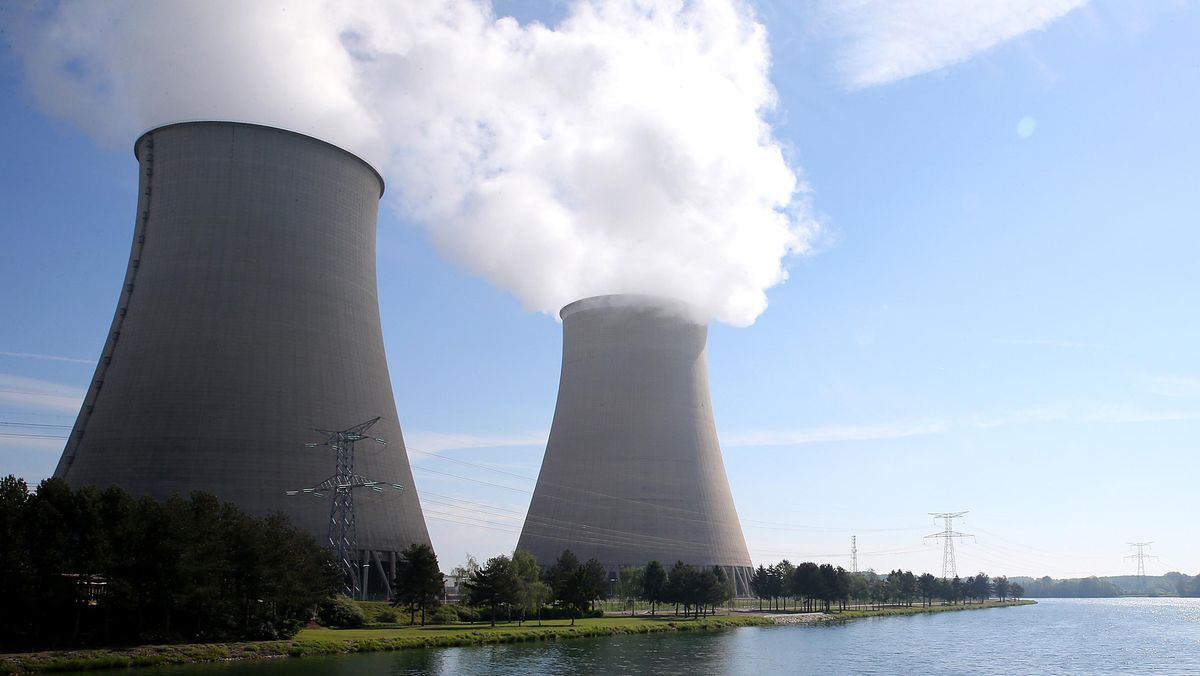
Could Nuclear Power Plants Pave the Way for Nuclear Weapons in Indonesia?
Indonesia is beginning to seriously push for the development of nuclear power plants (PLTNs), which are targeted to be operational by 2032.
Along with this effort, another question arises. Could the development of PLTNs pave the way for nuclear weapons? Does Indonesia need to have nuclear weapons in the face of an increasingly dynamic global geopolitical situation?
The Head of the Nuclear Energy Research Organization (ORTN) of the National Research and Innovation Agency (BRIN), Syaiful Bakhri, said that owning a PLTN does not automatically enable a country to develop nuclear weapons.
He explained that there is a difference between uranium for power plant needs and uranium for nuclear weapons.
“If it’s for nuclear weapons, it requires very high enrichment up to 90 percent. For PLTNs, the uranium enrichment is only about 5 to 7 percent. So, the uranium cannot be used for weapons,” said Syaiful when contacted on Tuesday (12/5).
He also explained that nuclear development in Indonesia is entirely directed towards peaceful purposes, not for weapons.
“As for nuclear weapons, I think it’s far off. We hope that with this nuclear technology, it can improve people’s welfare,” said Syaiful.
According to him, the benefits of nuclear technology are much greater if used for health, food, and industry rather than for weapons.
He gave an example that nuclear technology can be used to produce superior rice and sorghum seeds, control pests with sterile insect techniques, and for medical needs such as bone irradiation to help with bone healing.
“Nuclear technology can improve people’s welfare. In other words, the benefits for health are more important for society than participating in an arms race that will ultimately harm the people,” he said.
Indonesia is bound by the NPT
A Senior Researcher at BRIN and former Head of the National Nuclear Energy Agency (BATAN), Djarot Sulistio Wisnubroto, believes that Indonesia does not need to and should not develop nuclear weapons.
“Indonesia is a state party to the Treaty on the Non-Proliferation of Nuclear Weapons (NPT), as a non-nuclear weapon state and has ratified it through Law No. 8 of 1978. Indonesia is also part of the commitment to create a Southeast Asia nuclear-weapon-free zone,” said Djarot.
He said that what Indonesia needs is nuclear technology for peaceful purposes, which can be used for energy, health, food, industry, environment, research, and education.
“Indonesia’s strength is not in nuclear weapons, but in the ability to master nuclear technology safely, responsibly, and beneficially for the people,” he said.
The Lecturer of International Relations at UGM and a member of the International Campaign to Abolish Nuclear Weapons (ICAN), Muhadi Sugiono, explained that the NPT was signed in 1968 and came into effect in 1970.
The NPT is supported by 191 countries, including the five nuclear-weapon states (US, Russia, China, UK, France).
Muhadi explained that there are three main pillars in the NPT. First, it regulates that no other countries should develop nuclear weapons.
Second, countries that have nuclear weapons are obliged to reduce and eliminate their nuclear weapons.
Third, the right of countries that do not develop nuclear weapons to use nuclear technology for peaceful purposes.
Lately, he said, the Treaty on the Prohibition of Nuclear Weapons (TPNW) was born in 2017, which aims to completely abolish nuclear weapons.
Indonesia is one of the countries that ratified the TPNW. However, nuclear-weapon states and their allied countries strongly oppose the TPNW.
“Well, Indonesia complies, signed the NPT, and later also ratified the TPNW. This means that we have a commitment not to develop nuclear weapons, and therefore, we can also demand the right to develop nuclear technology for peaceful purposes,” said Muhadi.
The Indo-Pacific Challenge
Even though it is part of the non-nuclear proliferation, Indonesia must still be aware of potential threats, including the potential use of nuclear weapons in the Indo-Pacific region.
The Indo-Pacific region includes a number of geographical areas ranging from Southeast Asia, East Asia, South Asia to Oceania.
This region is one of the main arteries of the world economy, as well as a center for political and military competition.
Because of its strategic value, the Indo-Pacific has become a battleground for influence between nuclear powers, especially the United States and China.
A number of security pacts exist in the Indo-Pacific, such as ANZUS (Australia, New Zealand, United States) and AUKUS (Australia, UK, United States). China is the country that most seriously monitors the maneuvers of ANZUS and AUKUS.
This region also contains hidden dangers, especially through conflicts in the South China Sea involving many countries in Asia, including ASEAN and the United States.
In this strategic environment, Indonesia, which is not affiliated with any alliance, must remain vigilant about potential threats due to competition between the United States and China. This is because Indonesia will be greatly affected if a major war occurs in the Indo-Pacific, both economically, politically, and militarily.
Nuclear weapons are political weapons
However, Muhadi argues that Indonesia does not need nuclear weapons.
He said that nuclear weapons are not tactical weapons. Unlike rifles, cannons or bombs that can be used to target enemies.
According to Muhadi, nuclear weapons are political weapons, which will basically never be used.
“Even if they are used, we will not win against the enemy, because we will also perish,” he said.
As a political weapon, Muhadi said that owning nuclear weapons is only to create a deterrent effect.
“Because it is not a defensive weapon, it is just a political weapon. So, for the political weapon to be effective, it must be constantly on standby, but it should not be used, just to intimidate. Deterrent effect,” he said.
Muhadi then reiterated that Indonesia is bound by the NPT and TPNW.