
Could Gibran Run for President Again After Resigning?
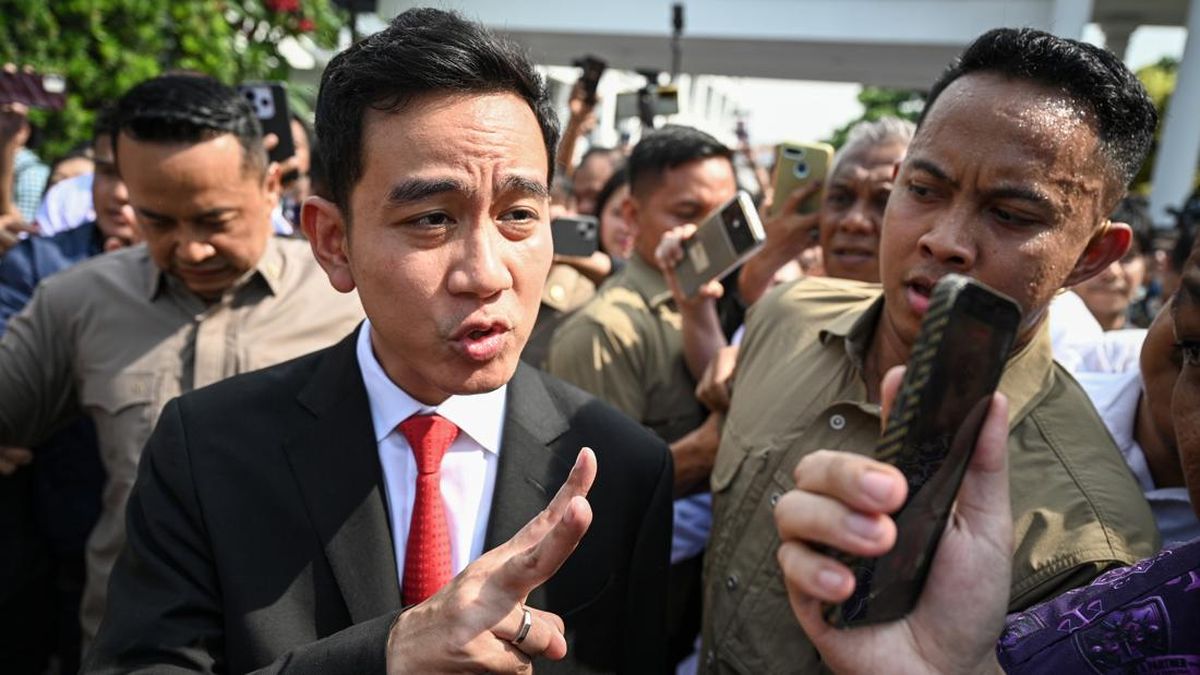
Gibran Rakabuming Raka’s political future is said to be far from over, despite his resignation as Indonesia’s vice-president on Thursday (12 November), amid legal and political pressure in parliament over an alleged diploma controversy.
Ali Rif’an, director of Arus Survei Indonesia (ASI), said there was no rule preventing Gibran from standing again. He said Gibran would simply need to prove that he met the education requirements.
“If, for example, that cannot be proved, the solution is to obtain an equivalency qualification such as Paket C, or whatever provides a high-school diploma,” Ali said when contacted on Friday (13 November).
Ali said Gibran had not entirely lost his political infrastructure. In his view, the Indonesian Solidarity Party (PSI) would remain a political vehicle as long as his father, former Indonesian president Joko Widodo (Jokowi), continued to enjoy public trust.
Ali warned, however, that allegations of treason could become a trump card if directed at Jokowi and his family. Conversely, if the case were to stop with National Police Chief Listyo Sigit Prabowo, the political standing of Gibran and Jokowi would remain relatively contained.
The lecturer at the Faculty of Political Science at UIN Jakarta said he believed public trust had been the basis of Gibran and Jokowi’s political capital. He added that Gibran’s decision to resign was not seen as having a particularly significant impact.
“He is even being compared with former vice-president Mohammad Hatta,” Ali said.
A legal gap
Iqbal Kholidin, a researcher at the Association for Elections and Democracy (Perludem), said there was no rule preventing Gibran from standing again.
Iqbal said Law No. 7 of 2017 on Elections contains no specific provision governing the candidacy status of a president or vice-president who leaves office before completing their term, whether by resigning or being dismissed.
Article 169 of the Election Law, he explained, sets out candidate requirements. These include having at least completed senior secondary education or its equivalent, never having committed a disgraceful act, never having been sentenced to imprisonment for an offence punishable by five years or more, and not having served twice as president or vice-president in the same office.
“This means that under the current rules, anyone seeking to stand must still be assessed against those requirements,” he said.
Iqbal said deliberations on a revised Election Law would provide an opportunity to address the regulatory gap in Gibran’s case. He said two matters needed clarification.
First, the law should clarify the candidacy status of anyone previously removed from the presidency or vice-presidency through impeachment, particularly where the grounds for removal were failing to meet the requirements or committing a disgraceful act.
Both are listed as candidate requirements in the Election Law.
Second, the process for verifying the validity of qualification documents, including overseas education equivalency certificates, should be clarified so that the General Elections Commission (KPU) checks not only whether documents are complete, but also verifies their authenticity with the issuing authority.
“Experience today shows that unresolved candidate-qualification issues at the nomination stage can develop into constitutional problems after a candidate has been elected and taken office,” Iqbal said.
Source: jawawa.id (https://jawawa.id/newsitem/could-gibran-run-for-president-again-after-resigning-1794613843)
Originally published by CNN Indonesia (https://www.cnnindonesia.com/nasional/20261113220010-32-1427059/apakah-gibran-bisa-maju-lagi-di-pilpres-usai-mundur), translated from Indonesian