
Cotton Prices Plummet by Rp 7,000/kg, Prompting Karangasem Farmers to Switch to Maize
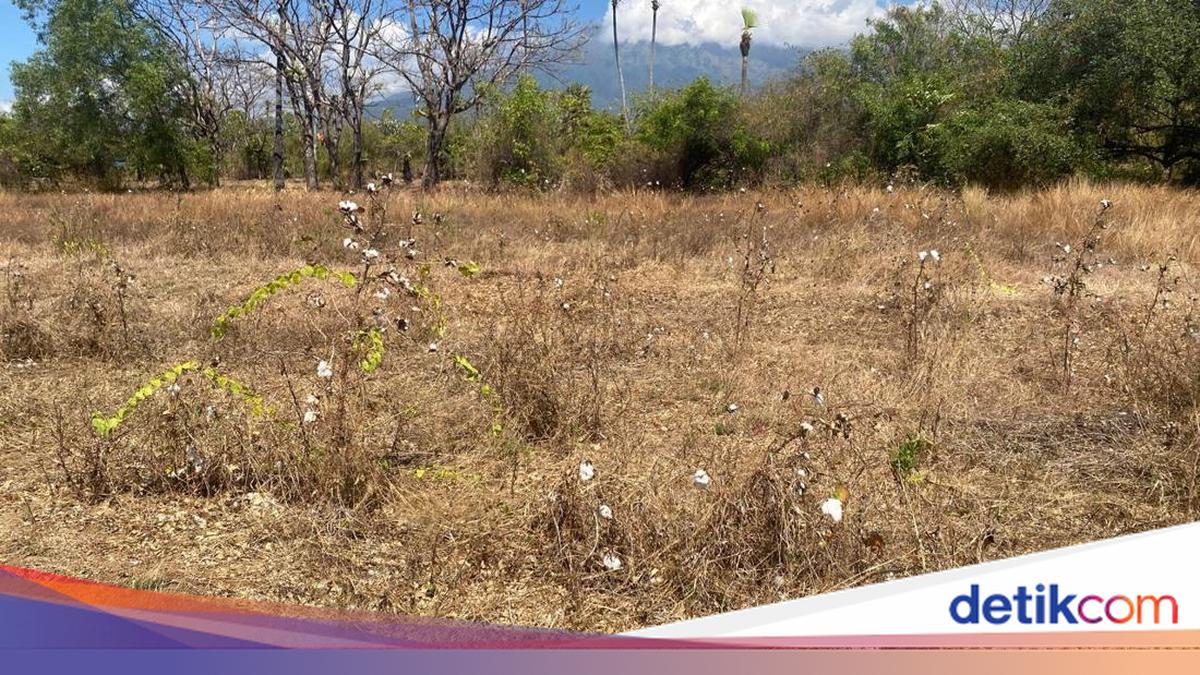
Cotton cultivation, which was once a flagship programme in Karangasem, Bali, is increasingly being abandoned by farmers. The collapse of cotton prices to just Rp 7,000 per kilogram has led farmers to choose alternative commodities deemed more profitable.
This situation is exacerbated by the absence of cotton seed assistance from the Karangasem Department of Agriculture, Food, and Fisheries (Distan PP) for 2026. Consequently, farmers wishing to continue cultivating cotton must now provide their own seeds.
One such farmer, I Nengah Gede Kari from Banjar Tegallanglangan, Datah Village, Abang District, is only cultivating cotton on approximately 5 are of land this year, utilising leftover seeds from previous government assistance. “The price has plummeted; it is now only Rp 7,000 per kilogram. Last month, I only harvested 20 kilograms,” Kari said on Friday (4/9/2026).
According to Kari, cotton prices once reached Rp 25,000 per kg when he first began harvesting several years ago. However, prices have steadily declined to the current level of around Rp 7,000 per kg.
Beyond pricing issues, yields are often suboptimal due to unpredictable weather conditions. This makes the costs and labour expended by farmers disproportionate to the returns obtained. “This year I did not receive cotton seed assistance, though I am unsure about other farmers. Clearly, due to weather factors, the harvest is not worth the effort and time, resulting in losses,” Kari added.
These conditions have prompted farmers to switch to other crops, such as maize and peanuts, which are perceived to have better price prospects.
The Head of Karangasem Distan PP, I Made Sugiartha, confirmed that the local government is not providing cotton seed assistance this year. This is due to limited seed stocks currently available at the Sweet Crop and Fibre Research Institute (Balittas).
Furthermore, budget constraints have led the government to prioritise programmes with more direct community benefits. He noted that over the last three years, cotton seed assistance to farmers has declined, leading to a drop in production. This decline is attributed to both limited seed supply and the fact that only a few farmer groups are still willing to plant.
In 2023, the area of cotton cultivation reached 82 hectares with a production of approximately 62,000 kg. The following year, the planting area decreased to 45 hectares with a production of around 49,000 kg. The decline continued into 2025, with the cultivation area dropping to about 40 hectares and production falling to 27,000 kg.
“The facts are as stated; it continues to decline because the seed assistance we provide has also decreased. In fact, there will be no seed assistance for cotton farmers in Karangasem this year or next year,” said Sugiartha.
Although there is no seed assistance this year, some cotton farmers are continuing to plant using self-funded seeds in certain areas. However, the total hectares planted and the resulting production levels are not yet known, as data collection is still ongoing.
“Hopefully, in the coming years, there will be a procurement of cotton seeds for farmers in Karangasem once again,” Sugiartha concluded.
Source: jawawa.id (https://jawawa.id/newsitem/cotton-prices-plummet-by-rp-7-000-kg-prompting-karangasem-farmers-to-switch-to-maize-1788505098)
Originally published by detikBali (https://www.detik.com/bali/bisnis/d-8648264/harga-kapas-anjlok-rp-7-ribu-kg-petani-karangasem-beralih-tanam-jagung), translated from Indonesian