
Corruption Scandal Rocks China's Elite Circle as Former Xinjiang Party Chief Sacked
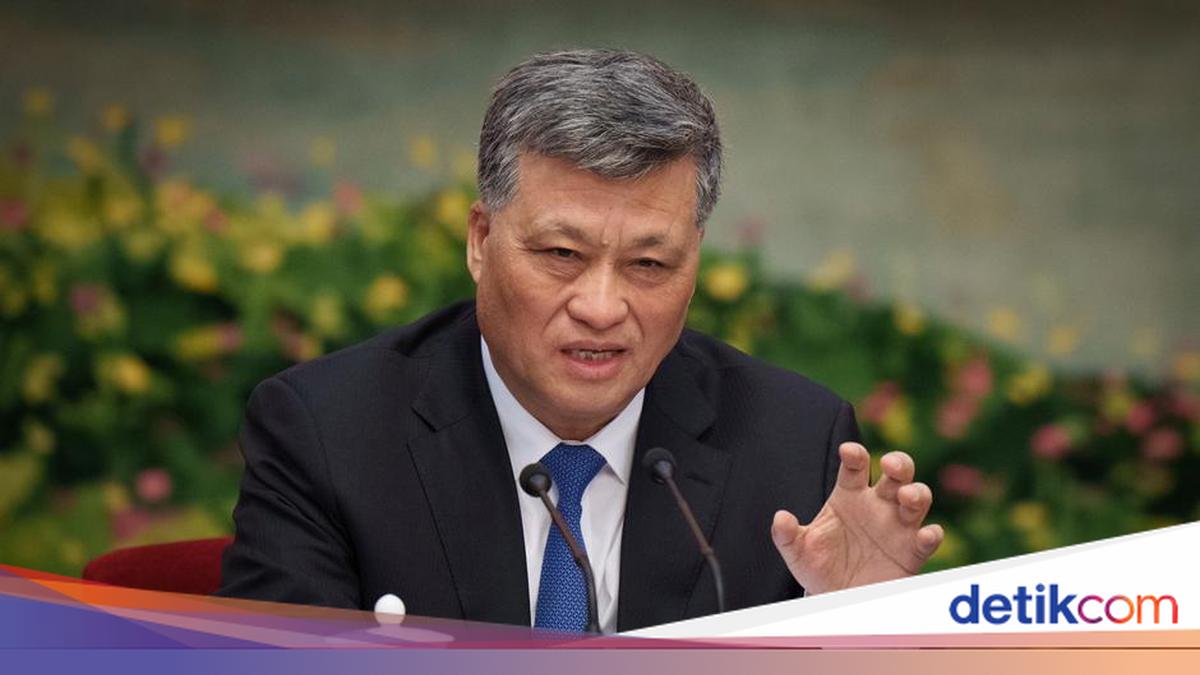
The Chinese government has announced the expulsion of Ma Xingrui from the Communist Party of China (CPC) after an internal investigation found alleged disciplinary violations and corruption offences.
According to the government news agency Xinhua, Ma is suspected of abusing his authority in official appointments, arranging jobs for certain parties, accepting illegal gifts, helping relatives purchase property below market price, and engaging in transactions described as ‘power traded for money and sex’.
Investigators also accused Ma of allowing his family members to exploit his political influence to gain economic benefits, in what is known as ‘family corruption’.
‘The investigation stated that Ma used his position to benefit others and allowed his family to use his political influence to obtain financial gains.’
Following his expulsion from the party, Ma is expected to be processed through the legal system. In China, expulsion from the CPC is generally a preliminary step before a corruption case is brought to court.
Who is Ma Xingrui?
Ma Xingrui is no ordinary bureaucrat. Before entering politics full-time, he was known as a scientist with a career in China’s space industry.
He led several national space programmes and built his career at the China Aerospace Science and Technology Corporation before being entrusted with various senior government positions.
His political career took off when he became Mayor of Shenzhen, then Governor of Guangdong Province, before finally serving as Communist Party Secretary in Xinjiang, one of China’s most politically sensitive regions.
Reuters noted that a number of officials promoted during Ma’s tenure leading both Shenzhen and Xinjiang are now also under investigation over alleged corruption.
‘Ma’s case not only targets an individual, but also opens investigations into the network of officials that flourished under his leadership.’
Ma’s downfall also comes as China’s defence sector and space industry face intense scrutiny. In recent years, several officials from the defence, aerospace and even nuclear industries have been implicated in similar cases.
Part of Xi Jinping’s anti-corruption campaign
Ma’s expulsion is the latest episode in President Xi Jinping’s anti-corruption campaign, which has been running for more than a decade.
Since coming to power in 2012, Xi has repeatedly asserted that eradicating corruption is a prerequisite for maintaining the Communist Party’s legitimacy. Thousands of officials across all levels of government have been punished through the campaign.
In the past two years, investigations have also reached several of the most senior military figures, including former Vice Chairman of the Central Military Commission He Weidong and General Zhang Youxia.
However, Xi’s anti-corruption campaign has also frequently been a subject of debate among observers.
‘The Chinese government says the campaign aims to clean up the bureaucracy, while some analysts view the anti-corruption drive as going hand in hand with efforts to strengthen party discipline and consolidate political power.’
Regardless of the debate, Ma Xingrui’s case shows that investigations continue to target officials at the highest levels of the Communist Party, including figures previously considered to be within the elite circle of power.