
Corruption-Free Zones at Borders Boost BNPP Bureaucratic Reform Index
The National Border Management Agency (BNPP) of the Republic of Indonesia has recorded an increase in its 2025 Bureaucratic Reform (RB) achievements. Based on the results of the Bureaucratic Reform Implementation Evaluation conducted by the Ministry of Administrative and Bureaucratic Reform (PANRB), the BNPP obtained a Bureaucratic Reform Index of 81.48, falling into the A- category (Satisfactory with Notes).
This achievement represents a 7.6-point increase compared to 2024, when the agency received a score of 73.88 under the ‘BB’ category. The evaluation results were communicated via a letter from the Deputy for Bureaucratic Reform, Apparatus Accountability, and Supervision of the Ministry of PANRB dated 19 May 2026.
The evaluation was conducted to assess progress in implementing bureaucratic reform to realise effective, agile, and collaborative digital government governance, as well as the ‘BerAKHLAK’ bureaucratic culture with professional civil servants.
The Head of the Bureau of Legal, Organisation, and Personnel of the BNPP, Belly Isnaeni, expressed appreciation for the hard work of all personnel contributing to the acceleration of bureaucratic reform within the BNPP. “This achievement is the result of the commitment and collective effort of all BNPP employees in building a bureaucracy that is increasingly professional, accountable, and service-oriented. The A- predicate serves as evidence that the organisational governance improvements implemented thus far have yielded positive results,” he stated at the BNPP office in Jakarta.
Furthermore, Belly noted that the increase in the BNPP’s RB score was driven by positive achievements in several strategic indicators. The BNPP successfully obtained a 100 per cent maximum score from the Audit Board of Indonesia (BPK), a Public Satisfaction Survey score of 91.69, a Legal Reform Index of 99.50, and a Development Planning Index of 98.36. Additionally, the follow-up on BPK audit recommendations at 81.65 per cent and the Integrity Assessment Survey at 81.03 per cent contributed to the improvement of the agency’s performance.
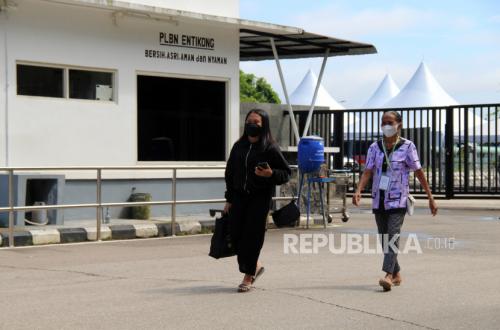
In terms of Integrity Zone development, the BNPP also achieved the ‘Corruption-Free Zone’ (WBK) predicate at the Entikong and Motamasin Integrated Border Posts (PLBN). This success demonstrates the BNPP’s commitment to building a clean, transparent, and corruption-free working environment.
These achievements were also supported by the implementation of Thematic Bureaucratic Reform, focusing on national development priority agendas. Throughout 2025, the BNPP supported thematic reforms through efforts contributing to poverty alleviation, investment increases, downstreaming acceleration, food security strengthening, and the improvement of healthcare and education access, particularly in border regions.
“Bureaucratic reform is not just about improving internal organisational processes, but also about how the bureaucracy can deliver a real impact on society. Therefore, various programmes run by the BNPL are continuously directed towards supporting the welfare of border communities and accelerating the development of national border areas,” he added.
Despite the significant increase, the evaluation results included several notes for improvement that the BNPP must address. Areas requiring strengthening include the Government Internal Control System (SPIP), the enhancement of public complaint management through SP4N-LAPOR!, the strengthening of goods and services procurement governance, and the improvement of sectoral statistical quality.
In response, the BNPP reaffirmed its commitment to following up on all recommendations provided by the Ministry of PANRB as part of its continuous improvement efforts. “Moving forward, the BNPP is committed to continuously improving the quality of bureaucratic reform to ensure it becomes more effective, accountable, adaptive, and capable of providing better public services, especially in border regions,” he concluded.