
Corruption Fight Faces Complex Challenges, Calls Mount for Transparent Law Enforcement
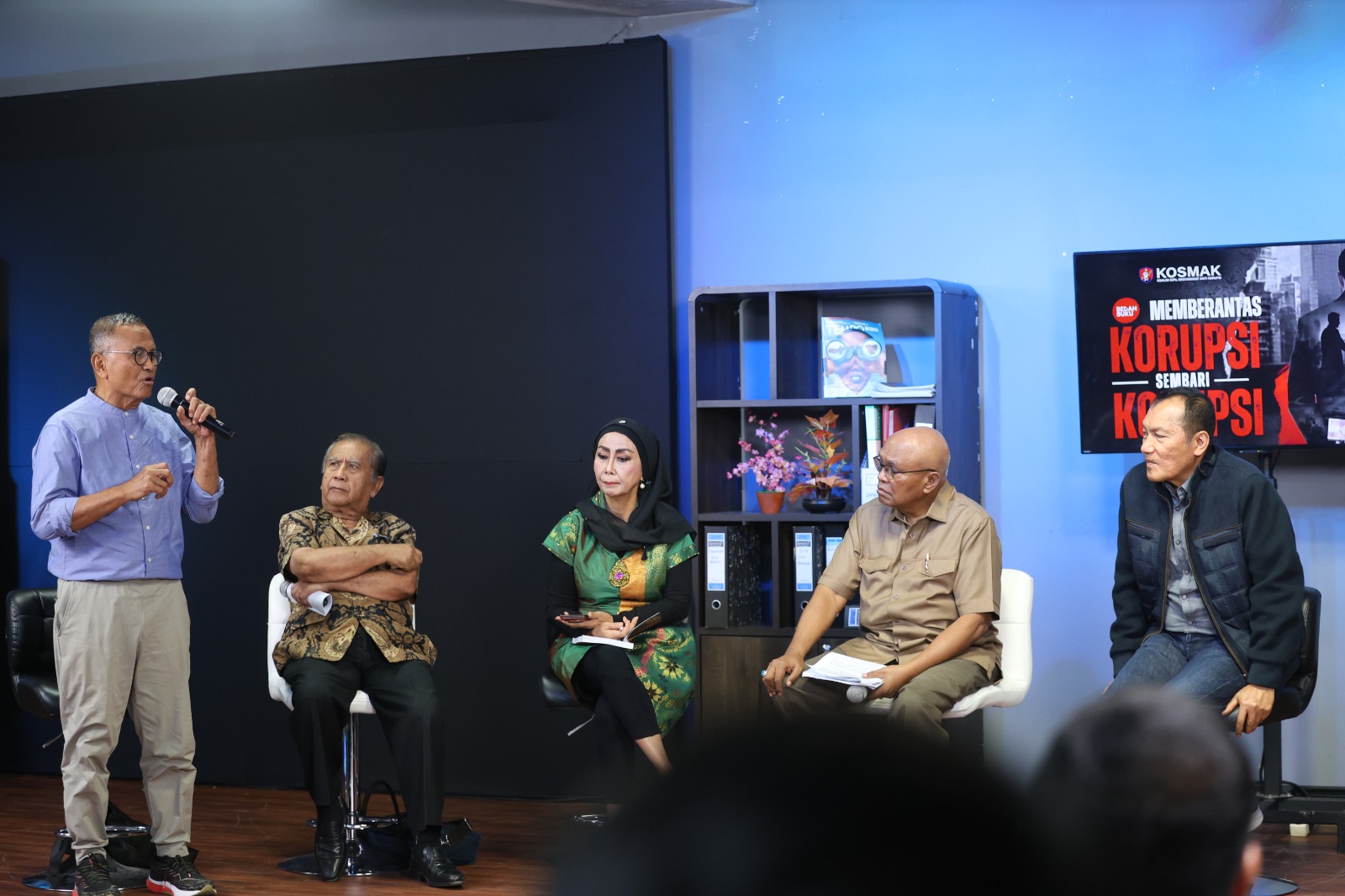
Coordinating Ministry for Political and Security Affairs officials stated that the government is increasing vigilance against corruption. The eradication of corruption in Indonesia is considered to be facing increasingly complex issues, where the challenge is not just about increasing the number of prosecutions, but ensuring that the authority of law enforcers is exercised transparently, accountably, free from conflicts of interest, and fairly.
These issues emerged during a book review on eradicating corruption in Jakarta, Monday (10/8/2026), which featured seven legal experts, former officials, and anti-corruption activists. Former Corruption Eradication Commission (KPK) leader Saut Situmorang stated that weak control over the use of authority is one of the fundamental problems in eradicating corruption. According to Saut, law enforcement must fulfill the principles of transparency, accountability, freedom from conflicts of interest, and fairness. He added that strengthening the code of ethics is important as an initial layer of oversight for officers, and that ethical violations left unchecked can develop into more serious legal problems.
Criminal law expert from the University of Muhammadiyah Jakarta, Chairul Huda, assessed that corruption criminal law has the potential to be used excessively for issues that actually have regulatory mechanisms through sectoral laws. He noted that not every issue causing state losses should automatically be brought to a corruption court, as unclear priorities can open space for selective law enforcement. He also warned of a shift in bribery patterns, where previously bribery was seen as an effort to escape the law, it can now be used to ensure someone is punished.
Money laundering expert Yenti Garnasih conveyed that corruption eradication must not stop at naming suspects. Law enforcers must trace the flow of funds and criminal assets, as perpetrators of money laundering are not always the perpetrators of the predicate crime. She noted that unexplained wealth can be an entry point for investigations through data from the Financial Transaction Reports and Analysis Centre (PPATK), banking transactions, and State Officials’ Wealth Reports (LHKPN).
National press figure and former State-Owned Enterprises Minister Dahlan Iskan expressed that corruption eradication is overwhelmed due to a lack of clear priorities and targets. He proposed a phased improvement, including focusing on strengthening law enforcement officers for five years before expanding targets to other groups. Advocate Petrus Selestinus revealed that an investigation by the Community Solidarity Committee (Kosmak) into six cases found alleged recurring patterns in the use of law enforcement authority, stressing that legal processes must be based on rules and free from political interests.
Former Constitutional Court Justice Maruar Siahaan stated that judicial independence means not only freedom from pressure and direction but also freedom from bribery. He encouraged the implementation of audits and legal audits on the performance of officers. Criminal law expert Ganjar Laksamana Bonaprapta from the University of Indonesia also assessed that audits are necessary because law enforcement problems occur from upstream to downstream, from recruitment to the execution of court decisions. He concluded that eradicating corruption requires strong authority, but authority must be accompanied by control, transparency, and accountability to ensure public trust in state institutions.