
Corruption During Disasters Could Carry the Death Penalty: Here Is the Law
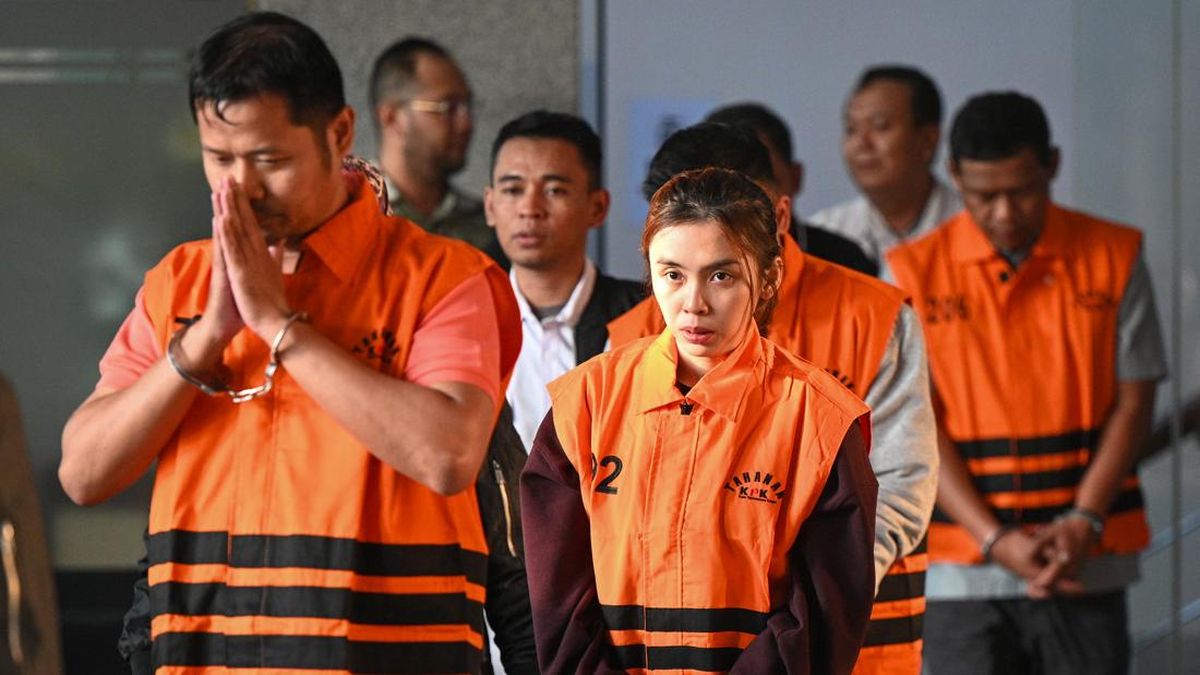
The possibility of imposing the death penalty for corruption has come into focus amid allegations that disaster-response funds were misappropriated at the National Disaster Mitigation Agency (BNPB). The case is being handled by the Corruption Eradication Commission (KPK).
Five suspects have been named: Gabriel Purwaka Sigit, head of BNPB’s Aid and Emergency Management Subdirectorate and Commitment-Making Officer; Bima Setiawan and Richard Erlangga, experts to BNPB chief Lieutenant General Suharyanto; and private-sector figures Gery Prasetiawan and Syifa Nrika. Bima is the younger brother of former BNPB chief Lieutenant General Suharyanto.
KPK Acting Director of Investigation Achmad Taufik Husein said several goods and services providers, or vendors, involved in the case were affiliated with Bima Setiawan. Between 2024 and 2026, total procurement at BNPB amounted to Rp148 billion.
Taufik said the procurement was funded by the Ready-to-Use Fund (DSP), an emergency fund for responding to major disasters across the country. These included forest and land fires in Papua and Kalimantan, floods in Sumatra and Aceh in November 2025, and a recent earthquake in East Nusa Tenggara.
“In the process of using the DSP, the KPK found suspected conflicts of interest and bribery,” he said.
The death penalty for corruption committed during a disaster is provided for under Article 2, paragraph 2, of Law No. 31/1999 on the Eradication of Criminal Acts of Corruption.
Article 2, paragraph 1, states that anyone who unlawfully enriches themselves, another person or a corporation in a way that may harm state finances or the national economy can be sentenced to life imprisonment, or imprisonment for a minimum of four and a maximum of 20 years, and fined between Rp200 million and Rp1 billion.
Paragraph 2 states: “Where the corruption offence referred to in paragraph (1) is committed under certain circumstances, the death penalty may be imposed.”
The explanatory notes to Article 2, paragraph 2, say “certain circumstances” are aggravating factors where the offence is committed while the country is in a state of danger as defined by law, during a national natural disaster, as a repeat corruption offence, or during an economic and monetary crisis.
In the BNPB case, the KPK has explained why it did not charge the suspects under the provision carrying the death penalty. Acting Director of Investigation Achmad Taufik Husein said the provision was not applied because investigators had limited time to determine the suspects’ status after an arrest operation.
“As for why Article 2 or Article 3 was not applied, colleagues will know that this was a covert investigation followed by an arrest in the act. The KPK had only 24 hours to decide whether to take the case to the investigation stage,” Taufik said on Friday (16 October).
Taufik said the latest Criminal Procedure Code requires investigators to promptly name suspects when a covert investigation leads to an arrest in the act. He said that situation led investigators not to apply the provision.
“Given those circumstances and the sufficiency of the evidence found during the investigation, after the case was presented, we applied the article already mentioned: Article 12(i), concerning conflicts of interest,” he said.
Source: jawawa.id (https://jawawa.id/newsitem/corruption-during-disasters-could-carry-the-death-penalty-here-is-the-law-1792385477)
Originally published by CNN Indonesia (https://www.cnnindonesia.com/nasional/20261019081820-12-1416872/pelaku-korupsi-saat-bencana-terancam-hukuman-mati-ini-pasalnya), translated from Indonesian