
Corruption and Oligarchy
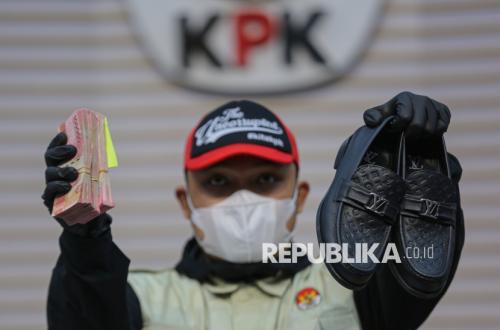
Every time a major corruption case surfaces, the Indonesian public experiences two almost simultaneous reactions: anger and exhaustion. Anger because the financial losses are often staggering. Exhaustion because the perpetrators continue to emerge from nearly the same circles: political elites, public officials, businesspeople, bureaucrats, and even those who previously projected a moralistic and nationalist image.
Corruption in Indonesia ultimately feels like a long-running series without a final episode. One case concludes, another emerges. One actor is imprisoned, a new network grows. The public begins to ask with a tone of resentment: is corruption in this country simply too deep-rooted to be eradicated?
This question becomes intriguing when viewed through the intersecting thoughts of two figures from different eras: Vedi R. Hadiz and Mochtar Lubis. Both come from different intellectual paths. Mochtar Lubis was a writer and journalist who heavily criticised the nation’s social character, while Vedi R. Hadiz is a political scientist who scrutinises Indonesia’s oligarchic structures and political economy. Yet at a certain point, both seem to converge on one major conclusion: corruption in Indonesia is not merely a problem of individuals but has become part of the culture of power and the structure of the system itself.
Mochtar Lubis long warned about a mentality of hypocrisy, a feudal culture, and society’s tendency to submit to power. In his famous speech on ‘Manusia Indonesia’ (Indonesian Man), he described how a culture of patronage leads many people to prefer safety in the shadow of a ruler rather than standing upright to defend the truth. The culture of ‘asal bapak senang’ (keeping the boss happy), pseudo-loyalty, and the tendency to worship positions slowly creates a social space that is permissive towards deviance. In such a situation, corruption is no longer seen as a major disgrace but rather as part of a ‘survival strategy’ within the system.
This is where Vedi Hadiz’s thinking provides a more structural layer of analysis. According to Hadiz, corruption in Indonesia cannot be understood solely as a matter of individual morality. Corruption has become the fuel for an expensive, competitive political-economic system dominated by oligarchic networks. Post-reform democracy indeed brought direct elections, regional autonomy, and political freedom. However, at the same time, political costs have skyrocketed. Regional head contests require massive capital. Political parties need high operational funds. The machinery of digital imaging, surveys, logistics, and elite consolidation requires substantial money.
In such a situation, the relationship between politics and capital becomes increasingly close. Businesspeople need access to state policies and projects, while political elites need funds to survive in the competition for power. From this, a symbiosis forms that often breeds rent-seeking, patronage, and corruption. Thus, corruption no longer stands as a mere individual act but rather as part of the metabolism of the power system. It works like a lubricant that keeps the political machine moving.
Ironically, the reforms once expected to dismantle the centralisation of power have, in many cases, merely shifted the arena of rent-seeking from the centre to the regions. Regional autonomy has spawned many ‘little kings’, political dynasties, and local elite networks competing for projects, permits, and resources. Corruption has also become decentralised.
At this point, the thoughts of Mochtar Lubis and Vedi Hadiz complement each other. Mochtar explains the mental and cultural side of the problem, while Hadiz dissects its political-economic structure. One speaks of people accustomed to bowing to patrons, the other explains how patronage is sustained by an oligarchic system. Both warn that democracy does not automatically produce justice. Elections can be held regularly, press freedom can be open, but if power relations remain controlled by elite networks and the culture of patronage continues to be nurtured, then corruption will only change its face.
Recent phenomena seem to lay this bare. Corruption no longer moves in secret. It appears with a modern face: wrapped in image-building, disguised through development jargon, and sometimes even defended by digital propaganda troops. The public is slowly experiencing moral fatigue. When too many scandals emerge, society can lose its sensitivity. Corruption is considered normal, as if it has become a natural part of politics. Yet that is where the greatest danger begins: when a nation starts to make peace with deviance.
Therefore, eradicating corruption cannot rely solely on arrest after arrest. The Republic of Indonesia requires more fundamental improvements: reform of political financing, strengthening of legal institutions, budget transparency, limiting the dominance of economic oligarchies, and most importantly, character education that fosters moral courage from an early age. But more than that, this nation needs the courage to look in the mirror. Because corruption is not just about who is arrested today, but about what system we have allowed to grow alongside us. Mochtar Lubis reminded us of the importance of human integrity, while Vedi Hadiz warned of the dangers of oligarchic structures. Perhaps both are saying the same thing in different languages: a nation will struggle to be healthy if power loses its sense of shame, and society loses the courage to say that what is wrong remains wrong.