
Corrective Ijtihad: A Path to Preserving the Constitution Amidst Public Pressure
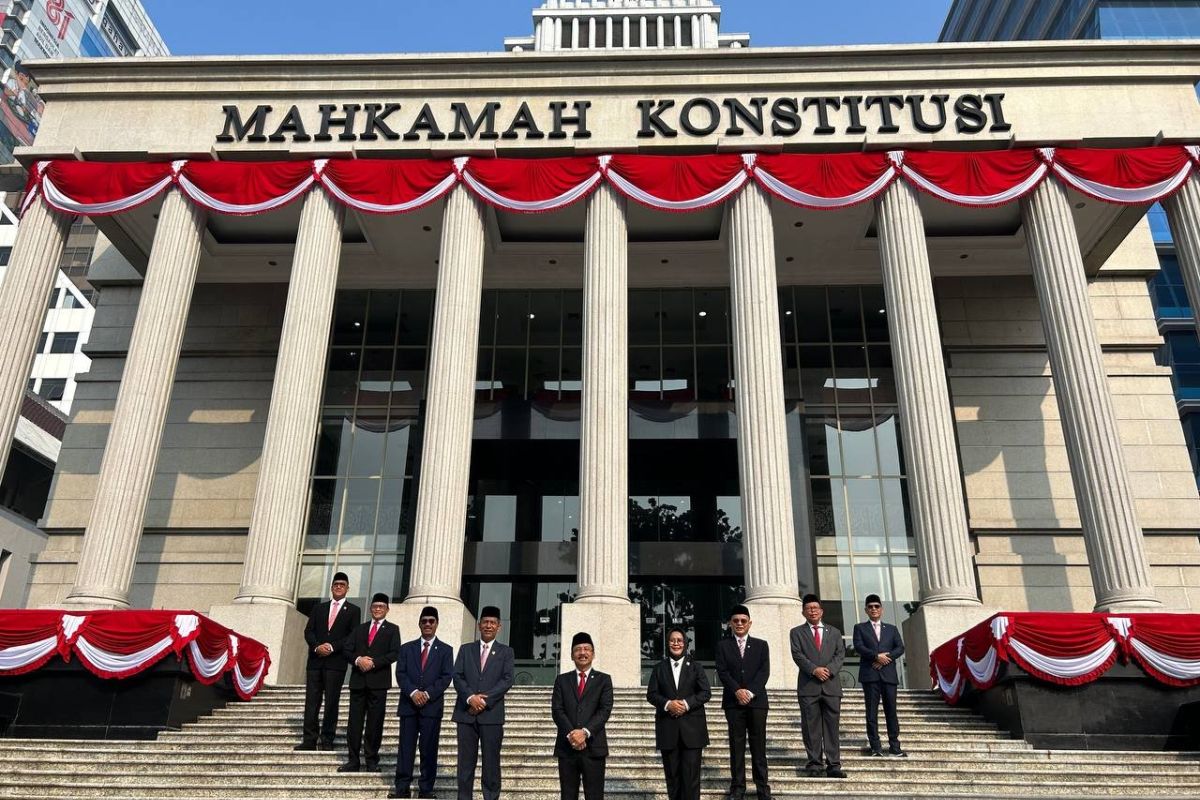
The Constitutional Court (MK) faces increasingly complex challenges amidst the heavy flow of information, political pressure, and societal demands for justice.
Judicial decisions no longer remain confined to the courtroom. Even before a verdict is finalised, a legal process can become the subject of news reports, political debates, and social media conversations, potentially triggering polarisation.
Two challenges must be managed simultaneously. The MK needs to maintain independence and consistency in upholding the constitution. At the same time, the public requires adequate explanations so that legal decisions are not perceived merely as a matter of winners and losers.
In such a situation, a perspective that could be termed ‘corrective ijtihad’ is required. This term is not a doctrine of positive law, but rather a conceptual construction to describe the courage to test and evaluate legal reasoning as constitutional issues and societal life evolve.
The word ‘ijtihad’ has a long tradition in legal reasoning. Emon (2015) explains that ijtihad relates to legal reasoning, interpretation, epistemology, and authority in responding to new issues. Meanwhile, the corrective dimension can be approached through the tradition of Legal Realism, developed in part by Karl N. Llewellyn.
In ‘Jurisprudence: Realism in Theory and Practice’ (1960), Llewellyn emphasised the importance of viewing law in practice (law in action), rather than just as written rules (law in books).
From this perspective, correction does not mean changing the law due to public pressure. Correction means testing whether legal reasoning, argumentation, and application are still capable of addressing new facts and issues fairly, rationally, and constitutionally.
With this understanding, corrective ijtihad is not an invitation for judges to follow public opinion, but rather the courage to listen to criticism without making popularity the source of legal truth.
It is not merely about winning or losing.