
Corporate Social Responsibility Plays a Key Role in Ensuring Business Continuity
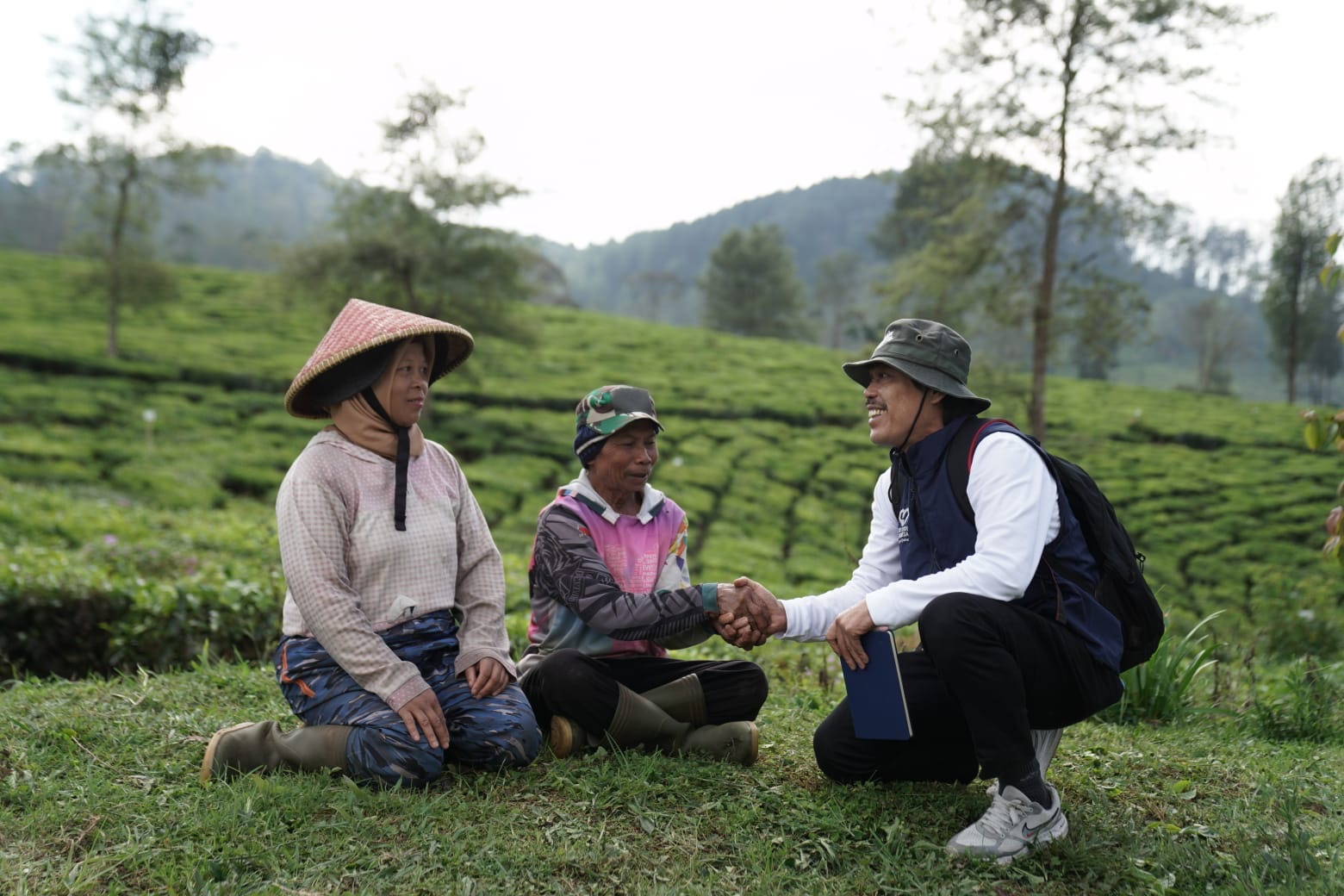
Unit Tanggung Jawab Sosial dan Lingkungan (TJSL) IDSurvey hosted the FIRST Summit titled ‘One Way, One Day, FIRST Lead The Way’ as a strategic forum to confirm, align, and strengthen the TJSL agenda across the group’s entities — BKI, SUCOFINDO, and Surveyor Indonesia. This event marks IDSurvey’s commitment to ensure TJSL is not implemented in isolation but is integrated in a single strategic direction aligned with the holding’s commitments, business needs, and evolving stakeholder expectations. For IDSurvey, TJSL is not merely a social programme outside of business activities, but an integral part of corporate responsibility to create holistic value — not only economic but also social, relevant and sustainable. CFO Sinung Triwulandari emphasised that as a holding company for Testing, Inspection, Consulting, and Certification (TICC) services, business sustainability hinges not only on operational excellence but also on the quality of relationships with communities, regulators, customers and other stakeholders. ‘In this context, TJSL has a strategic function in building and maintaining the social licence to operate, i.e., social acceptance that forms the foundation for business continuity,’ he said. He added that while formal licences are the basis for operation, sustainable growth depends on the level of social trust built through healthy and enduring relationships. Therefore TJSL should be positioned as part of the company strategy to build legitimacy, trust, and long-term relationships. IDSurvey also views TJSL as a corporate contribution to building a stable, inclusive, and resilient social ecosystem. From a sustainable development perspective, business success is measured not only by the ability to manage social risks but also by capacity to strengthen social cohesion and foster constructive relationships among stakeholders. One of the main items is a Focus Group Discussion (FGD) to draft the IDSurvey Group TJSL Roadmap. The forum aims to ensure all TJSL initiatives across each entity remain within aligned strategic corridors, while allowing adaptation to the business character and operational context of each company. ‘This alignment is important so that the IDSurvey Group TJSL is not only strong at the activity level but also consistent in direction, measurable in impact, and increasingly relevant in meeting stakeholder needs,’ added Sinung. IDSurvey reiterates its commitment to strengthening responsible, adaptive business practices that create long-term value for the company, society, and the broader ecosystem. Also present was Fahrudin, Coordinator of the TJSL Directorate at the State-Owned Enterprises Regulatory Agency (Badan Pengaturan BUMN), who outlined the strategic direction of TJSL as an instrument for shaping an industrial and societal ecosystem that increasingly requires testing, inspection, certification, verification, and sustainability assurance services. ‘TJSL IDSurvey is not merely a social programme but a strategic instrument for building a culture of standards, creating a sustainability ecosystem, and expanding demand for national assurance services,’ he said. He added that the TJSL potential should be optimally leveraged to strengthen core business while opening new market opportunities for IDSurvey Group’s TICC services. Through various TJSL initiatives—mentoring and certifying SMEs (Halal, SNI, HACCP, ISO, TKDN, ESG), green industry education and standardised supply chains, assistance with sustainability reporting, and literacy in carbon footprint and traceability—IDSurvey Group contributes to building an Indonesia that is increasingly certified, standardised, and sustainable. The transition to LED lighting across the managed precincts can extend the lifespan of electrical equipment. Indonesia Sustainability 360 Forum 2026 officially launched. The forum connects policy, business and innovation for the transformation of the green economy. Throughout 2025, the company continued to realise its sustainability commitments through data-driven approaches across ESG agendas. This initiative is not merely a short-term campaign but part of the long-term accountability system built since 2022. Eco-enzyme, in addition to reducing organic waste, also helps improve water quality and reduces odour in drainage channels.